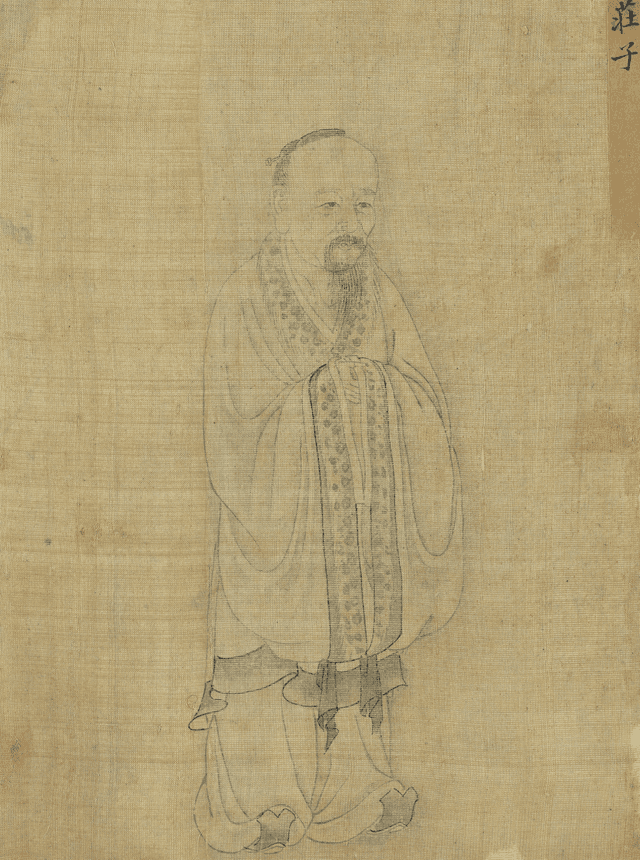
Zhuangzi
Zhuangzi was an influential Chinese philosopher and writer during the Warring States period, known for his profound contributions to Daoism. His eponymous text, the 'Zhuangzi,' is a foundational work of Daoist philosophy, characterized by its rich use of allegory, parable, and humor. Through a series of whimsical and thought-provoking stories, Zhuangzi explored themes of spontaneity, relativity, and the nature of reality, challenging conventional wisdom and advocating for a life in harmony with the Dao, or the natural way of the universe. Zhuangzi's ideas significantly impacted not only Daoism but also Chinese Buddhism and Confucianism, as his emphasis on the relativity of human concepts and values encouraged a more flexible approach to life and governance. His writings have inspired countless generations of thinkers, poets, and artists, making him a central figure in Chinese literature and philosophy. The 'Zhuangzi' remains a vital text, celebrated for its literary artistry as well as its philosophical depth, and continues to be studied for its insights into the human condition and the nature of existence.
Famous Quotes
View all 3 quotes“Once upon a time, I dreamt I was a butterfly, fluttering hither and thither, to all intents and purposes a butterfly. I was conscious only of my happiness as a butterfly, unaware that I was myself. Soon I awaked, and there I was, veritably myself again. Now I do not know whether I was then a man dreaming I was a butterfly, or whether I am now a butterfly, dreaming I am a man.”
“The fish trap exists because of the fish. Once you've gotten the fish you can forget the trap. The rabbit snare exists because of the rabbit. Once you've gotten the rabbit, you can forget the snare. Words exist because of meaning. Once you've gotten the meaning, you can forget the words. Where can I find a man who has forgotten words so I can talk with him?”
“Flow with whatever may happen, and let your mind be free: Stay centered by accepting whatever you are doing. This is the ultimate.”
Books from the author



Link to this page
Add a free, dofollow link to Lex on your blog, forum, syllabus, or reading list.

<a href="https://lex-books.com/author/zhuangzi"><img src="https://lex-books.com/badges/read-on-lex.svg" alt="Zhuangzi on Lex" width="160" height="40"></a>[](https://lex-books.com/author/zhuangzi)[url=https://lex-books.com/author/zhuangzi][img]https://lex-books.com/badges/read-on-lex.svg[/img][/url]Zhuangzi on Lex: https://lex-books.com/author/zhuangzi