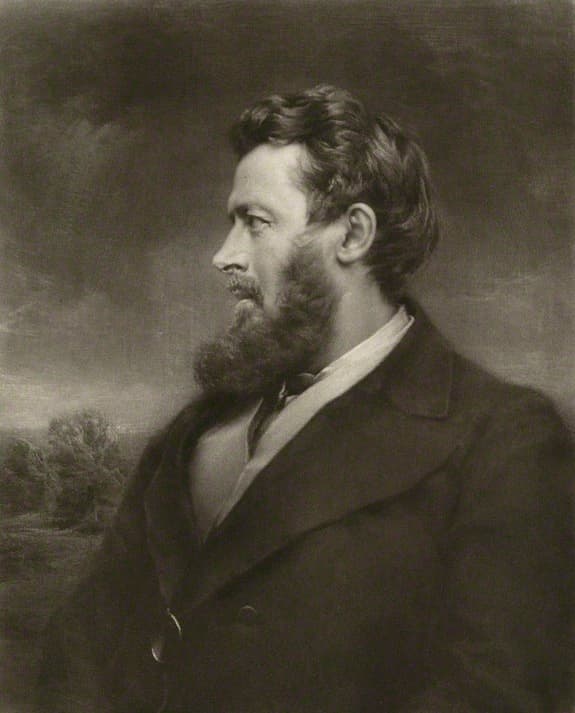
Walter Bagehot
Walter Bagehot was an influential English journalist, businessman, and essayist whose writings spanned government, economics, literature, and race. He co-founded the National Review in 1855, which became a significant platform for political discourse in Victorian England. Bagehot's most notable works include 'The English Constitution,' where he analyzed the British political system and its unwritten conventions, and 'Lombard Street: A Description of the Money Market,' which provided insights into the financial system and banking practices of his time. His ability to blend economic theory with practical analysis marked him as a pioneering figure in economic journalism. Bagehot's contributions to political and economic thought have had a lasting impact, influencing both contemporary and later thinkers. His exploration of the relationship between the monarchy and Parliament in 'The English Constitution' remains a critical reference for understanding British governance. Through his incisive essays and critiques, Bagehot established himself as a key voice in the intellectual landscape of the 19th century, leaving a legacy that continues to inform discussions on economics and political theory today.
Famous Quotes
View all 3 quotes“The greatest pleasure in life is doing what people say you cannot do.”
“Life is a compromise of what your ego wants to do, what experience tells you to do, and what your nerves let you do.”
“The reason why so few good books are written is that so few people who can write know anything.”
Books from the author


Link to this page
Add a free, dofollow link to Lex on your blog, forum, syllabus, or reading list.

<a href="https://lex-books.com/author/walter-bagehot"><img src="https://lex-books.com/badges/read-on-lex.svg" alt="Walter Bagehot on Lex" width="160" height="40"></a>[](https://lex-books.com/author/walter-bagehot)[url=https://lex-books.com/author/walter-bagehot][img]https://lex-books.com/badges/read-on-lex.svg[/img][/url]Walter Bagehot on Lex: https://lex-books.com/author/walter-bagehot