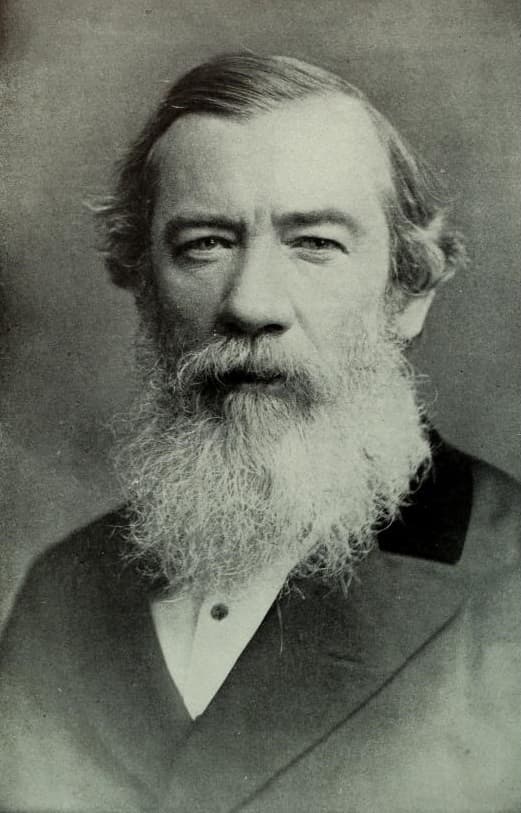
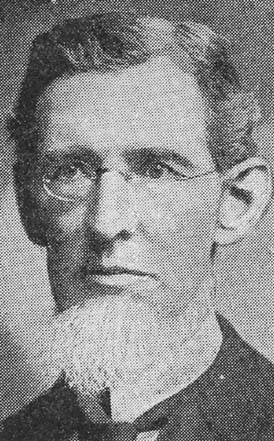
Moncure Daniel Conway
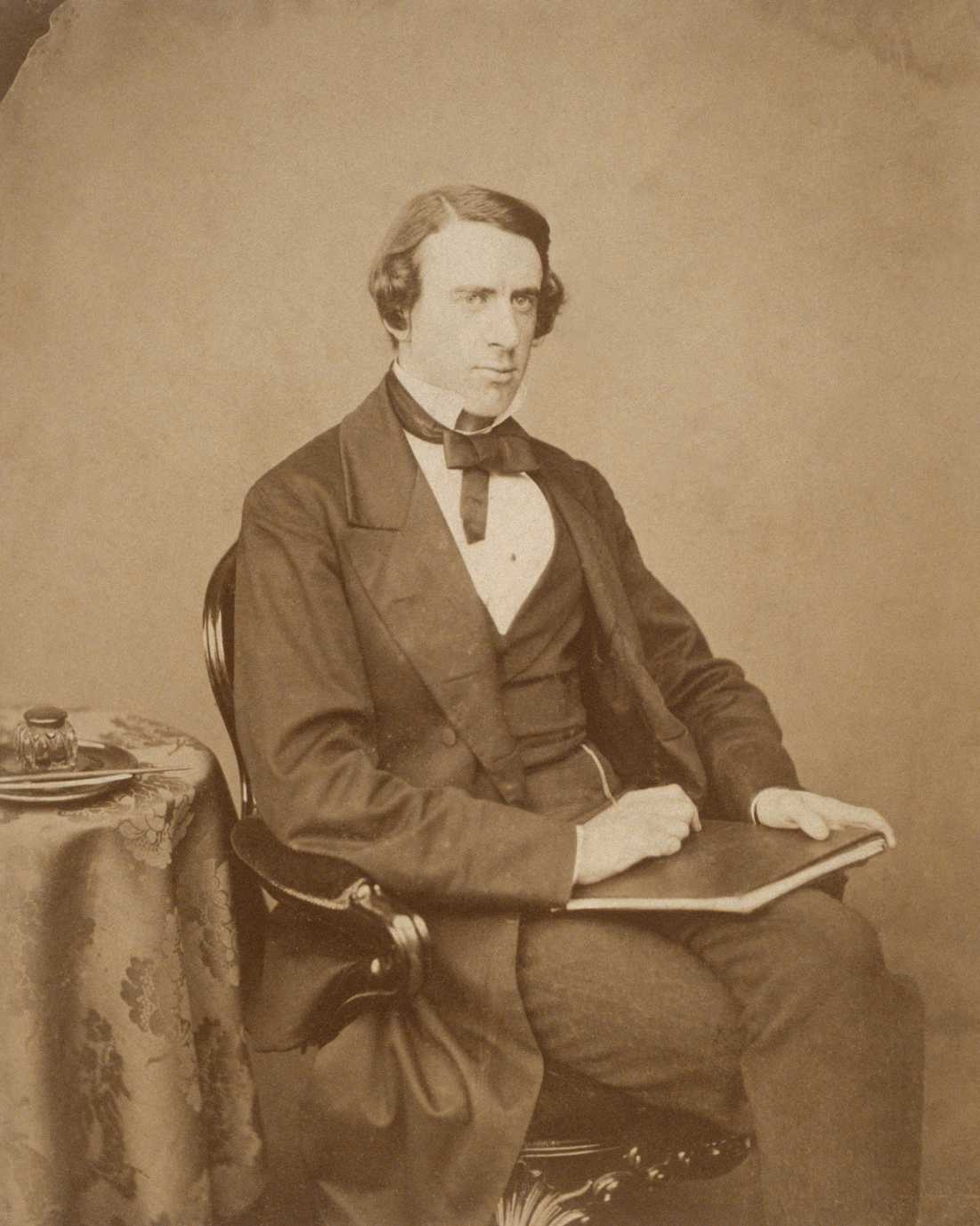
Moncure Daniel Conway was an influential American abolitionist minister and radical writer known for his progressive views and literary contributions. Born into a distinguished family in Virginia and Maryland, he initially embraced various religious affiliations, including Methodism and Unitarianism, before identifying as a Freethinker. His commitment to social justice and reform led him to become a prominent figure in the abolitionist movement, advocating for the end of slavery and championing civil rights. In the latter part of his life, Conway relocated to Europe, where he spent nearly four decades in England and France, furthering his intellectual pursuits. Conway's literary legacy includes notable biographies of significant figures such as Edmund Randolph, Nathaniel Hawthorne, and Thomas Paine, which reflect his deep engagement with American history and thought. His own autobiography provides insight into his life and beliefs, showcasing his journey as a thinker and activist. As a leader of the freethought movement at London's South Place Chapel, now known as Conway Hall, he played a crucial role in promoting secularism and rational discourse. Conway's work and advocacy left a lasting impact on both American literature and the broader social reform movements of his time.
Famous Quotes
View all 3 quotes“In 1881, being on a visit to Boston, my wife and I found ourselves in the Parker House with the Ingersoll 's, and went over to Charleston to hear him lecture. His subject was 'Some Mistakes of Moses,' and it was a memorable experience. Our lost leaders, -- Emerson , Thoreau , Theodore Parker, -- who had really spoken to disciples rather than to the nation, seemed to have contributed something to form this organ by which their voice could reach the people. Every variety of power was in this orator, -- logic and poetry, humor and imagination, simplicity and dramatic art, moral and boundless sympathy . The wonderful power which Washington's Attorney-general, Edmund Randolph, ascribed to Thomas Paine of insinuating his ideas equally into learned and unlearned had passed from Paine 's pen to Ingersoll 's tongue. The effect on the people was indescribable. The large theatre was crowded from pit to dome. The people were carried from plaudits of his argument to loud laughter at his humorous sentences, and his flexible voice carried the sympathies of the assembly with it, at times moving them to tears by his pathos . { Conway's thoughts on the great Robert Ingersoll }”
“Washington , like most scholarly Virginians of his time, was a Deist ... Contemporary evidence shows that in mature life Washington was a Deist, and did not commune, which is quite consistent with his being a vestryman. In England, where vestries have secular functions, it is not unusual for Unitarians to vestrymen, there being no doctrinal subscription required for that office. Washington 's letters during the Revolution occasionally indicate his recognition of the hand of Providence in notable public events, but in the thousands of his letters I have never been able to find the name of Christ or any reference to him. { Conway was employed to edit Washington 's letters }”
“He shrank from even the smallest things that inclined towards self indulgence. He would not remain alone with a lady. { On Jain scholar Virchand Gandhi }”
Books from the author
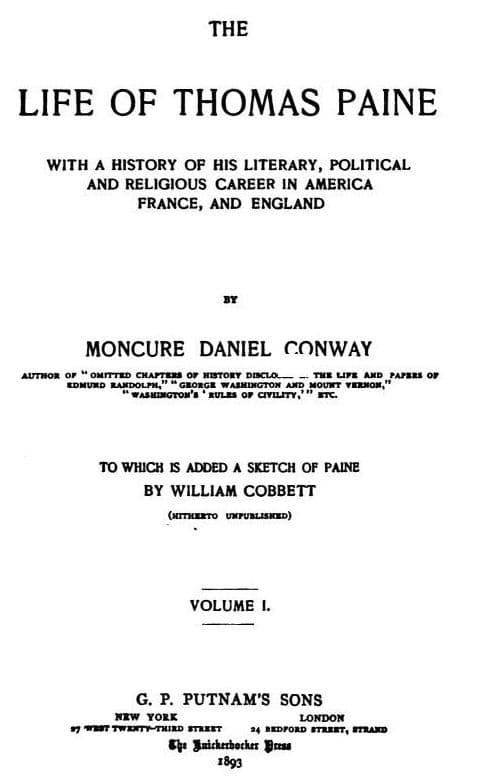



Link to this page
Add a free, dofollow link to Lex on your blog, forum, syllabus, or reading list.

<a href="https://lex-books.com/author/moncure-daniel-conway"><img src="https://lex-books.com/badges/read-on-lex.svg" alt="Moncure Daniel Conway on Lex" width="160" height="40"></a>[](https://lex-books.com/author/moncure-daniel-conway)[url=https://lex-books.com/author/moncure-daniel-conway][img]https://lex-books.com/badges/read-on-lex.svg[/img][/url]Moncure Daniel Conway on Lex: https://lex-books.com/author/moncure-daniel-conway