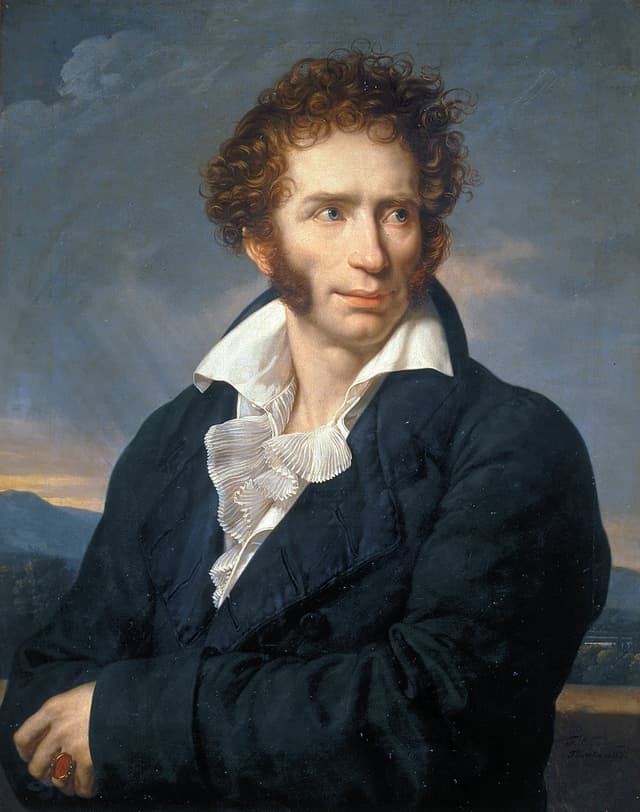
Ugo Foscolo
Ugo Foscolo was an influential Italian writer and poet, known for his passionate engagement with themes of love, death, and national identity. Born Niccolò Foscolo, he emerged as a significant figure in the Italian literary landscape during the late 18th and early 19th centuries. His early work, 'The Last Letters of Jacopo Ortis,' published in 1798, is often regarded as the first modern Italian novel, blending personal narrative with broader social and political commentary. This novel, alongside his poignant long poem 'Dei Sepolcri' from 1807, reflects his revolutionary spirit and deep concern for the Italian unification movement, showcasing his belief in the power of literature to inspire change. Foscolo's literary contributions extended beyond these notable works, as he also penned the carmen 'The Graces' in 1812, further solidifying his reputation as a key figure in Italian Romanticism. His writings are characterized by their emotional intensity and philosophical depth, often grappling with existential themes and the human condition. Foscolo's legacy endures not only through his innovative narrative techniques and poetic forms but also through his role as a precursor to the modern Italian literary tradition, influencing subsequent generations of writers and thinkers in Italy and beyond.
Famous Quotes
View all 3 quotes“Io non odio persona alcuna, ma vi son uomini ch'io ho bisogno di vedere soltanto da lontano.”
“E mentre io guardo la tua pace, dorme quello spirto guerrier ch'entro mi rugge.”
“Il cuore nella solitudine e nella pace va a poco a poco obbliando i suoi affanni, perché la pace e la libertà si compiacciono della semplice e solitaria natura”
Books from the author


Link to this page
Add a free, dofollow link to Lex on your blog, forum, syllabus, or reading list.

<a href="https://lex-books.com/author/ugo-foscolo"><img src="https://lex-books.com/badges/read-on-lex.svg" alt="Ugo Foscolo on Lex" width="160" height="40"></a>[](https://lex-books.com/author/ugo-foscolo)[url=https://lex-books.com/author/ugo-foscolo][img]https://lex-books.com/badges/read-on-lex.svg[/img][/url]Ugo Foscolo on Lex: https://lex-books.com/author/ugo-foscolo