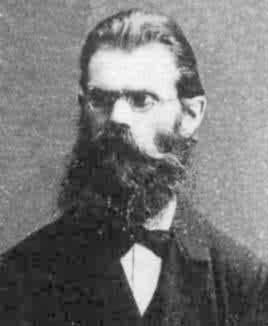
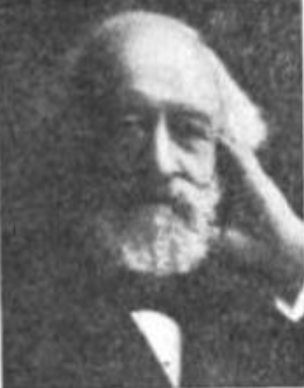
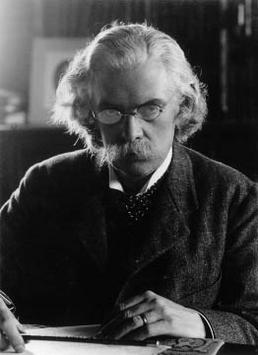
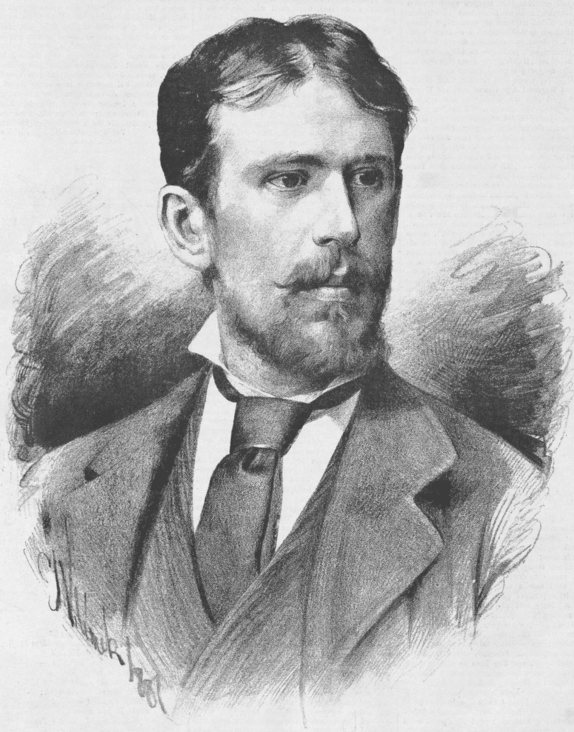
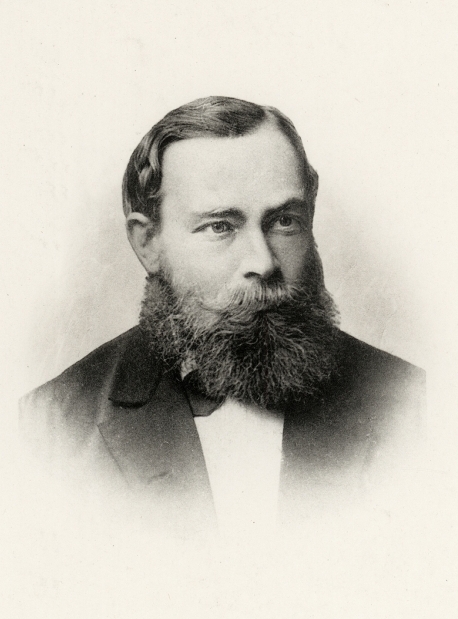
Theodor Reye
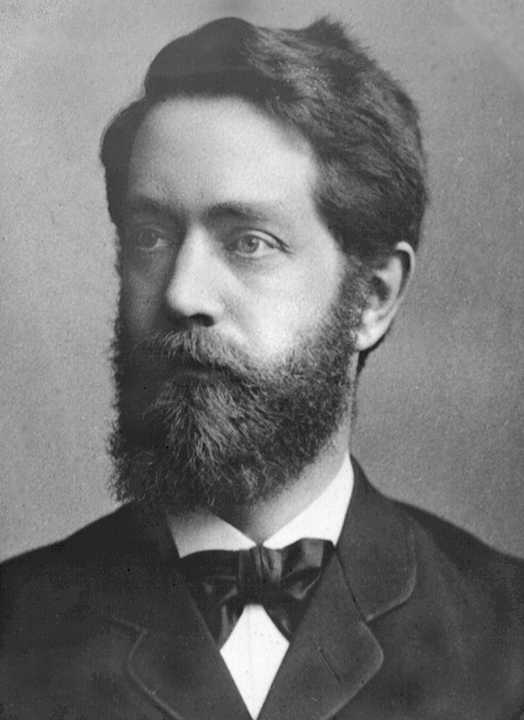
Karl Theodor Reye was a prominent German mathematician known for his significant contributions to the fields of geometry, particularly projective and synthetic geometry. Born in Ritzebüttel, Reye's academic pursuits led him to explore complex geometric configurations, culminating in his influential work, 'Geometrie der Lage' (Geometry of Position), first published in 1876. This seminal text introduced innovative concepts, including the Reye configuration, which consists of 12 points, 12 planes, and 16 lines, establishing him as a key figure in the development of modern geometric theory. Reye's work extended beyond theoretical constructs; he also tackled practical problems in geometry, such as a novel solution to the three-dimensional extension of the problem of Apollonius, which involves constructing spheres tangent to four given spheres. His explorations not only advanced mathematical understanding but also laid groundwork for future research in geometry. Reye's legacy endures through his contributions to mathematical education and the ongoing relevance of his geometric configurations in contemporary studies.
Books from the author






Link to this page
Add a free, dofollow link to Lex on your blog, forum, syllabus, or reading list.

<a href="https://lex-books.com/author/theodor-reye"><img src="https://lex-books.com/badges/read-on-lex.svg" alt="Theodor Reye on Lex" width="160" height="40"></a>[](https://lex-books.com/author/theodor-reye)[url=https://lex-books.com/author/theodor-reye][img]https://lex-books.com/badges/read-on-lex.svg[/img][/url]Theodor Reye on Lex: https://lex-books.com/author/theodor-reye