Famous Givers and Their Gifts
1896
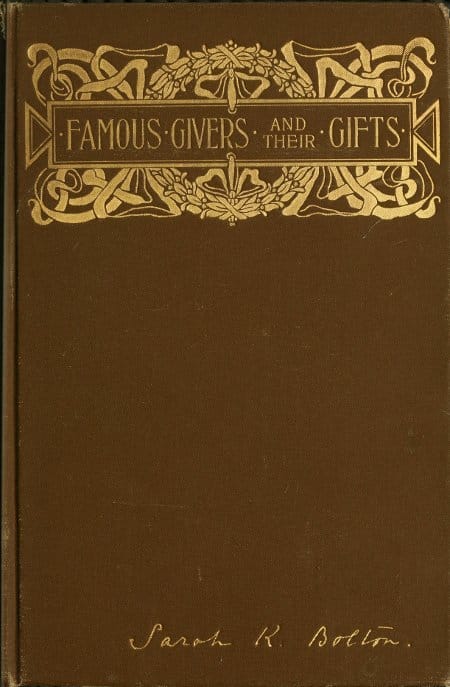
In the twilight of the nineteenth century, Sarah Knowles Bolton turned her gaze toward a question that would define the American Gilded Age: what do the wealthy owe the world? This collection of biographical sketches profiles the great givers of the era, men who accumulated fortunes and then, often after profound personal loss, chose to redirect that wealth toward the public good. The book opens with John Lowell Jr., a Boston Brahmin who, after the deaths of his wife and children, dedicated his substantial inheritance to founding the Lowell Institute and its free public lectures. Bolton traces his ancestry and education, setting the template for what follows: portraits of individuals who transformed private abundance into lasting public institutions. These are not mere charity profiles but moral arguments made flesh, demonstrating that generosity could be a form of genius. The prose carries Victorian earnestness, yes, but also genuine admiration for people who recognized that wealth is only transient unless invested in something immortal. For readers interested in the origins of American philanthropy or the moral philosophy of the wealthy, this remains a revealing window into how the rich once thought about their obligations.
Editions

Link to this book
Add a free, dofollow link to Lex on your blog, forum, syllabus, or reading list.

<a href="https://lex-books.com/book/famous-givers-and-their-gifts-6238130f-caa5-43df-bb0c-2099d1df16e0"><img src="https://lex-books.com/badges/read-on-lex.svg" alt="Read Famous Givers and Their Gifts by Sarah Knowles Bolton free on Lex" width="160" height="40"></a>[](https://lex-books.com/book/famous-givers-and-their-gifts-6238130f-caa5-43df-bb0c-2099d1df16e0)[url=https://lex-books.com/book/famous-givers-and-their-gifts-6238130f-caa5-43df-bb0c-2099d1df16e0][img]https://lex-books.com/badges/read-on-lex.svg[/img][/url]Read Famous Givers and Their Gifts by Sarah Knowles Bolton free on Lex: https://lex-books.com/book/famous-givers-and-their-gifts-6238130f-caa5-43df-bb0c-2099d1df16e0Cite this book
Reading this edition for a paper or guide? Copy a citation.
Bolton, Sarah Knowles. Famous Givers and Their Gifts. Lex, lex-books.com/book/famous-givers-and-their-gifts-6238130f-caa5-43df-bb0c-2099d1df16e0.Bolton, S. K. (1896). Famous Givers and Their Gifts. Lex. https://lex-books.com/book/famous-givers-and-their-gifts-6238130f-caa5-43df-bb0c-2099d1df16e0Bolton, Sarah Knowles. Famous Givers and Their Gifts. Lex. https://lex-books.com/book/famous-givers-and-their-gifts-6238130f-caa5-43df-bb0c-2099d1df16e0.