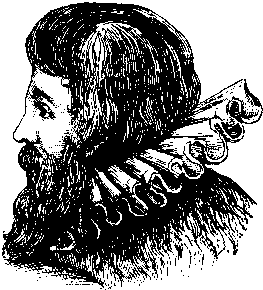
Roger Ascham
Roger Ascham was an influential English scholar and didactic writer, renowned for his contributions to education and prose style. He championed the use of the vernacular in literature, advocating for a more accessible approach to learning that resonated with the broader public. Ascham's educational theories emphasized the importance of engaging students through dialogue and practical application, setting the groundwork for modern pedagogical methods. His notable works include 'The Scholemaster,' a seminal text on education that outlined his philosophies and practices, and 'Toxophilus,' which explored the art of archery while reflecting on moral and ethical considerations. Ascham's impact extended beyond his writings; he served as a tutor to Elizabeth I, imparting knowledge in Greek and Latin during her formative years. His role in the courts of Edward VI, Mary I, and Elizabeth I positioned him as a significant figure in the intellectual landscape of Tudor England. Ascham's legacy lies in his innovative approach to education and his advocacy for the vernacular, influencing future generations of educators and writers. His works remain a testament to the evolving nature of learning and the importance of accessibility in literature.
Famous Quotes
View all 3 quotes“For I assure you, there is no such whetstone to sharpen a good wit and encourage a will to learning as is praise.”
“He that will write well in any tongue, must follow this counsel of Aristotle, to speak as the common people do, to think as wise men do: and so should every man understand him, and the judgment of wise men allow him.”
“The least learned, for the most part, have been always most ready to write.”
Books from the author





Link to this page
Add a free, dofollow link to Lex on your blog, forum, syllabus, or reading list.

<a href="https://lex-books.com/author/roger-ascham"><img src="https://lex-books.com/badges/read-on-lex.svg" alt="Roger Ascham on Lex" width="160" height="40"></a>[](https://lex-books.com/author/roger-ascham)[url=https://lex-books.com/author/roger-ascham][img]https://lex-books.com/badges/read-on-lex.svg[/img][/url]Roger Ascham on Lex: https://lex-books.com/author/roger-ascham