
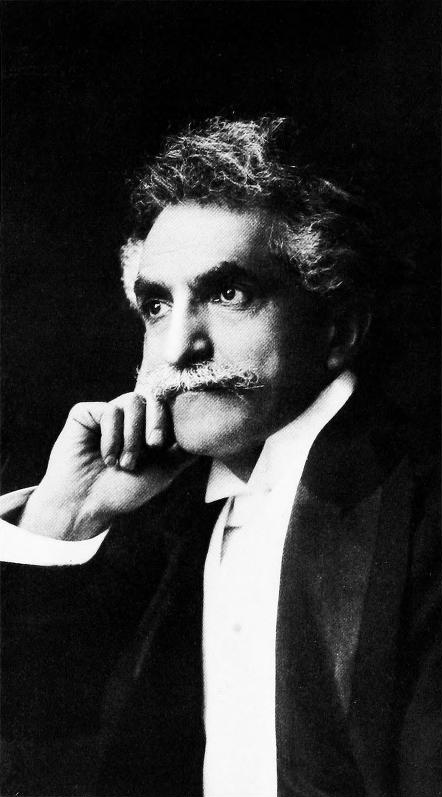
Robert Blatchford
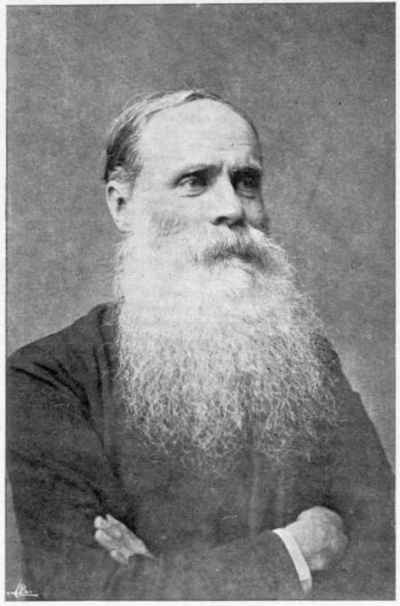
Robert Blatchford was an influential English socialist campaigner, journalist, and author known for his passionate advocacy of social reform and his outspoken atheism. Born in 1851, he emerged as a significant figure in the early 20th century, using his platform to challenge prevailing social norms and promote socialist ideals. His notable works, including 'Merrie England' and 'The Clarion', articulated a vision for a more equitable society and critiqued the injustices of capitalism. Blatchford's writings not only inspired a generation of socialists but also sparked debates on nationalism and eugenics, as he vehemently opposed the latter, arguing for the dignity of all individuals regardless of their background. In the later years of his life, following the death of his wife, Blatchford's interests shifted towards spiritualism, reflecting a personal transformation that paralleled the broader societal changes of his time. His legacy is marked by his contributions to socialist thought and his role in the early labor movement in Britain. Blatchford's work remains significant for its bold challenges to authority and its advocacy for social justice, making him a key figure in the history of British socialism and journalism.
Famous Quotes
View all 3 quotes“How many successful men who have led loveless lives would wish to be born again to the mean worry and anxious labour they have suffered under and defeated? But when I have spoken to grey-haired widowed husbands of a future life their eyes have sparkled and I have not needed telling of their secret hope. As I have put it: "If there is another life I will seek my sweet friend and marry her again.”
“If a leaden bullet is composed of electric charges, may not a human spirit be composed of something equally intangible—or tangible? I found myself as Carlyle put it, "standing on the bosom of nothing." That was in 1920, when I was just turned sixty-nine. In the following year, on the 19th of December, 1 9 2 1, my wife died. The dear girl had a happy death. She never knew she was dying and she had no pain. She just fell asleep. The last time I saw her she was sleeping quietly, and she looked like a pretty child. There was a slight flush on her cheeks and one little white hand lay out on the green counterpane: "like an April daisy on the grass." That was at midnight, and she died at six the next morning. I had gone to bed, for I was exhausted with watching. For the last week or more she would not let me out of her room by night or day. When I got up on the morning of her death I found to my surprise that I did not believe she was dead. My materialism notwithstanding, I felt that my wife was alive. My daughters, who held the same materialistic views, shared my feeling. We could not believe that she was not. Perhaps it was because we had been so devoted to her, because she had so filled our lives. I began to ask myself if perhaps the spiritualists were right. I did what Lady Warwick did when the Socialist idea came to her. I read all the best spiritualist books I could get hold of. I read and thought steadily for a couple of years and then I wrote some articles in the Sunday Chronicle protesting against the harsh criticism and cheap ridicule to which spiritualists were subjected. Still, I was not convinced. I was only puzzled. The books had affected me as W. T. Stead's talk had affected me. I told myself that all those gifted and honourable men and women could not be dupes or knaves. And—if they were right?”
“And yet—does it not seem too good to be true? Oh, believe me, I cannot shake nor ignore the evidence. My doubt is quite illogical and therefore quite human. And—we shall all know some day—perhaps. Old people love to look back, they say. It may be because they have much to look back upon. But if the promise of the soul's reawakening holds good, there is a larger joy in looking forward. To our next meeting then?”
Books from the author








Link to this page
Add a free, dofollow link to Lex on your blog, forum, syllabus, or reading list.

<a href="https://lex-books.com/author/robert-blatchford"><img src="https://lex-books.com/badges/read-on-lex.svg" alt="Robert Blatchford on Lex" width="160" height="40"></a>[](https://lex-books.com/author/robert-blatchford)[url=https://lex-books.com/author/robert-blatchford][img]https://lex-books.com/badges/read-on-lex.svg[/img][/url]Robert Blatchford on Lex: https://lex-books.com/author/robert-blatchford