Robert Austin
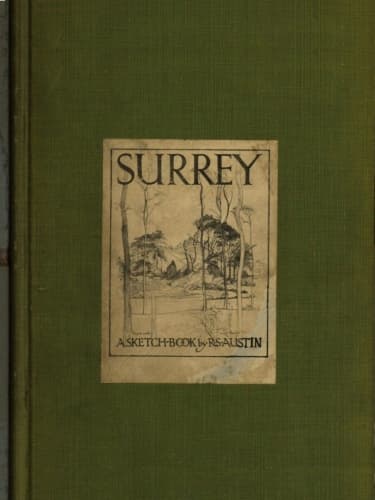
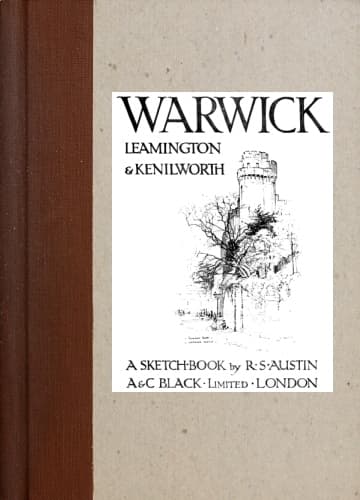
Robert Austin was an English writer and artist, renowned for his evocative sketches and writings that captured the essence of the English countryside. Born in 1895, he developed a keen interest in art and literature from an early age, which would later inform his work as a sketch artist and author. Austin's notable works, such as 'Surrey: A Sketch-Book' and 'Warwick, Leamington & Kenilworth: A Sketch-Book,' reflect his deep appreciation for the landscapes and cultural heritage of England. Through his detailed observations and lyrical prose, he painted vivid pictures of the regions he explored, inviting readers to appreciate the beauty and charm of rural life. Austin's contributions to literature extend beyond mere travel writing; he infused his sketches with personal reflections and historical context, making his work significant in the genre of regional literature. His ability to blend visual art with narrative prose set him apart, allowing him to create a unique literary voice that resonated with readers. His legacy endures as a testament to the power of place in literature, and his works continue to inspire those who seek to understand the intricate relationship between landscape and identity.
Famous Quotes
View all 15 quotes“A true saying it is, ‘Desire hath no rest;‘ is infinite in itself, endless; and as one calls it, a perpetual rack, or horse-mill, according to Austin, still going round as in a ring.””
“A second case concerns Charles Whitman, the 1966 “Texas Tower” sniper who, after killing his wife and mother, opened fire atop a tower at the University of Texas in Austin, killing sixteen and wounding thirty-two, one of the first school massacres. Whitman was literally an Eagle Scout and childhood choirboy, a happily married engineering major with an IQ in the 99th percentile. In the prior year he had seen doctors, complaining of severe headaches and violent impulses (e.g., to shoot people from the campus tower). He left notes by the bodies of his wife and his mother, proclaiming love and puzzlement at his actions: “I cannot rationaly [sic] pinpoint any specific reason for [killing her],” and “let there be no doubt in your mind that I loved this woman with all my heart.” His suicide note requested an autopsy of his brain, and that any money he had be given to a mental health foundation. The autopsy proved his intuition correct”
“Describing his technique to Robert Frost, Clarke said "I load myself down with chains and try to wriggle free.””
Books from the author


Link to this page
Add a free, dofollow link to Lex on your blog, forum, syllabus, or reading list.

<a href="https://lex-books.com/author/robert-austin"><img src="https://lex-books.com/badges/read-on-lex.svg" alt="Robert Austin on Lex" width="160" height="40"></a>[](https://lex-books.com/author/robert-austin)[url=https://lex-books.com/author/robert-austin][img]https://lex-books.com/badges/read-on-lex.svg[/img][/url]Robert Austin on Lex: https://lex-books.com/author/robert-austin