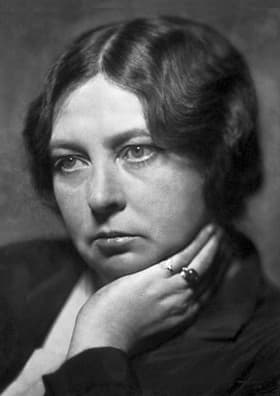
Sigrid Undset
Sigrid Undset was a Danish-born Norwegian novelist renowned for her historical fiction and profound exploration of human experience. Born in Denmark and raised in Norway, she published her first works in 1907, but it was her monumental trilogy, Kristin Lavransdatter, released between 1920 and 1922, that solidified her literary legacy. This work intricately depicts life in medieval Norway through the lens of a woman's journey from birth to death, showcasing Undset's deep understanding of character and society. Undset's literary significance was recognized when she was awarded the Nobel Prize for Literature in 1928, making her one of the few women to receive this honor at the time. Her opposition to Nazi Germany led her to flee Norway for the United States in 1940, but she returned after the war in 1945. Through her novels, Undset not only captured the essence of Norwegian culture and history but also addressed universal themes of love, faith, and moral struggle, ensuring her place as a pivotal figure in 20th-century literature.
Famous Quotes
View all 3 quotes“And when we give each other Christmas gifts in His name, let us remember that He has given us the sun and the moon and the stars, and the earth with its forests and mountains and oceans--and all that lives and move upon them. He has given us all green things and everything that blossoms and bears fruit and all that we quarrel about and all that we have misused--and to save us from our foolishness, from all our sins, He came down to earth and gave us Himself.”
“No one and nothing can harm us, child, except what we fear and love.”
“Many a man is given what is intended for another, but no man is given another's fate.”
Books from the author




Link to this page
Add a free, dofollow link to Lex on your blog, forum, syllabus, or reading list.

<a href="https://lex-books.com/author/sigrid-undset"><img src="https://lex-books.com/badges/read-on-lex.svg" alt="Sigrid Undset on Lex" width="160" height="40"></a>[](https://lex-books.com/author/sigrid-undset)[url=https://lex-books.com/author/sigrid-undset][img]https://lex-books.com/badges/read-on-lex.svg[/img][/url]Sigrid Undset on Lex: https://lex-books.com/author/sigrid-undset