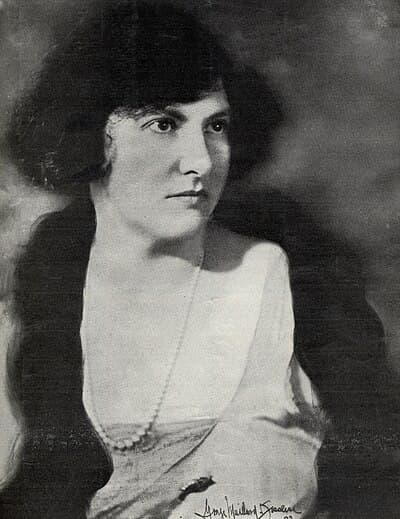
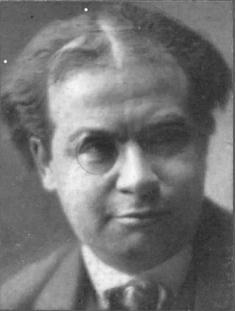
Marion Bauer
Marion Eugénie Bauer was an influential American composer, educator, and music critic who played a pivotal role in shaping the landscape of American music in the early twentieth century. Born in 1882, she composed a diverse range of works, including pieces for piano, chamber ensembles, symphonic orchestras, and vocal music. Her contributions extended beyond composition; she was a dedicated educator, teaching music history and composition at Washington Square College of New York University from 1926 until 1951. Additionally, she served as a guest lecturer at the Juilliard School, where she continued to inspire future musicians until her passing in 1955. Bauer was not only a prolific composer but also a passionate advocate for contemporary music. She was instrumental in founding several key organizations, including the American Music Guild, the American Music Center, and the American Composers Alliance, where she held significant leadership roles. Her editorial work for the Chicago-based Musical Leader and her writings, such as the influential book "Twentieth Century Music," further established her as a critical voice in the music community. Through her efforts, Bauer championed both her own compositions and the works of emerging composers, leaving a lasting legacy in American music education and composition.
Famous Quotes
View all 14 quotes“A good friend of mine once said, "I have never met a bigot who was a reader as a child.””
“It is the nature of stories to leave out far more than they include.””
“The power of fiction is that it gives us, as readers, the opportunity to move inside another human being, to look out through that person's eyes, hear with her ears, think with his thoughts, feel with her feelings. It is the only form of art which can accomplish that feat so deeply, so completely. And thus it is the perfect bridge for helping us coming to know the other - the other inside as well as outside ourselves. (x)””
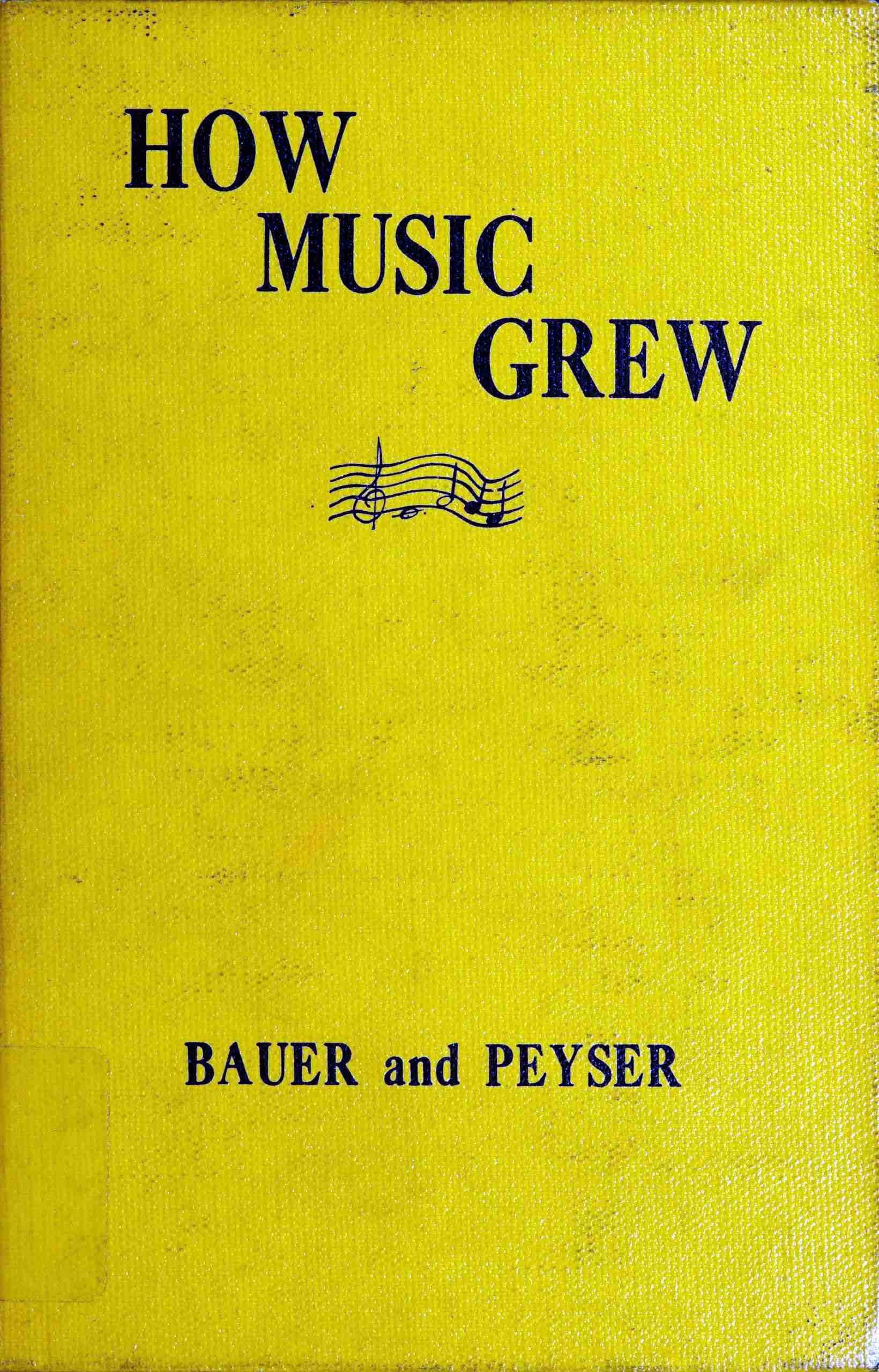
Books from the author


Link to this page
Add a free, dofollow link to Lex on your blog, forum, syllabus, or reading list.

<a href="https://lex-books.com/author/marion-bauer"><img src="https://lex-books.com/badges/read-on-lex.svg" alt="Marion Bauer on Lex" width="160" height="40"></a>[](https://lex-books.com/author/marion-bauer)[url=https://lex-books.com/author/marion-bauer][img]https://lex-books.com/badges/read-on-lex.svg[/img][/url]Marion Bauer on Lex: https://lex-books.com/author/marion-bauer