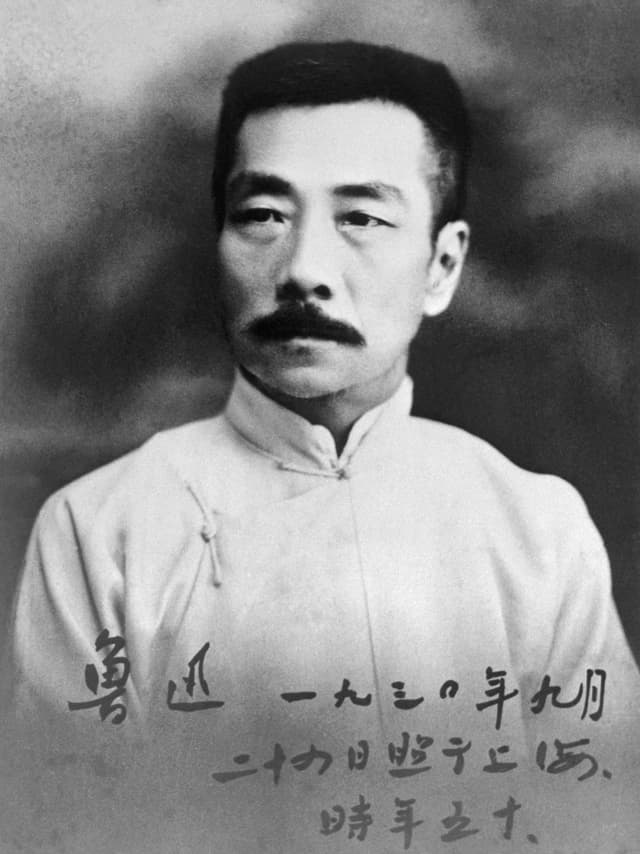
Xun Lu
Lu Xun, born Zhou Shuren, was a pivotal figure in modern Chinese literature, renowned for his sharp critiques of society and culture. Hailing from a family of declining landlords in Shaoxing, Zhejiang, he initially pursued a medical education in Japan but soon shifted his focus to writing. Lu Xun's literary career began with the groundbreaking novella "Diary of a Madman" in 1918, which is recognized as the first work written in vernacular Chinese. This marked a significant departure from classical Chinese literature and played a crucial role in the New Culture Movement, advocating for a more accessible literary form that resonated with the common people. Throughout his career, Lu Xun produced a diverse body of work that included essays, poetry, and literary criticism, often characterized by a satirical and acerbic tone. His writings, particularly in the wake of the May Fourth Movement, addressed the complexities of Chinese identity and the need for social reform. As a prominent leftist intellectual in the 1930s, he became the nominal leader of the League of Left-Wing Writers in Shanghai, further solidifying his influence on Chinese literature and politics. Lu Xun's legacy endures as he is celebrated not only for his literary contributions but also for his role in shaping modern Chinese thought and culture, earning him a revered status in the People's Republic of China after his death.
Famous Quotes
View all 15 quotes“Lies written in ink cannot disguise facts written in blood.””
“Hope cannot be said to exist, nor can it be said not to exist.It is just like the roads across the earth.For actually there were no roads to begin with,but when many people pass one way a road is made.””
“Hope is a path on the mountainside. At first there is no path. But then there are people passing that way. And there is a path.””
Books from the author






Link to this page
Add a free, dofollow link to Lex on your blog, forum, syllabus, or reading list.

<a href="https://lex-books.com/author/xun-lu"><img src="https://lex-books.com/badges/read-on-lex.svg" alt="Xun Lu on Lex" width="160" height="40"></a>[](https://lex-books.com/author/xun-lu)[url=https://lex-books.com/author/xun-lu][img]https://lex-books.com/badges/read-on-lex.svg[/img][/url]Xun Lu on Lex: https://lex-books.com/author/xun-lu