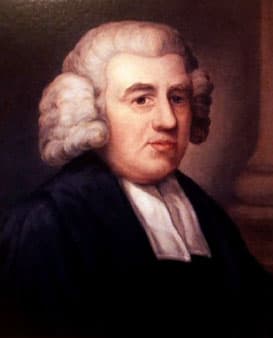
John Newton
John Newton was an English evangelical Anglican cleric and a pivotal figure in the abolitionist movement. Born into a seafaring family, he went to sea at a young age, eventually becoming a captain of slave ships and an investor in the slave trade. His life took a dramatic turn when he was enslaved himself in West Africa, an experience that profoundly impacted his worldview. After his rescue, he returned to the slave trade but underwent a significant religious conversion that led him to renounce his former life. Newton became an ardent supporter of abolitionism, advocating against the very practices he once participated in. As a parish priest in Olney, Buckinghamshire, for over two decades, Newton wrote numerous hymns that reflected his faith and moral convictions, with "Amazing Grace" being his most famous work. This hymn, along with others like "Glorious Things of Thee Are Spoken," has left a lasting legacy in Christian worship and beyond. Newton lived to witness the British Empire's abolition of the African slave trade in 1807, just months before his death, marking a significant moment in the history of social justice and reform, driven in part by his own transformation and advocacy.
Famous Quotes
View all 3 quotes“I am not what I ought to be, I am not what I want to be, I am not what I hope to be in another world; but still I am not what I once used to be, and by the grace of God I am what I am”
“Although my memory's fading, I remember two things very clearly: I am a great sinner and Christ is a great Savior.”
“I am still in the land of the dying; I shall be in the land of the living soon. (his last words)”
Books from the author



Link to this page
Add a free, dofollow link to Lex on your blog, forum, syllabus, or reading list.

<a href="https://lex-books.com/author/john-newton"><img src="https://lex-books.com/badges/read-on-lex.svg" alt="John Newton on Lex" width="160" height="40"></a>[](https://lex-books.com/author/john-newton)[url=https://lex-books.com/author/john-newton][img]https://lex-books.com/badges/read-on-lex.svg[/img][/url]John Newton on Lex: https://lex-books.com/author/john-newton