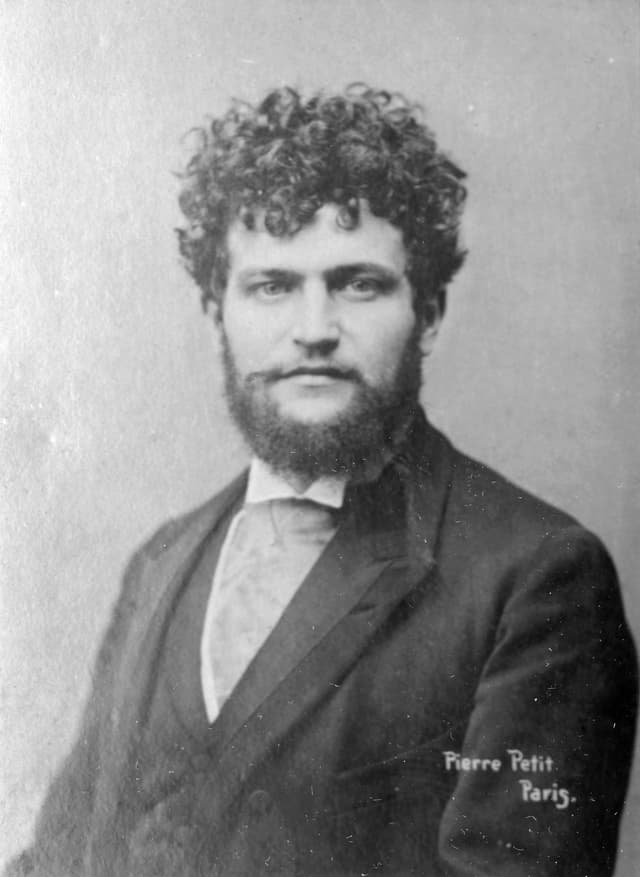
Jean Rameau
Jean Rameau was a pivotal figure in 18th-century French music, renowned as both a composer and a music theorist. Little is known about his early life, but he rose to prominence in the 1720s with his influential work, 'Treatise on Harmony,' which established him as a leading theorist of music. Rameau's compositions for the harpsichord gained widespread acclaim across Europe, showcasing his innovative approach to harmony and structure. It was not until he was nearly 50 that he ventured into opera, debuting with 'Hippolyte et Aricie' in 1733, a work that challenged the established norms of French music and ignited fierce debates among critics and audiences alike. Despite facing criticism from supporters of the prevailing Lully style and later from advocates of Italian opera during the Querelle des Bouffons, Rameau's contributions to French opera solidified his status as a dominant composer of his time. His music fell out of favor by the end of the 18th century, but the 20th century saw a revival of interest in his works, leading to a renewed appreciation for his innovative compositions and theories. Rameau's legacy endures as a cornerstone of Baroque music, influencing generations of composers and theorists who followed.
Famous Quotes
View all 4 quotes“Music is a science which should have definite rules; these rules should be drawn from an evident principle; and this principle cannot really be known to us without the aid of mathematics.””
“Even nature is concerned, for it leads us to choose the third as the sole consonance which may makeup for the harshness of the dissonance. The third despite its imperfection becomes the sole object of our desire after a dissonance and gives new charm to the perfect chord. It is for this reason that the rule for resolving””
“This is what Zarlino means when he says that the bass should proceed by separated intervals, for intervals cannot be consonant unless they are separated. Although Zarlino also says that the bass””
Books from the author


Link to this page
Add a free, dofollow link to Lex on your blog, forum, syllabus, or reading list.

<a href="https://lex-books.com/author/jean-rameau"><img src="https://lex-books.com/badges/read-on-lex.svg" alt="Jean Rameau on Lex" width="160" height="40"></a>[](https://lex-books.com/author/jean-rameau)[url=https://lex-books.com/author/jean-rameau][img]https://lex-books.com/badges/read-on-lex.svg[/img][/url]Jean Rameau on Lex: https://lex-books.com/author/jean-rameau