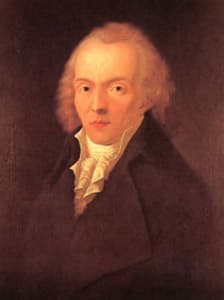
Jean Paul
Jean Paul, born Johann Paul Friedrich Richter, was a German Romantic writer known for his unique blend of humor, philosophy, and deep emotional insight. His early life in the Franconian region of Germany was marked by a strong literary influence from his father, a schoolmaster, which instilled in him a passion for literature and writing. Jean Paul's works often explored the complexities of human nature and the struggles of the individual against societal norms, making him a precursor to later existential thought. His early novels, such as 'Siebenkäs' and 'Hesperus', showcased his innovative narrative style and his ability to weave fantastical elements with profound philosophical reflections, earning him a devoted readership in Germany and beyond. Jean Paul's literary significance lies in his pioneering approach to character development and narrative structure, which influenced later writers, including Thomas Mann and Franz Kafka. His use of humor as a vehicle for exploring serious themes set him apart from his contemporaries. Additionally, his essays and critiques on literature and society contributed to the discourse of his time, reflecting the tensions of the Romantic era. Jean Paul's legacy endures in the realm of German literature, where he is celebrated for his imaginative storytelling and his exploration of the human condition, making him a vital figure in the transition from Romanticism to modern literary thought.
Famous Quotes
View all 2 quotes“Better to die on one's feet than to live on one's knees.””
“Music is moonlight in the gloomy night of life.””
Books from the author






Link to this page
Add a free, dofollow link to Lex on your blog, forum, syllabus, or reading list.

<a href="https://lex-books.com/author/jean-paul"><img src="https://lex-books.com/badges/read-on-lex.svg" alt="Jean Paul on Lex" width="160" height="40"></a>[](https://lex-books.com/author/jean-paul)[url=https://lex-books.com/author/jean-paul][img]https://lex-books.com/badges/read-on-lex.svg[/img][/url]Jean Paul on Lex: https://lex-books.com/author/jean-paul