Herbert Wildon Carr
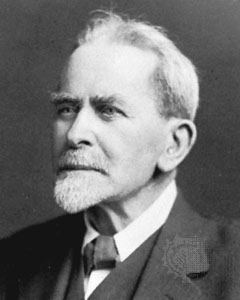
Herbert Wildon Carr was a British philosopher recognized for his innovative synthesis of Leibnizian Monadology and Bergsonian vitalism. His work sought to bridge the gap between metaphysical concepts and the dynamic aspects of life, emphasizing the interplay between the individual and the universe. Carr's philosophical inquiries were deeply influenced by the ideas of his predecessors, yet he carved out a unique perspective that contributed to the discourse on metaphysics and the nature of existence. Among his notable works, Carr authored 'The Philosophy of the Unconscious' and 'The Evolution of the Idea of God,' where he explored the implications of consciousness and the divine in relation to human experience. His writings not only reflected his philosophical stance but also engaged with contemporary debates in philosophy, making him a significant figure in early 20th-century thought. Carr's legacy lies in his ability to integrate complex philosophical ideas, offering a distinctive viewpoint that continues to be referenced in discussions of metaphysics and the philosophy of life.
Books from the author








Link to this page
Add a free, dofollow link to Lex on your blog, forum, syllabus, or reading list.

<a href="https://lex-books.com/author/herbert-wildon-carr"><img src="https://lex-books.com/badges/read-on-lex.svg" alt="Herbert Wildon Carr on Lex" width="160" height="40"></a>[](https://lex-books.com/author/herbert-wildon-carr)[url=https://lex-books.com/author/herbert-wildon-carr][img]https://lex-books.com/badges/read-on-lex.svg[/img][/url]Herbert Wildon Carr on Lex: https://lex-books.com/author/herbert-wildon-carr