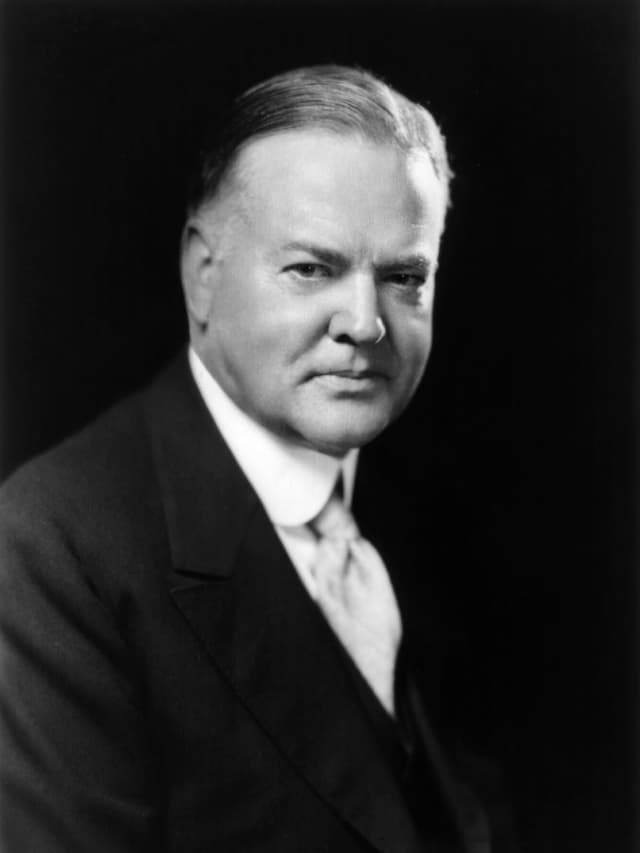
Herbert Hoover
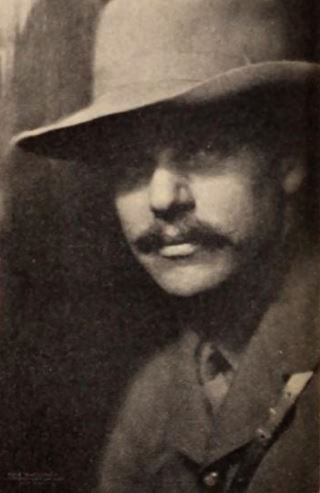
Herbert Clark Hoover was the 31st president of the United States, serving from 1929 to 1933 during one of the nation's most challenging periods, the Great Depression. Born into a Quaker family in West Branch, Iowa, he grew up in Oregon and became one of the first graduates of Stanford University in 1895. Hoover initially found success as a mining engineer, working in various countries, including Australia and China, where he amassed considerable wealth. His humanitarian efforts during World War I, particularly as the head of the Commission for Relief in Belgium and later the U.S. Food Administration, earned him a reputation as a capable leader and garnered support from progressives. He served as Secretary of Commerce under Presidents Warren G. Harding and Calvin Coolidge, where he was known for his active involvement in various initiatives, including the development of air travel and radio technology. Hoover's presidency began with great promise but was quickly overshadowed by the stock market crash of 1929, which marked the beginning of the Great Depression. His administration's response to the economic crisis was criticized as inadequate, leading to widespread discontent and his eventual defeat by Franklin D. Roosevelt in the 1932 election. Despite his earlier successes, Hoover's legacy is often defined by his inability to effectively address the economic turmoil of his time. His life and career reflect the complexities of leadership in times of crisis, as well as the challenges of transitioning from a successful private sector career to public service.
Famous Quotes
View all 3 quotes“Older men declare war. But it is youth that must fight and die.”
“My country owes me nothing. It gave me, as it gives every boy and girl, a chance. It gave me schooling, independence of action, opportunity for service and honor.”
“Children are our greatest natural resource.”
Books from the author



Link to this page
Add a free, dofollow link to Lex on your blog, forum, syllabus, or reading list.

<a href="https://lex-books.com/author/herbert-hoover"><img src="https://lex-books.com/badges/read-on-lex.svg" alt="Herbert Hoover on Lex" width="160" height="40"></a>[](https://lex-books.com/author/herbert-hoover)[url=https://lex-books.com/author/herbert-hoover][img]https://lex-books.com/badges/read-on-lex.svg[/img][/url]Herbert Hoover on Lex: https://lex-books.com/author/herbert-hoover