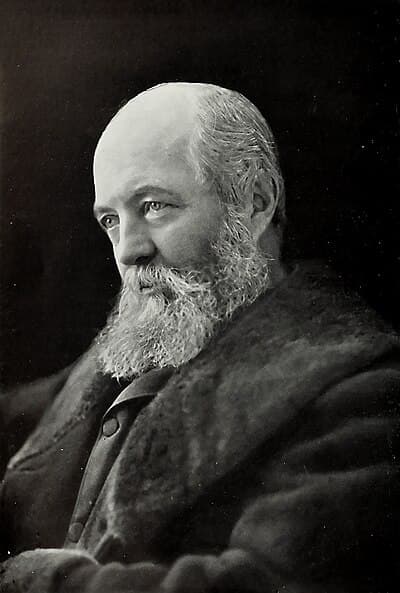
Frederick Law Olmsted
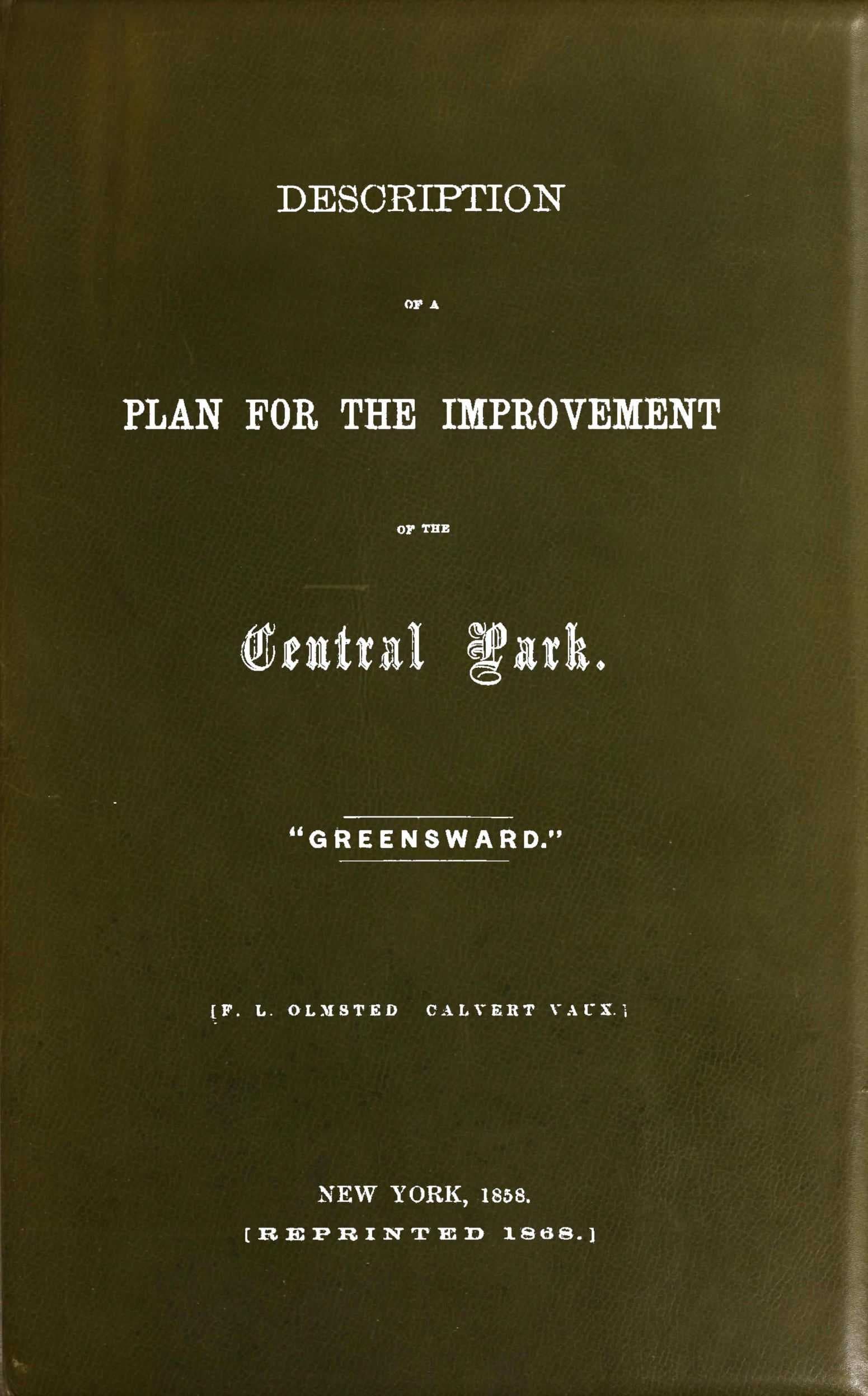
Frederick Law Olmsted was a pioneering American landscape architect, journalist, and social critic, widely regarded as the father of landscape architecture in the United States. His most notable collaboration with partner Calvert Vaux began with the design of Central Park in New York City, a groundbreaking project that set the standard for urban parks across the nation. Olmsted's vision extended beyond individual parks; he conceived comprehensive park systems and planned communities, including the Emerald Necklace in Boston and Riverside, Illinois, one of the first planned communities in the U.S. His influence also reached institutional campuses, with master plans for prestigious universities such as Stanford and the University of Chicago. In addition to his design work, Olmsted was a key figure in the early conservation movement, advocating for the preservation of natural landscapes like Niagara Falls and the Adirondack region. His leadership during the Civil War as head of the U.S. Sanitary Commission showcased his commitment to social issues, organizing medical services for the Union Army. Olmsted's legacy endures through the continued relevance of his principles in landscape architecture, as he set a benchmark for quality and innovation that shaped the field and inspired future generations of designers.
Famous Quotes
View all 3 quotes“The possession of arbitrary power has always, the world over, tended irresistibly to destroy humane sensibility, magnanimity, and truth.”
“and slaves thus get a fictitious value like stocks “in a corner.”
“Men,” says Macaulay, “are never so likely to settle a question rightly, as when they discuss it freely.” The principle is at the basis of free institutions. Its reverse is the apex of despotism. The attempt to suppress discussion has given every advantage to the unterrified partisans on both sides, who assume to fight for truth and rights.”
Books from the author
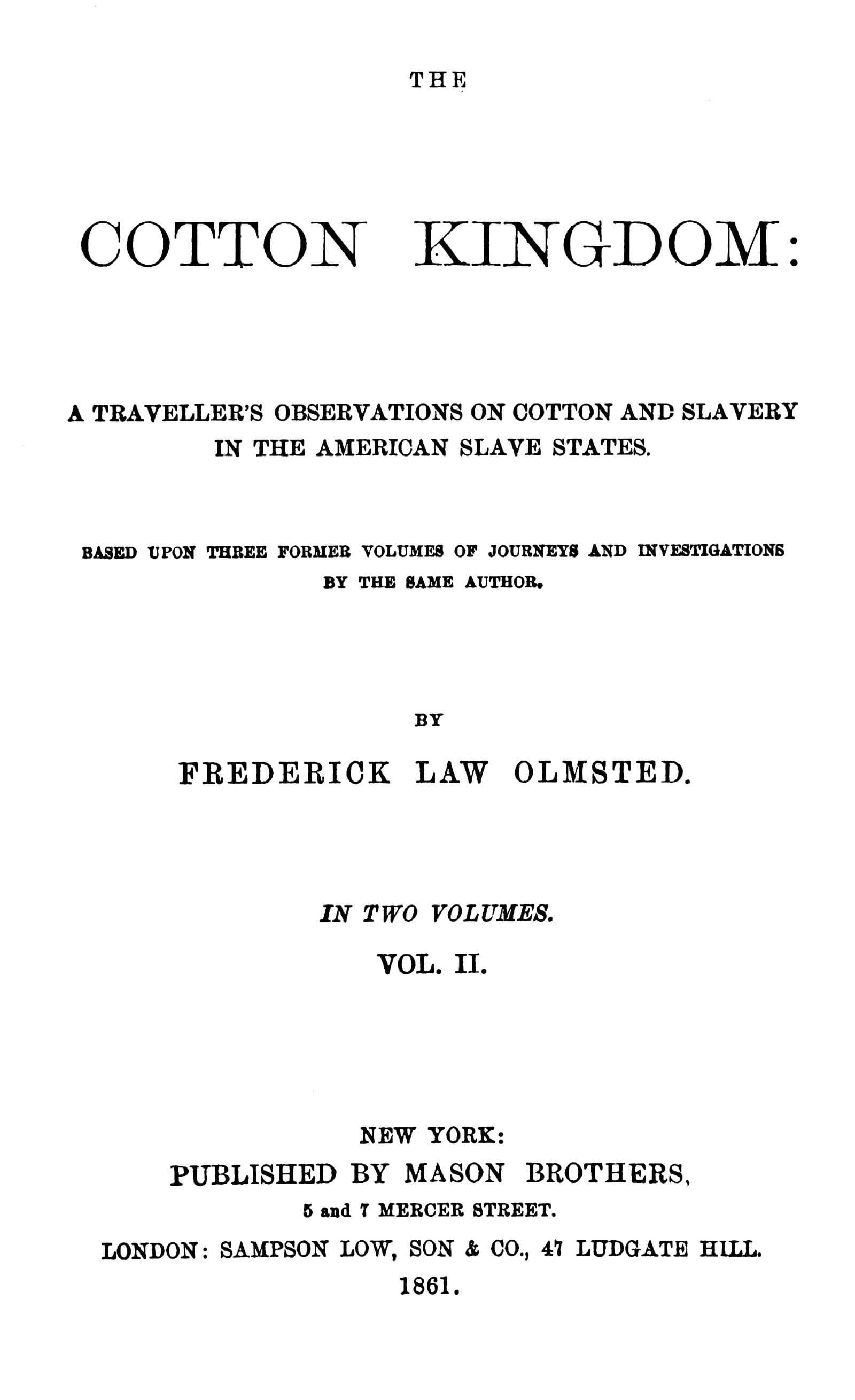
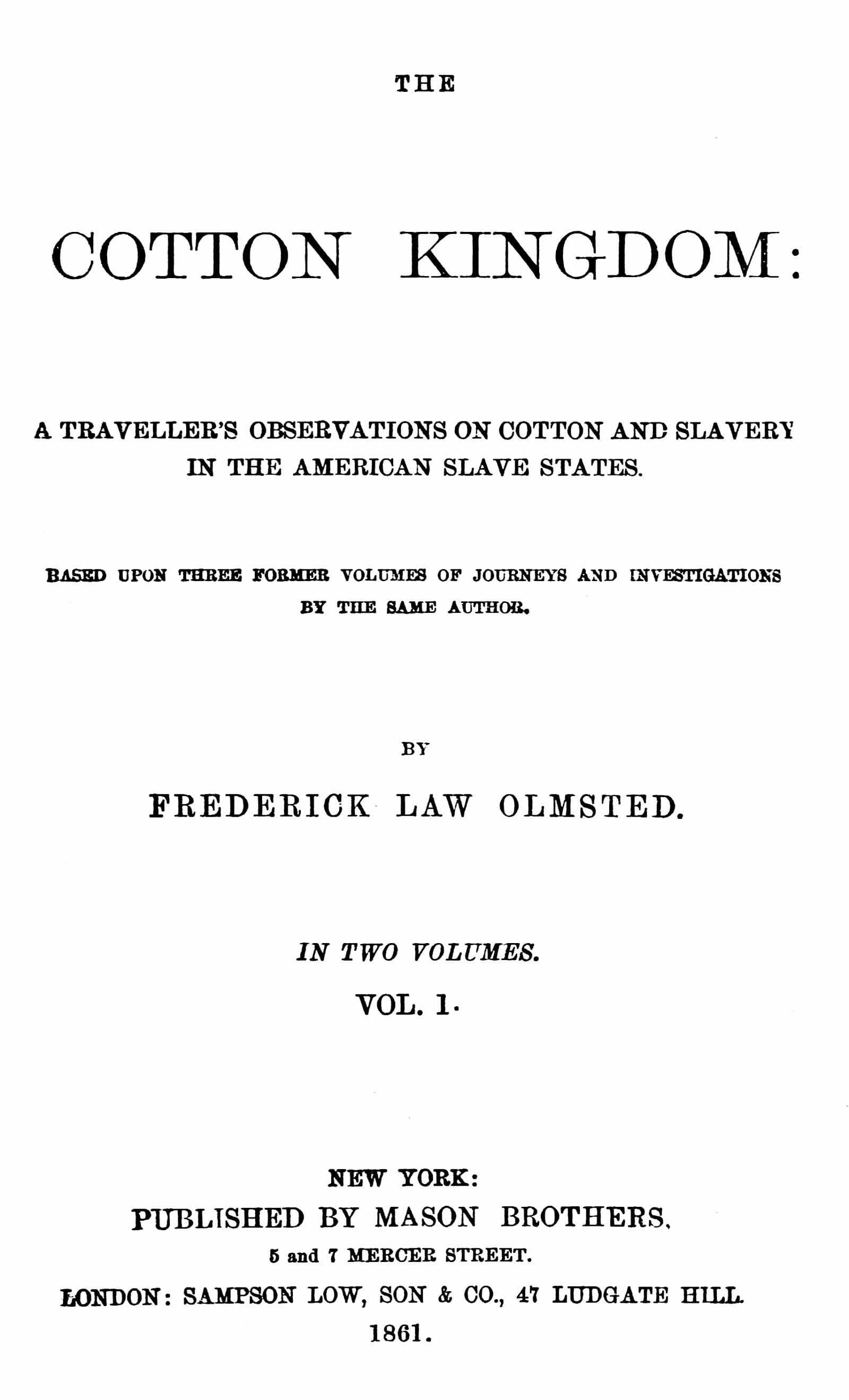
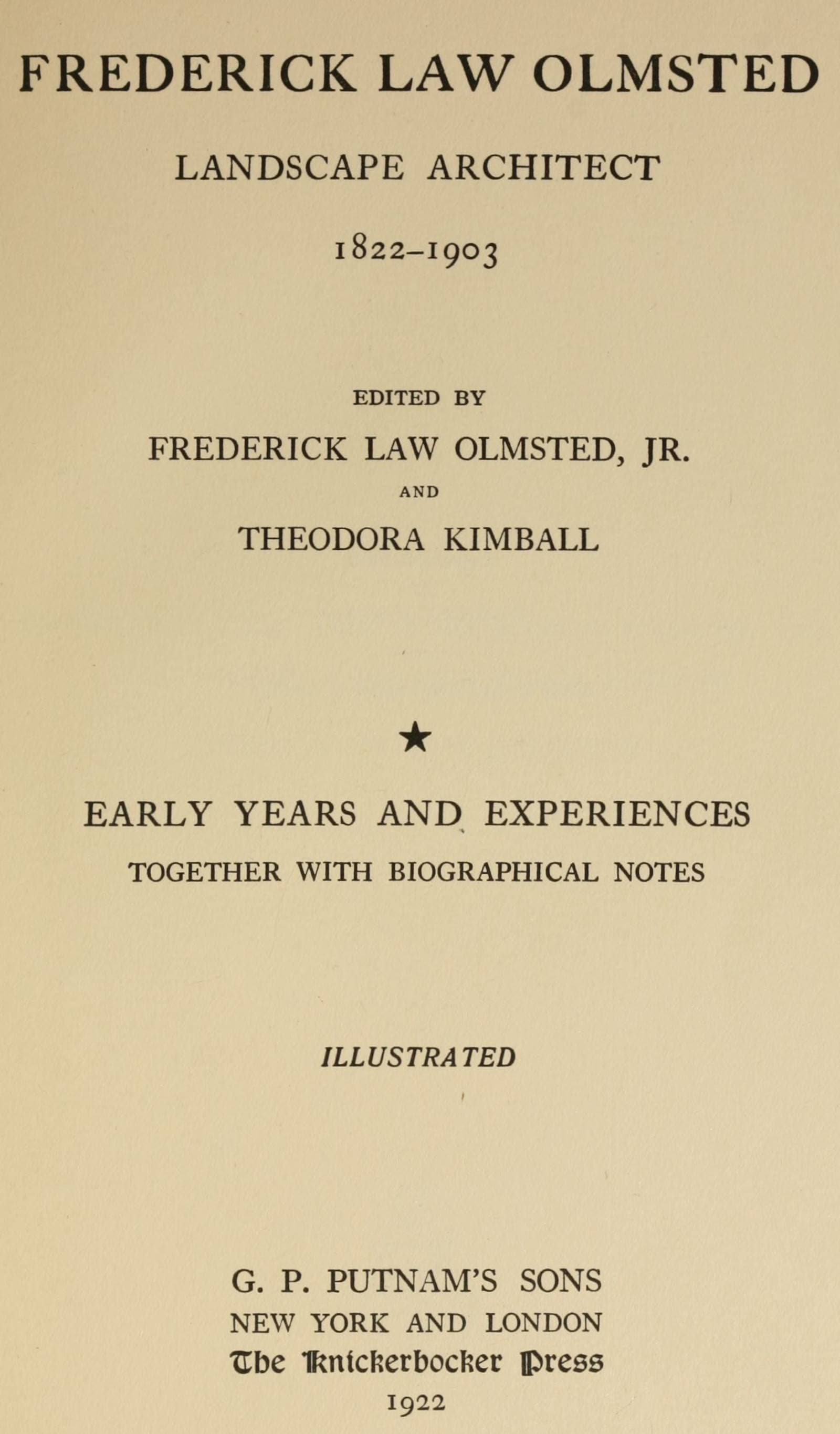






Link to this page
Add a free, dofollow link to Lex on your blog, forum, syllabus, or reading list.

<a href="https://lex-books.com/author/frederick-law-olmsted"><img src="https://lex-books.com/badges/read-on-lex.svg" alt="Frederick Law Olmsted on Lex" width="160" height="40"></a>[](https://lex-books.com/author/frederick-law-olmsted)[url=https://lex-books.com/author/frederick-law-olmsted][img]https://lex-books.com/badges/read-on-lex.svg[/img][/url]Frederick Law Olmsted on Lex: https://lex-books.com/author/frederick-law-olmsted