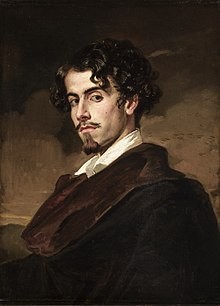
Gustavo Adolfo Bécquer
Gustavo Adolfo Bécquer was a pivotal figure in Spanish literature, renowned for his contributions as a poet, playwright, and literary columnist. Born Gustavo Adolfo Claudio Domínguez Bastida, he adopted the surname Bécquer, following in the footsteps of his brother Valeriano, a painter. Bécquer's work emerged during a time when realism dominated the literary scene in Spain, yet he remained firmly rooted in the Romantic and post-Romantic movements. His poetry and prose, characterized by their emotional depth and lyrical beauty, captured the essence of human experience and the complexities of love and existence. His most celebrated works, "Rimas" and "Leyendas," have become cornerstones of Spanish literature, often studied in educational settings across the Spanish-speaking world. Although he was not widely recognized during his lifetime, Bécquer's legacy grew significantly after his death, establishing him as one of the most read Spanish authors, second only to Miguel de Cervantes. His influence extends beyond his own time, shaping the course of modern Spanish literature and inspiring countless writers and poets in the years that followed.
Famous Quotes
View all 19 quotes“¡Los suspiros son aire y van al aire!¡Las lágrimas son agua y van al mar!Dime, mujer, cuando el amor se olvida¿sabes tú adónde va?””
“Por una mirada un mundo;por una sonrisa, un cielo;por un beso…¡yo no séqué te diera por un beso!””
“El alma que hablar puede con los ojos también puede besar con la mirada.””
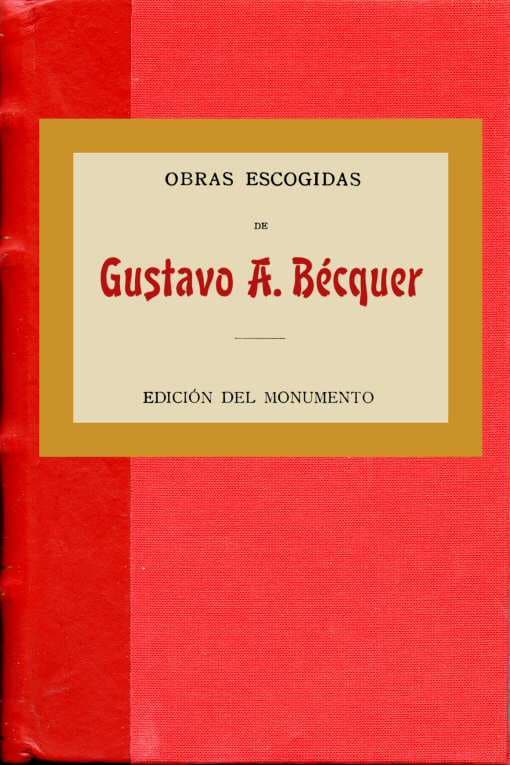
Books from the author


Link to this page
Add a free, dofollow link to Lex on your blog, forum, syllabus, or reading list.

<a href="https://lex-books.com/author/gustavo-adolfo-bécquer"><img src="https://lex-books.com/badges/read-on-lex.svg" alt="Gustavo Adolfo Bécquer on Lex" width="160" height="40"></a>[](https://lex-books.com/author/gustavo-adolfo-bécquer)[url=https://lex-books.com/author/gustavo-adolfo-bécquer][img]https://lex-books.com/badges/read-on-lex.svg[/img][/url]Gustavo Adolfo Bécquer on Lex: https://lex-books.com/author/gustavo-adolfo-bécquer