What would you like to read?Search books, authors, genres, shelves, users...
Search books, authors, genres, shelves, users...Search books, authors, genres, shelves, users...

What would you like to read?Search books, authors, genres, shelves, users...
Search books, authors, genres, shelves, users...Search books, authors, genres, shelves, users...
2 books
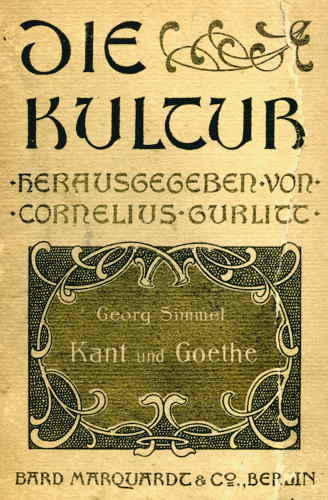
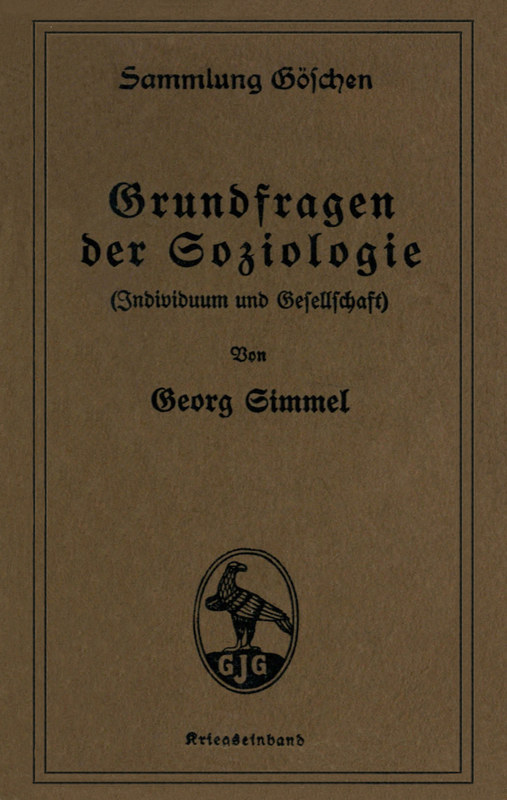
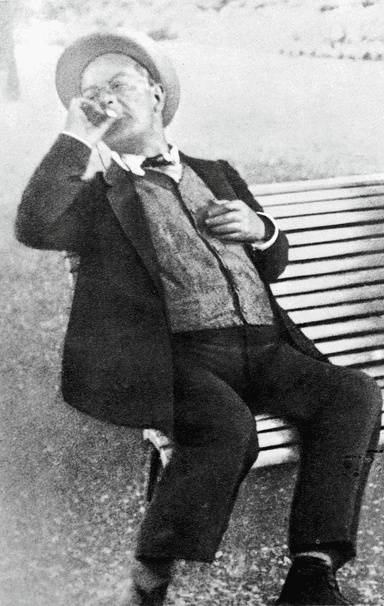
Georg Simmel (/ˈzɪməl/; German: [ˈzɪml̩]; 1 March 1858 – 26 September 1918) was a German sociologist, philosopher, and critic. Simmel was influential in the field of sociology. Simmel was one of the first generation of German sociologists: his neo-Kantian approach laid the foundations for sociological antipositivism, asking "what is society?"—directly alluding to Kant's "what is nature?"—presenting pioneering analyses of social individuality and fragmentation. Simmel discussed social and cultural phenomena in terms of "forms" and "contents" with a transient relationship, wherein form becomes content, and vice versa dependent on context. In this sense, Simmel was a forerunner to structuralist styles of reasoning in the social sciences. Through "The Metropolis and Mental Life" Simmel was a precursor of urban sociology, symbolic interactionism, and social network analysis. An acquaintance of Max Weber, Simmel wrote on the topic of personal character in a manner reminiscent of the sociological ideal type. He broadly rejected academic standards, however, philosophically covering topics such as emotion and romantic love. Both Simmel and Weber's nonpositivist theory informed the eclectic critical theory of the Frankfurt School.

The calculative exactness of practical life which the money economy has brought about corresponds to the ideal of natural science: to transform the world by mathematical formulas. Only money economy has filled the days of so many people with weighing, calculating, with numerical determinations, with a reduction of qualitative values to quantitative ones.
The deepest problems of modern life derive from the claim of the individual to preserve the autonomy and individuality of his existence in the face of overwhelming social forces, of historical heritage, of external culture, and of the technique of life.
By my existence I am nothing more than an empty place, an outline,that is reserved within being in general. Given with it, though, is the duty to fill in this empty place. That is my life.
The calculative exactness of practical life which the money economy has brought about corresponds to the ideal of natural science: to transform the world by mathematical formulas. Only money economy has filled the days of so many people with weighing, calculating, with numerical determinations, with a reduction of qualitative values to quantitative ones.