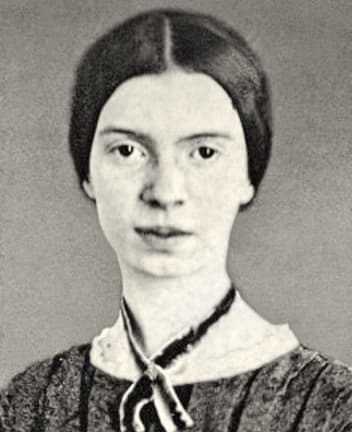
Emily Dickinson
Emily Dickinson was an American poet whose innovative style and introspective themes have made her one of the most significant figures in American literature. Born in Amherst, Massachusetts, into a prominent family, she spent much of her life in relative seclusion, developing a unique voice that diverged from the conventions of her time. After a brief education at the Mount Holyoke Female Seminary, Dickinson returned home, where she cultivated her reclusive lifestyle, often dressed in white and communicating primarily through letters. Despite her isolation, she produced nearly 1,800 poems, though only a handful were published during her lifetime, often heavily edited to conform to traditional poetic norms. Dickinson's poetry is characterized by its unconventional use of form, including short lines, slant rhyme, and idiosyncratic punctuation and capitalization. Her works frequently explore profound themes such as death, immortality, nature, and the human experience, reflecting her introspective nature and deep engagement with the world around her. Posthumously, her poetry gained recognition for its originality and depth, influencing countless writers and shaping the course of modern poetry. Today, Dickinson is celebrated not only for her unique voice but also for her role in challenging the boundaries of poetic expression, leaving a lasting legacy that continues to inspire and resonate with readers and poets alike.
Famous Quotes
View all 20 quotes“Hope is the thing with feathers That perches in the soul And sings the tune without the words And never stops at all.””
“If I can stop one heart from breaking, I shall not live in vain.””
“Forever is composed of nows.””
Books from the author

Link to this page
Add a free, dofollow link to Lex on your blog, forum, syllabus, or reading list.

<a href="https://lex-books.com/author/emily-dickinson"><img src="https://lex-books.com/badges/read-on-lex.svg" alt="Emily Dickinson on Lex" width="160" height="40"></a>[](https://lex-books.com/author/emily-dickinson)[url=https://lex-books.com/author/emily-dickinson][img]https://lex-books.com/badges/read-on-lex.svg[/img][/url]Emily Dickinson on Lex: https://lex-books.com/author/emily-dickinson