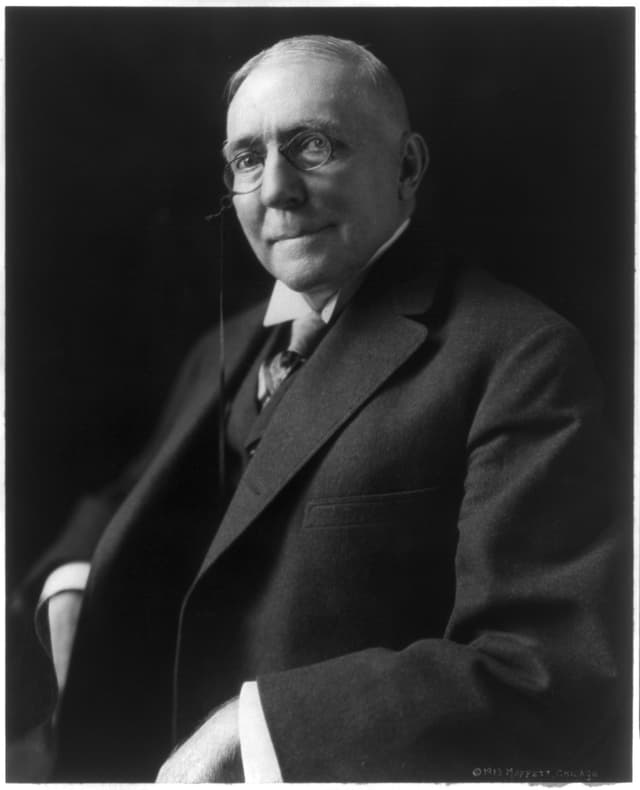
James Whitcomb Riley
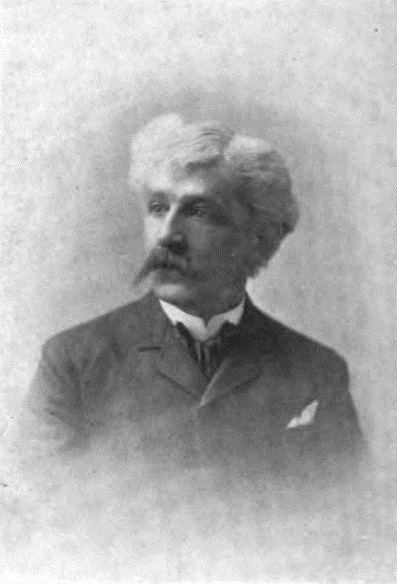
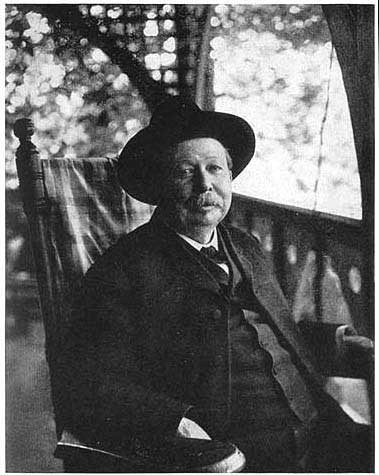
James Whitcomb Riley was an influential American poet and author, celebrated for his contributions to children's literature and dialect poetry. Known as the 'Hoosier Poet,' Riley's works often blended humor and sentimentality, capturing the essence of Midwestern life. Among his most notable poems are 'Little Orphant Annie' and 'The Raggedy Man,' which showcase his mastery of dialect and his ability to resonate with both children and adults. His career began in humble circumstances as a sign maker, but with the endorsement of established poets like Henry Wadsworth Longfellow, he transitioned into a successful literary career, gaining recognition through poetry readings across the Midwest and beyond. Despite facing personal challenges, including struggles with alcohol and financial difficulties due to unfavorable contracts, Riley's popularity soared in the 1890s, culminating in the publication of 'Rhymes of Childhood,' which became a bestseller and sold millions of copies. His work not only entertained but also shaped the landscape of American poetry, making him a significant figure in the literary world of his time. Riley's legacy endures through annual celebrations of his work and his lasting impact on children's poetry, as he remains a beloved figure in American literature.
Famous Quotes
View all 3 quotes“He Is Not Dead I cannot say, and I will not say That he is dead. He is just away. With a cheery smile, and a wave of the hand, He has wandered into an unknown land And left us dreaming how very fair It needs must be, since he lingers there. And you—oh you, who the wildest yearn For an old-time step, and the glad return, Think of him faring on, as dear In the love of There as the love of Here. Think of him still as the same. I say, He is not dead—he is just away.”
“I bless the hoss from hoof to head - From head to hoof, and tale to mane! - I bless the hoss, as I have said, From head to hoof, and back again!”
“A Parting Guest What delightful hosts are they— Life and Love! Lingeringly I turn away, This late hour, yet glad enough They have not withheld from me Their high hospitality. So, with face lit with delight And all gratitude, I stay Yet to press their hands and say, Thanks.—So fine a time! Good night.”
Books from the author
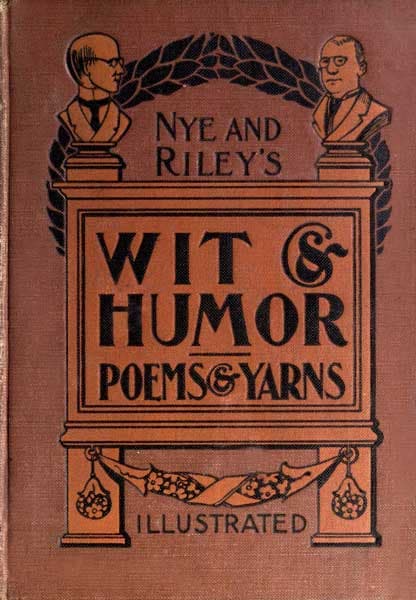
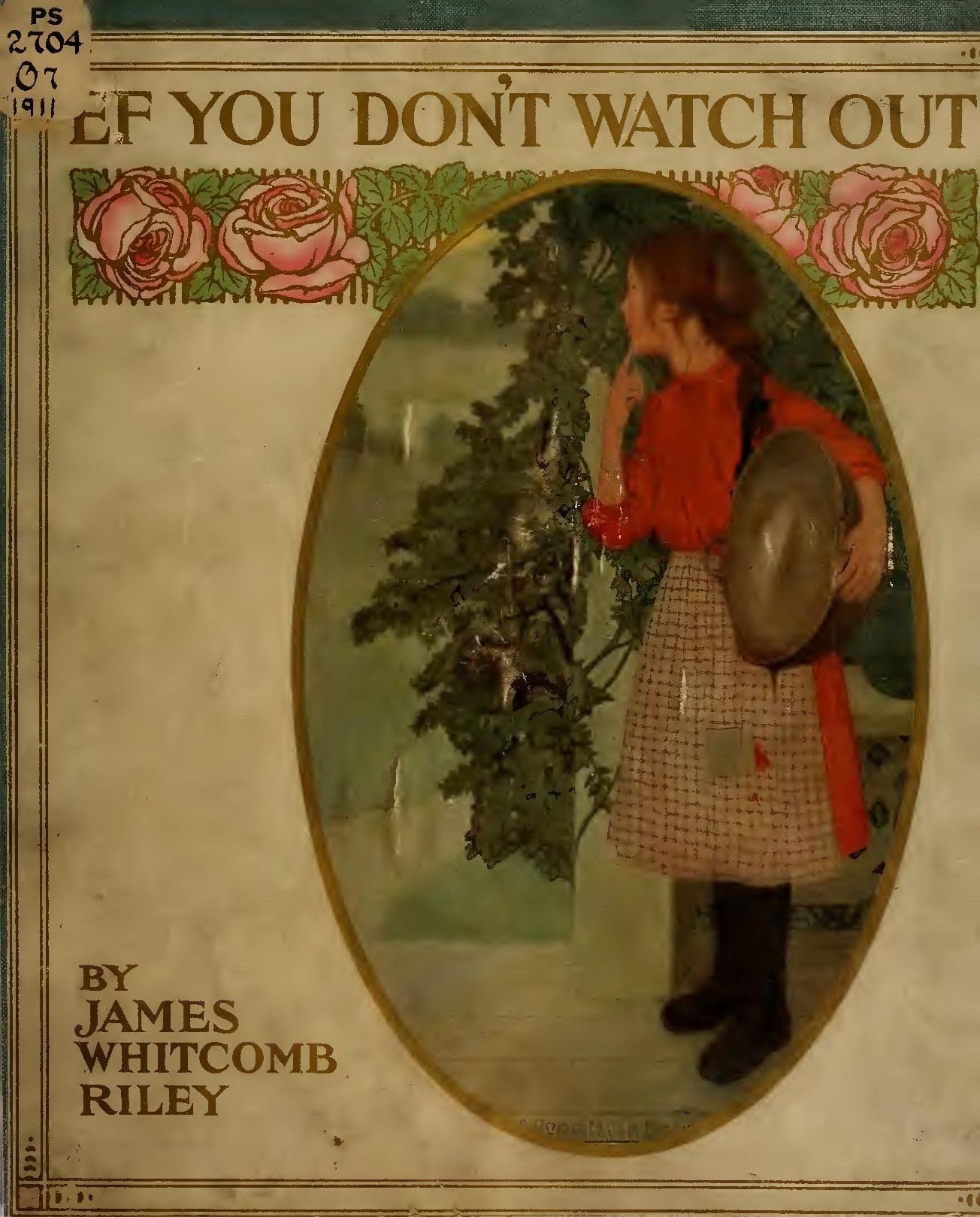
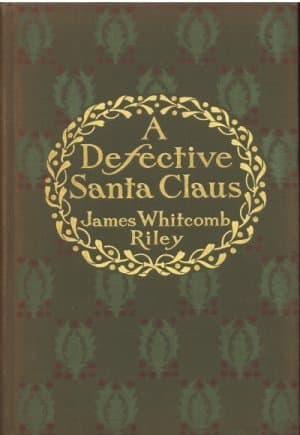

Link to this page
Add a free, dofollow link to Lex on your blog, forum, syllabus, or reading list.

<a href="https://lex-books.com/author/james-whitcomb-riley"><img src="https://lex-books.com/badges/read-on-lex.svg" alt="James Whitcomb Riley on Lex" width="160" height="40"></a>[](https://lex-books.com/author/james-whitcomb-riley)[url=https://lex-books.com/author/james-whitcomb-riley][img]https://lex-books.com/badges/read-on-lex.svg[/img][/url]James Whitcomb Riley on Lex: https://lex-books.com/author/james-whitcomb-riley