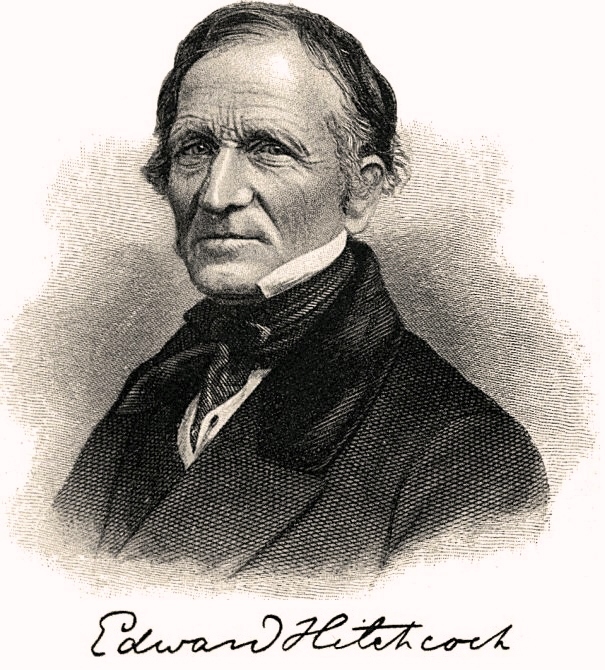
Edward Hitchcock
Edward Hitchcock was an influential American geologist and educator, best known for his role as the third President of Amherst College from 1845 to 1854. His early life in Massachusetts laid the foundation for a career that would intertwine geology and education. Hitchcock's passion for natural history led him to study geology extensively, and he became one of the first American scientists to focus on the study of fossils and their implications for understanding Earth's history. His notable works include 'Elementary Geology' and 'The Geology of Massachusetts,' which not only advanced geological science but also served as educational texts for students and the public alike. Hitchcock's contributions to geology were significant, particularly in the study of dinosaur footprints, which he famously described in his work 'Ichnology of New England.' His pioneering efforts in paleontology and his advocacy for the scientific method in education helped shape the academic landscape of his time. As a leader at Amherst College, he emphasized the importance of integrating scientific inquiry with a liberal arts education, leaving a lasting legacy in both geology and higher education. Hitchcock's work laid the groundwork for future generations of geologists and educators, solidifying his place in the history of American science and academia.
Famous Quotes
View all 1 quotes“His adolescent reading of Poe’s stories revealed to him a truth on which his whole career was based: that people love”
Books from the author




Link to this page
Add a free, dofollow link to Lex on your blog, forum, syllabus, or reading list.

<a href="https://lex-books.com/author/edward-hitchcock"><img src="https://lex-books.com/badges/read-on-lex.svg" alt="Edward Hitchcock on Lex" width="160" height="40"></a>[](https://lex-books.com/author/edward-hitchcock)[url=https://lex-books.com/author/edward-hitchcock][img]https://lex-books.com/badges/read-on-lex.svg[/img][/url]Edward Hitchcock on Lex: https://lex-books.com/author/edward-hitchcock