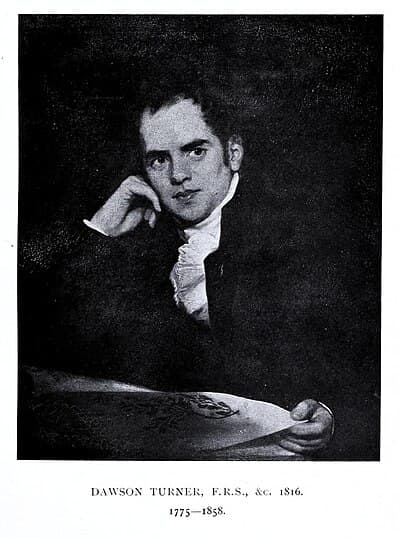
Dawson Turner
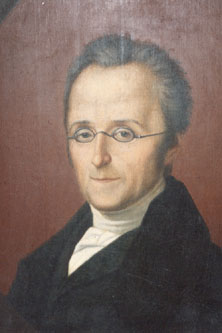
Dawson Turner was an influential English banker, botanist, and antiquary known for his extensive work in the field of cryptogams, a branch of botany that deals with non-flowering plants such as ferns, mosses, and fungi. His passion for botany was evident in his meticulous studies and contributions to the understanding of these often-overlooked organisms. Turner’s dedication to the natural sciences was complemented by his role as a prominent figure in the antiquarian community, where he contributed to the preservation and study of historical artifacts and documents. Turner’s legacy is marked by his close ties to other notable figures in botany and history, including his son-in-law, William Jackson Hooker, who became a leading botanist in his own right. His work not only advanced the study of cryptogams but also inspired future generations of botanists and antiquarians. Through his research and publications, Turner played a crucial role in elevating the status of botanical studies in England, leaving a lasting impact on the scientific community and the appreciation of natural history.
Famous Quotes
View all 1 quotes“I suspect there is a great deal of cant to be cleared out of the mind before we can become equitable judges of what doing good really means. I define doing good as the fulfilment of our best instincts and faculties for the best use of mankind; but I do not expect that the Good Earnest People will accept this definition. They would find it much too catholic, simply because they have learned to attach a specialised meaning to the phrase ‘doing good,’ which limits it to some form of active philanthropy. If they would but allow a wider vision of life to pass before the eye, they would see that there are many ways of doing good besides those which satisfy their own ideals. It is a singular thing that men find it very difficult to live lives of charity without cherishing uncharitable tempers towards those who do not live precisely as they themselves do. For instance, the busy philanthropist, nobly eager to bring a little happiness into the grey lives of the disinherited, often has the poorest opinion of artists and novelists, who appear to him to live useless lives. But when Turner paints a picture like the Fighting Temeraire Towed to Her Last Berth, which is destined to stir generous thoughts in multitudes of hearts long after his death: or when Scott writes novels which have increased the sum of human happiness for a century, is not each doing good of the rarest, highest, and most enduring kind? The fulfilment of one's best instincts and faculties, for the best use of mankind, is not only the completest, but also the only available form of philanthropy. Since Nature has chosen to endow us with diverse faculties, our service of mankind must be diverse too. In a word, doing good is a much larger business than the ordinary philanthropist imagines; it has many branches and a thousand forms; and they are not always doing the most who seem the busiest, nor do those accomplish most in the alleviation of human misery whose contact with it is the closest.””
Books from the author




Link to this page
Add a free, dofollow link to Lex on your blog, forum, syllabus, or reading list.

<a href="https://lex-books.com/author/dawson-turner"><img src="https://lex-books.com/badges/read-on-lex.svg" alt="Dawson Turner on Lex" width="160" height="40"></a>[](https://lex-books.com/author/dawson-turner)[url=https://lex-books.com/author/dawson-turner][img]https://lex-books.com/badges/read-on-lex.svg[/img][/url]Dawson Turner on Lex: https://lex-books.com/author/dawson-turner