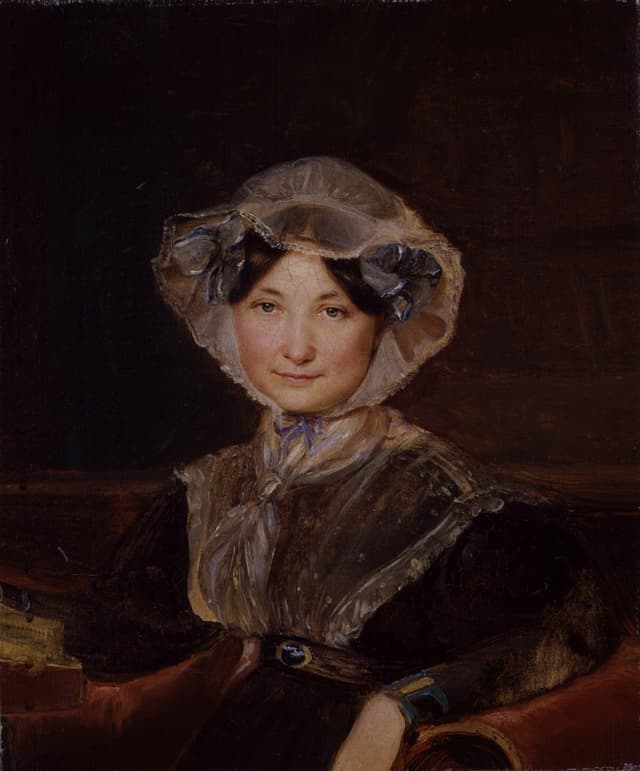
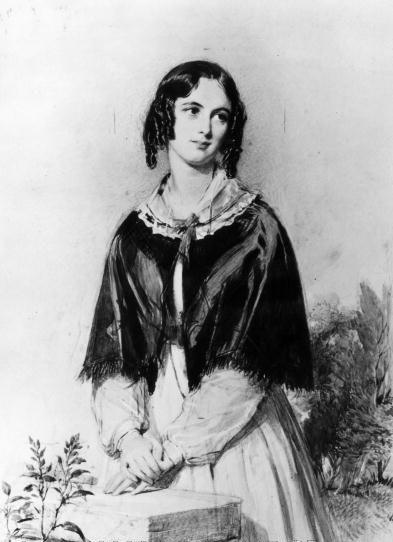
Frances Milton Trollope
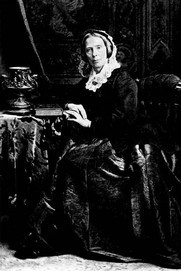
Frances Milton Trollope, known as Fanny Trollope, was an influential English novelist whose works spanned various social issues and literary forms. Her most famous book, 'Domestic Manners of the Americans' (1832), offered keen observations from her travels in the United States, providing a critical perspective on American society that sparked both admiration and controversy. Beyond travel writing, Trollope was a pioneer in the genre of social novels, addressing themes such as slavery and industrialization. Her novel 'The Life and Adventures of Michael Armstrong, the Factory Boy' is recognized as the first industrial novel, highlighting the struggles of the working class during the rise of industrialization in England. Additionally, her anti-Catholic novels reflected her Protestant views and explored the complexities of self-making in a rapidly changing society. Trollope's literary significance lies not only in her diverse body of work but also in her role as a precursor to later feminist and social critiques in literature. Despite facing criticism and being overlooked by modernist critics, her contributions have gained renewed attention, emphasizing the importance of women writers in the literary canon. Her influence is noted in the works of later authors, including Harriet Beecher Stowe, who was inspired by Trollope's anti-slavery sentiments. Fanny Trollope's legacy endures as a testament to the power of literature to challenge societal norms and provoke thought on pressing social issues.
Famous Quotes
View all 2 quotes“A single word indicative of doubt, that any thing, or every thing, in that country is not the very best in the world, produces an effect which must be seen and felt to be understood. If the citizens of the United States were indeed the devoted patriots they call themselves, they would surely not thus encrust themselves in the hard, dry, stubborn persuasion, that they are the first and best of the human race, that nothing is to be learnt, but what they are able to teach, and that nothing is worth having, which they do not possess.”
“Situated on an island which I think it will one day cover, it rises like Venice from the sea, and like that fairest of cities in the days of her glory, receives into its lap tribute of all the riches of the earth. - Frances Trollope (1827)”
Books from the author



Link to this page
Add a free, dofollow link to Lex on your blog, forum, syllabus, or reading list.

<a href="https://lex-books.com/author/frances-milton-trollope"><img src="https://lex-books.com/badges/read-on-lex.svg" alt="Frances Milton Trollope on Lex" width="160" height="40"></a>[](https://lex-books.com/author/frances-milton-trollope)[url=https://lex-books.com/author/frances-milton-trollope][img]https://lex-books.com/badges/read-on-lex.svg[/img][/url]Frances Milton Trollope on Lex: https://lex-books.com/author/frances-milton-trollope