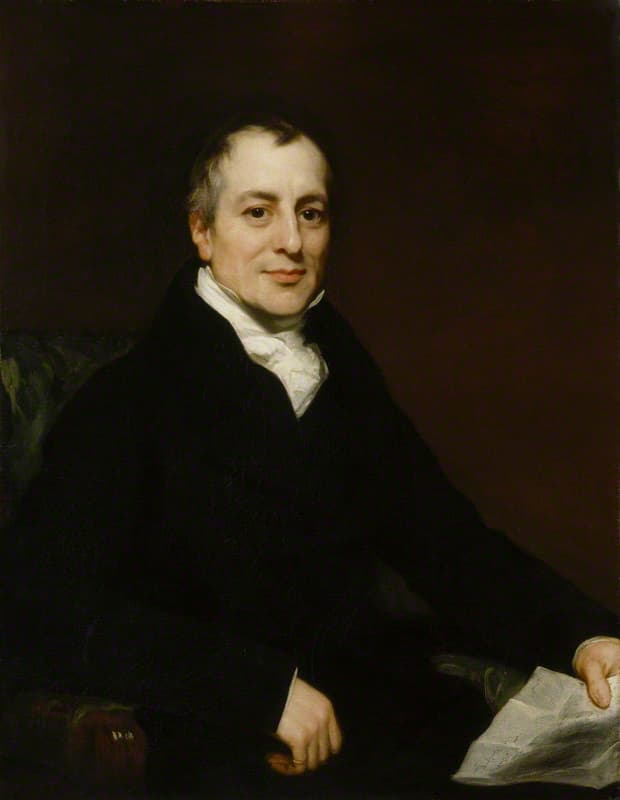
David Ricardo
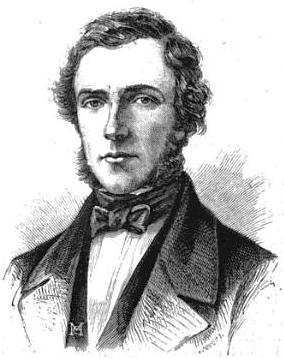
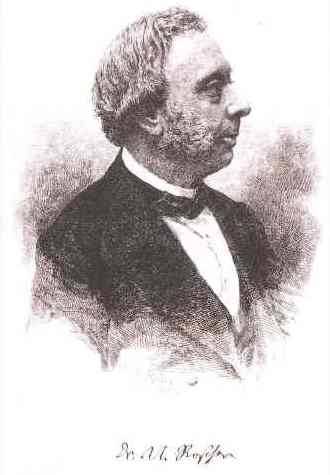
David Ricardo was a prominent British economist and politician, recognized as one of the leading figures of classical economics alongside contemporaries like Adam Smith and Thomas Malthus. Born in London to a Sephardic Jewish family, he made a significant personal choice at the age of 21 by eloping with a Quaker and converting to Unitarianism, which led to estrangement from his family. After establishing a successful career in finance, particularly in government borrowing, he retired to Gloucestershire where he became an active political figure, serving as High Sheriff and later as a Member of Parliament for Portarlington. Throughout his life, he engaged with influential thinkers such as James Mill and Jeremy Bentham, contributing to debates on economic and social reform. Ricardo's major contributions to economic theory include his advocacy for free trade and his opposition to the Corn Laws, which he believed hindered economic growth and accessibility to goods. His seminal works, including "Principles of Political Economy and Taxation," introduced concepts such as comparative advantage, which argued that countries should specialize in the production of goods where they have a relative efficiency. This idea laid the groundwork for modern trade theory and significantly influenced economic policy in Britain. Despite his early death from an ear infection, Ricardo's ideas endured, shaping economic thought and public policy long after his passing, solidifying his legacy as a foundational figure in economics.
Famous Quotes
View all 3 quotes“...I wish that I may never think the smiles of the great and powerful a sufficient inducement to turn aside from the straight path of honesty and the convictions of my own mind.”
“The diminution of money in one country, and its increase in another, do not operate on the price of one commodity only, but on the prices of all.”
“I wish that I may never think the smiles of the great and powerful a sufficient inducement to turn aside from the straight path of honesty and the convictions of my own mind.”
Books from the author

Link to this page
Add a free, dofollow link to Lex on your blog, forum, syllabus, or reading list.

<a href="https://lex-books.com/author/david-ricardo"><img src="https://lex-books.com/badges/read-on-lex.svg" alt="David Ricardo on Lex" width="160" height="40"></a>[](https://lex-books.com/author/david-ricardo)[url=https://lex-books.com/author/david-ricardo][img]https://lex-books.com/badges/read-on-lex.svg[/img][/url]David Ricardo on Lex: https://lex-books.com/author/david-ricardo