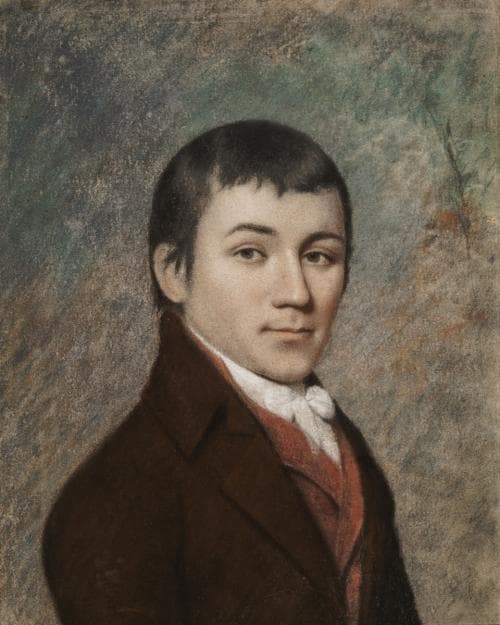
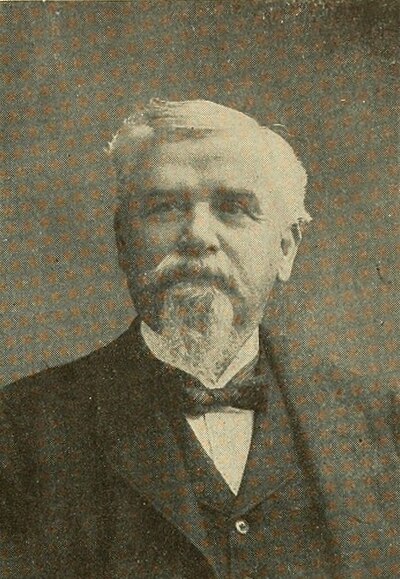
Charles Brockden Brown
Charles Brockden Brown was a pioneering American novelist and editor during the Early National period, often hailed as a crucial figure in the development of American literature. His works, which spanned multiple genres including novels, essays, and historiography, showcased a remarkable breadth and complexity that set him apart from his contemporaries. Brown's novels, particularly 'Wieland' and 'Edgar Huntly,' are notable for their exploration of Gothic themes and psychological depth, reflecting the anxieties of early American society. His innovative narrative techniques and focus on the darker aspects of human nature have earned him recognition as the 'Father of the American Novel.' Brown's influence extended beyond his own writings; he helped to shape the emerging American literary identity in a time when the nation was still defining itself. His contributions laid the groundwork for future American authors, including James Fenimore Cooper, and his exploration of themes such as identity, morality, and the supernatural resonated with readers and writers alike. Despite his relatively short life, Brown's legacy endures, marking him as a foundational figure in the canon of American literature.
Famous Quotes
View all 3 quotes“All men are, at times, influenced by inexplicable sentiments. Ideas haunt them in spite of all their efforts to discard them. Prepossessions are entertained, for which their reason is unable to discover any adequate cause. The strength of a belief, when it is destitute of any rational foundation, seems, of itself, to furnish a new ground for credulity. We first admit a powerful persuasion, and then, from reflecting on the insufficiency of the ground on which it is built, instead of being prompted to dismiss it, we become more forcibly attached to it.”
“"The incapacity of sound sleep denotes a mind sorely wounded.”
“No one knows the powers that are latent in his constitution. Called forth by imminent dangers, our efforts frequently exceed our most sanguine belief.”
Books from the author

Link to this page
Add a free, dofollow link to Lex on your blog, forum, syllabus, or reading list.

<a href="https://lex-books.com/author/charles-brockden-brown"><img src="https://lex-books.com/badges/read-on-lex.svg" alt="Charles Brockden Brown on Lex" width="160" height="40"></a>[](https://lex-books.com/author/charles-brockden-brown)[url=https://lex-books.com/author/charles-brockden-brown][img]https://lex-books.com/badges/read-on-lex.svg[/img][/url]Charles Brockden Brown on Lex: https://lex-books.com/author/charles-brockden-brown