Edgar Huntly; Or, Memoirs of a Sleep-Walker
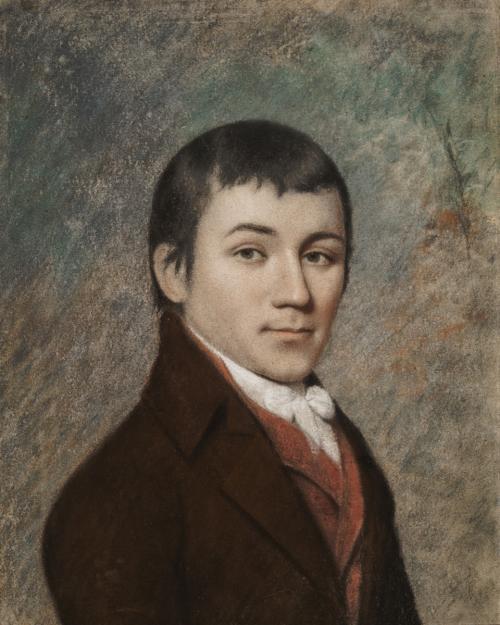
In the restless forests of post-revolutionary America, a man wakes to find his hands bloodied and his memory fractured. So begins Charles Brockden Brown's chilling 1799 novel, one of the earliest American Gothic works and a radical experiment in psychological horror. When the narrator's friend Waldegrave is murdered, he stumbles upon a half-naked figure digging obsessively at the grave site, a mysterious stranger named Clithero Edny whose dark secret propels the narrative into the wilderness and toward ever-deepening layers of guilt, obsession, and moral ambiguity. But the true horror lies not in the external pursuit, but in the question that haunts every page: what if the sleep-walker is not Clithero alone? Brown's novel dismantles the Enlightenment's faith in rational identity, revealing the self as fragmented, violent, and fundamentally unknowable. The American frontier becomes a mirror for internal darkness, a Gothic space where the forests hold secrets the colonists cannot articulate. This is American literature's first great reckoning with the unconscious mind, published decades before Freud gave sleep-walking its clinical vocabulary.
Editions
X-Ray
“There is no standard by which time can be measured, but the succession of our thoughts, and the changes that take place in the external world.””
— Charles Brockden Brown
“No one knows the powers that are latent in his constitution. Called forth by imminent dangers, our efforts frequently exceed our most sanguine belief.””
— Charles Brockden Brown
“Death was a sweet relief for my present miseries, and I vehemently longed for its arrival.””
— Charles Brockden Brown
“How slender is the accommodation which nature has provided for man.””
— Charles Brockden Brown
“Passage into new forms, overleaping the bars of time and space, reversal of the laws of inanimate intelligent existence, had been mine to perform and to witness.””
— Charles Brockden Brown
“The sleek locks, neat apparel, pacific guise, sobriety and gentleness of aspect by which I was customarily distinguished, would in vain be sought in the apparition which would now present itself before them. My legs, neck, and bosom were bare, and their native hue was exchanged for the livid marks of bruises and scarifications. A horrid scar upon my cheek, and my uncombed locks; hollow eyes, made ghastly by abstinence and cold . . . would prepossess them with the notion of a maniac or ruffian.””
— Charles Brockden Brown
“This scene is adapted to my temper. Its mountainous asperities supply me with images of desolation and seclusion, and its headlong streams lull me into temporary forgetfulness of mankind.””
— Charles Brockden Brown
Link to this book
Add a free, dofollow link to Lex on your blog, forum, syllabus, or reading list.

<a href="https://lex-books.com/book/edgar-huntly-or-memoirs-of-a-sleep-walker-4ccd44d0-8b99-4f26-92ad-ce4cd681ae64"><img src="https://lex-books.com/badges/read-on-lex.svg" alt="Read Edgar Huntly; Or, Memoirs of a Sleep-Walker by Charles Brockden Brown free on Lex" width="160" height="40"></a>[](https://lex-books.com/book/edgar-huntly-or-memoirs-of-a-sleep-walker-4ccd44d0-8b99-4f26-92ad-ce4cd681ae64)[url=https://lex-books.com/book/edgar-huntly-or-memoirs-of-a-sleep-walker-4ccd44d0-8b99-4f26-92ad-ce4cd681ae64][img]https://lex-books.com/badges/read-on-lex.svg[/img][/url]Read Edgar Huntly; Or, Memoirs of a Sleep-Walker by Charles Brockden Brown free on Lex: https://lex-books.com/book/edgar-huntly-or-memoirs-of-a-sleep-walker-4ccd44d0-8b99-4f26-92ad-ce4cd681ae64Cite this book
Reading this edition for a paper or guide? Copy a citation.
Brown, Charles Brockden. Edgar Huntly; Or, Memoirs of a Sleep-Walker. Lex, lex-books.com/book/edgar-huntly-or-memoirs-of-a-sleep-walker-4ccd44d0-8b99-4f26-92ad-ce4cd681ae64.Brown, C. B. (n.d.). Edgar Huntly; Or, Memoirs of a Sleep-Walker. Lex. https://lex-books.com/book/edgar-huntly-or-memoirs-of-a-sleep-walker-4ccd44d0-8b99-4f26-92ad-ce4cd681ae64Brown, Charles Brockden. Edgar Huntly; Or, Memoirs of a Sleep-Walker. Lex. https://lex-books.com/book/edgar-huntly-or-memoirs-of-a-sleep-walker-4ccd44d0-8b99-4f26-92ad-ce4cd681ae64.