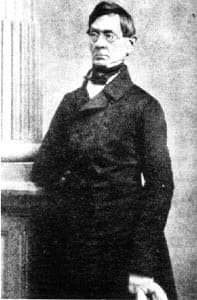
Anton Schindler
Anton Schindler was an Austrian law clerk who became a significant figure in the life of composer Ludwig van Beethoven. Initially serving as Beethoven's secretary, Schindler developed a close relationship with the composer, which allowed him unique insights into Beethoven's life and work. His dedication to Beethoven extended beyond mere assistance; he became one of the earliest biographers of the composer, capturing not only the details of Beethoven's professional achievements but also his personal struggles and philosophies. Schindler's biography, published posthumously, offered a glimpse into the complexities of Beethoven's character and the challenges he faced, particularly regarding his deafness and the impact it had on his music. Schindler's contributions to Beethoven's legacy were pivotal, as he helped to preserve the narrative of the composer's life during a time when such accounts were scarce. His writings provided a foundation for future biographers and scholars, influencing how Beethoven was perceived in the years following his death. Despite his role as a biographer, Schindler's own life remains less documented, overshadowed by the monumental figure he chose to chronicle. Nevertheless, his work has ensured that Beethoven's story continues to resonate, highlighting the profound connection between the composer and his devoted secretary.
Famous Quotes
View all 3 quotes“I am that which is.—I am all that is, all that was, and all that shall be.—No mortal man hath my veil uplifted!" II. "He is One, self-existent, and to that One all things owe their existence." [142]”
“In his political sentiments Beethoven was a republican; the spirit of independence natural to a genuine artist gave him a decided bias that way. Plato's "Republic" was transfused into his flesh and blood, and upon the principles of that philosopher he reviewed all the constitutions in the world.”
“BEETHOVEN should by no means be offered as a model for directors of orchestras. The performers under him were obliged cautiously to avoid being led astray by their conductor, who thought only of his composition, and constantly laboured to depict the exact expression required by the most varied gesticulations. Thus, when the passage was loud, he often beat time downwards, when his hand should have been up. A diminuendo he was in the habit of making by contracting his person, making himself smaller and smaller; and when a pianissimo occurred, he seemed to slink, if the word is allowable, beneath the conductor's desk. As the sounds increased in loudness, so did he gradually rise up, as if out of an abyss; and when the full force of the united instruments broke upon the ear, raising himself on tiptoe, he looked of gigantic stature, and, with both his arms floating about in undulating motion, seemed as if he would soar to the clouds. He was all motion, no part of him remained inactive, and the entire man could only be compared to a perpetuum mobile. When his deafness increased, it was productive of frequent mischief, for the maestro's hand went up when it ought to have descended. He contrived to set himself right again most easily in the piano passages, but of the most powerful fortes he could make nothing. In many cases, however, his eye afforded him assistance, for he watched the movements of the bows, and, thus discovering what was going on, soon corrected himself.”
Books from the author




Link to this page
Add a free, dofollow link to Lex on your blog, forum, syllabus, or reading list.

<a href="https://lex-books.com/author/anton-schindler"><img src="https://lex-books.com/badges/read-on-lex.svg" alt="Anton Schindler on Lex" width="160" height="40"></a>[](https://lex-books.com/author/anton-schindler)[url=https://lex-books.com/author/anton-schindler][img]https://lex-books.com/badges/read-on-lex.svg[/img][/url]Anton Schindler on Lex: https://lex-books.com/author/anton-schindler