
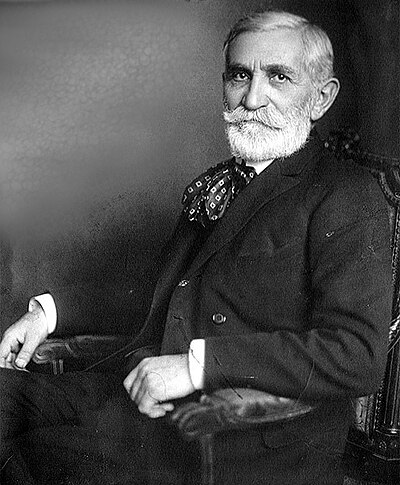
Alexander Sutherland
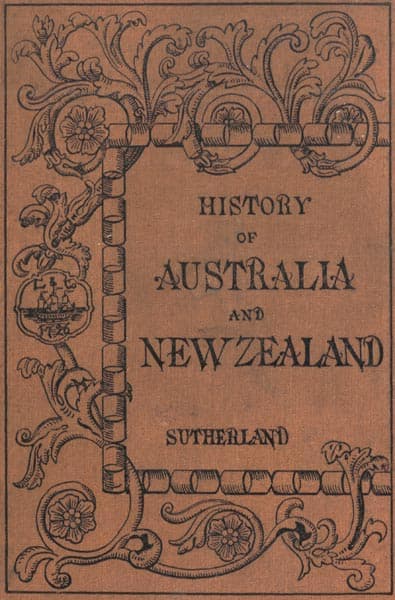
Alexander Sutherland was a Scottish-Australian educator, writer, and philosopher known for his contributions to literature and education in Australia. Born in Scotland, he emigrated to Australia where he became a prominent figure in the intellectual landscape of the time. Sutherland's work often explored themes of education, philosophy, and the human condition, reflecting his deep commitment to social reform and the advancement of knowledge. He was particularly influential in the development of educational practices in Australia, advocating for a more progressive and inclusive approach to learning. Among his notable works, Sutherland is best remembered for 'The Philosophy of Education,' where he articulated his views on the importance of education in shaping society. His writings not only addressed educational theory but also delved into the philosophical underpinnings of human thought and behavior. Sutherland's legacy lies in his role as a pioneer in Australian education and his efforts to elevate the discourse around philosophy and literature in the region, leaving a lasting impact on future generations of educators and thinkers.
Famous Quotes
View all 3 quotes“Captain Cook.—But in the year 1770 a series of important discoveries was indirectly brought about. The Royal Society of London, calculating that the planet Venus would cross the disc of the sun in 1769, persuaded the English Government to send out an expedition to the Pacific Ocean for the purpose of making observations which would enable astronomers to calculate the distance of the earth from the sun.”
“Each man had as many wives as he could obtain. He did not support them, but they supported him, and when children became too numerous he lessened his family by killing off a few. More than half the children were thus destroyed. Their enjoyments consisted of games with a kind of ball, and mock-fights, but especially in a wild dance they called the corrobboree. They were in general good-humoured when things went pleasantly; but a man would spear his wife through the leg or dash his child’s brains out readily enough when things were not to his taste, and nobody would think any the worse of him for”
“7. Gold.—In 1858 it was reported that gold had been discovered far to the north, on the banks of the Fitzroy River, and in a short time many vessels arrived in Keppel Bay, their holds and decks crowded with men, who eagerly landed and hastened to Canoona, a place about sixty or seventy miles up the river. Ere long there were about fifteen thousand diggers on the scene; but it was soon discovered that the gold was confined to a very small area, and by no means plentiful; and those who had spent all their money in getting to the place were in a wretched plight. A large population had been hurriedly gathered in an isolated region, without provisions, or the possibility of obtaining them; their expectations of the goldfield had been disappointed, and for some time the Fitzroy River was one great scene of misery and starvation till the Governments of New South Wales and Victoria sent vessels to convey the unfortunate diggers away from the place.”
Books from the author


Link to this page
Add a free, dofollow link to Lex on your blog, forum, syllabus, or reading list.

<a href="https://lex-books.com/author/alexander-sutherland"><img src="https://lex-books.com/badges/read-on-lex.svg" alt="Alexander Sutherland on Lex" width="160" height="40"></a>[](https://lex-books.com/author/alexander-sutherland)[url=https://lex-books.com/author/alexander-sutherland][img]https://lex-books.com/badges/read-on-lex.svg[/img][/url]Alexander Sutherland on Lex: https://lex-books.com/author/alexander-sutherland