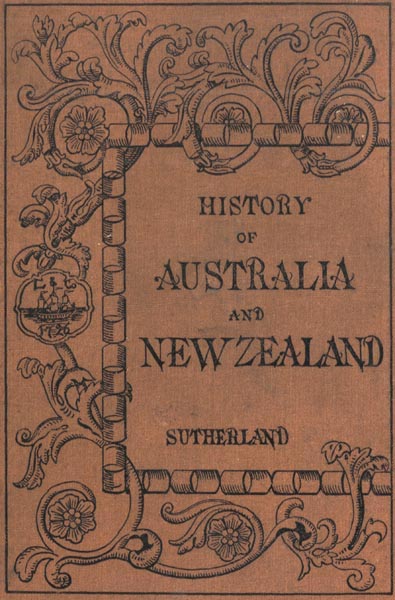
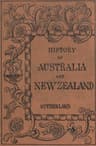
History of Australia and New Zealand from 1606 to 1890
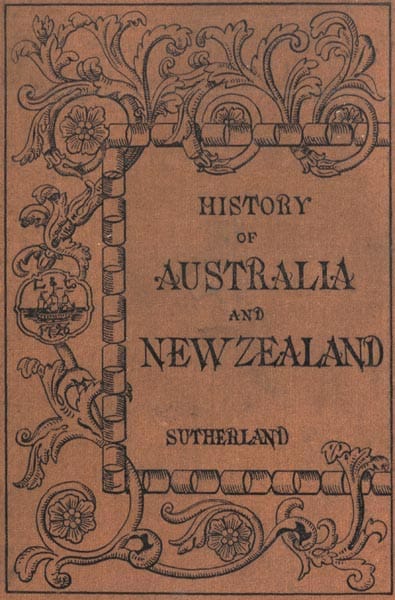
What emerges from these pages is not merely a catalog of voyages, but a portrait of a world remaking itself. Sutherland traces the arc from Abel Tasman's first haunting glimpse of New Zealand's coast in 1642 through the fevered decades of British colonization, where dreams of penal colonies and pastoral empire collided with ancient civilizations already woven into the land. The narrative captures the desperate searches for the mythical southern continent, the violent encounters between European mariners and Indigenous peoples, and the gradual mapping of coastlines that had remained secret for millennia. Written in the late nineteenth century, when the bones of this history were still fresh, Sutherland offers a window into how contemporary observers understood the making of nations. This is history as lived experience, not afterthought. For readers curious about colonial expansion, maritime adventure, or the origins of two Pacific nations, the account provides both vivid narrative and the invaluable perspective of someone writing at the tail end of the transformative era itself.
Editions
X-Ray
“In 1880 the colony had increased to 500,000 white people, owning 12,000,000 sheep and exporting nearly £6,000,000 worth of goods. The Maoris were 44,000, but while the whites were rapidly increasing, the Maoris were somewhat decreasing. They had 112,000 sheep””
— Alexander Sutherland
“Australia; the Royal Society of Victoria undertook to organise an expedition for the purpose of crossing the continent, and collected subscriptions to the amount of £3,400; the Victorian Government voted £6,000, and spent an additional sum of £3,000 in bringing twenty-six camels from Arabia.””
— Alexander Sutherland
“Each man had as many wives as he could obtain. He did not support them, but they supported him, and when children became too numerous he lessened his family by killing off a few. More than half the children were thus destroyed. Their enjoyments consisted of games with a kind of ball, and mock-fights, but especially in a wild dance they called the corrobboree. They were in general good-humoured when things went pleasantly; but a man would spear his wife through the leg or dash his child’s brains out readily enough when things were not to his taste, and nobody would think any the worse of him for””
— Alexander Sutherland
“There were frequent conflicts between the crews of labour vessels and the inhabitants of the islands. The white men burnt the native villages, and carried off crowds of men and women; while, in revenge, the islanders often surprised a vessel and massacred its crew; and in such cases the innocent suffered for the guilty. The sailors often had the baseness to disguise themselves as missionaries, in order the more easily to effect their purpose; and when the true missionaries, suspecting nothing, approached the natives on their errand of good will, they were speared or clubbed to death by the unfortunate islanders. But, as a rule, the “Kanakas” were themselves the sufferers; the English vessels pursued their frail canoes, ran them down, and sank them; then, while struggling in the sea, the men were seized and thrust into the hold, and the hatches were fastened down. When in this dastardly manner a sufficient number had been gathered together, and the dark interior of the ship was filled with a steaming mass of human beings densely huddled together, the captains set sail for Queensland, where they landed those of their living cargoes who””
— Alexander Sutherland
“Captain Cook.”
— Alexander Sutherland
“The year 1839 brought further increase to the population; and before the beginning of 1840 there were 3,000 persons, with 500 houses and 70 shops, in Melbourne. In 1841, within five years of””
— Alexander Sutherland
“He found a few natives left there, the remnant of the tribes whom Te Whero Whero had either destroyed or carried into slavery. These few people had taken refuge up in the awful solitudes of the giant Mount Egmont, but had come back to dwell, a sorrow-stricken handful, in the homes of their fathers. Barrett was left to arrange a bargain with them, and in return for a quantity of goods they sold all the land along sixty miles of coast with a depth of fifteen miles inland. This was the land which Wakefield recommended for the new settlers, and he lent them a ship to take them round.””
— Alexander Sutherland
Link to this book
Add a free, dofollow link to Lex on your blog, forum, syllabus, or reading list.

<a href="https://lex-books.com/book/history-of-australia-and-new-zealand-from-1606-to-1890-06698ee5-7053-4857-b90d-12f4a5d1214a"><img src="https://lex-books.com/badges/read-on-lex.svg" alt="Read History of Australia and New Zealand from 1606 to 1890 by Alexander Sutherland free on Lex" width="160" height="40"></a>[](https://lex-books.com/book/history-of-australia-and-new-zealand-from-1606-to-1890-06698ee5-7053-4857-b90d-12f4a5d1214a)[url=https://lex-books.com/book/history-of-australia-and-new-zealand-from-1606-to-1890-06698ee5-7053-4857-b90d-12f4a5d1214a][img]https://lex-books.com/badges/read-on-lex.svg[/img][/url]Read History of Australia and New Zealand from 1606 to 1890 by Alexander Sutherland free on Lex: https://lex-books.com/book/history-of-australia-and-new-zealand-from-1606-to-1890-06698ee5-7053-4857-b90d-12f4a5d1214aCite this book
Reading this edition for a paper or guide? Copy a citation.
Sutherland, Alexander. History of Australia and New Zealand from 1606 to 1890. Lex, lex-books.com/book/history-of-australia-and-new-zealand-from-1606-to-1890-06698ee5-7053-4857-b90d-12f4a5d1214a.Sutherland, A. (n.d.). History of Australia and New Zealand from 1606 to 1890. Lex. https://lex-books.com/book/history-of-australia-and-new-zealand-from-1606-to-1890-06698ee5-7053-4857-b90d-12f4a5d1214aSutherland, Alexander. History of Australia and New Zealand from 1606 to 1890. Lex. https://lex-books.com/book/history-of-australia-and-new-zealand-from-1606-to-1890-06698ee5-7053-4857-b90d-12f4a5d1214a.