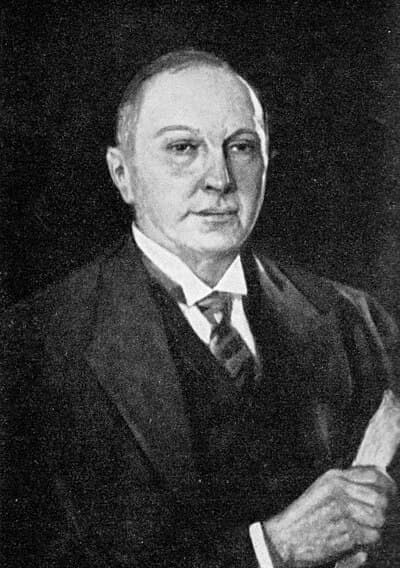
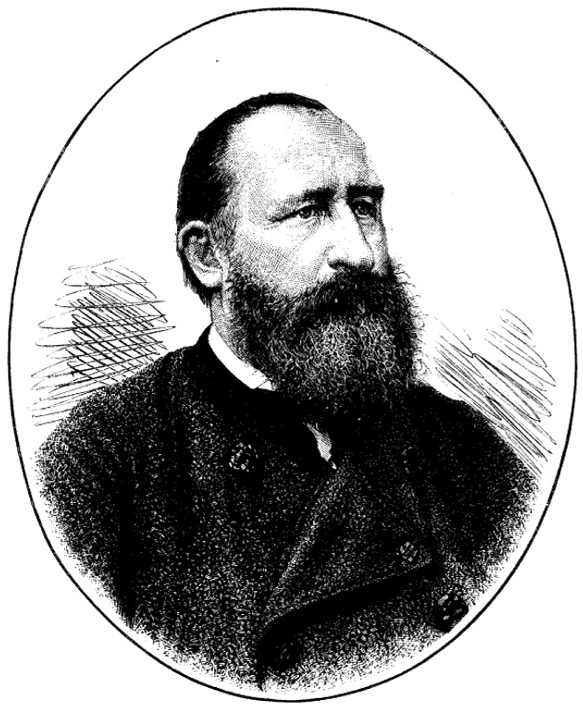
Alexander Morris
Alexander Morris was a prominent Canadian politician known for his significant contributions to the development of Canada during the 19th century. Born in 1826, he played a crucial role in the cabinet of Prime Minister John A. Macdonald from 1869 to 1872, where he was instrumental in shaping policies that would influence the nation’s growth. Morris's political career was marked by his commitment to the advancement of Canadian Confederation and his efforts to address the needs of various provinces, particularly in the context of Indigenous affairs and land treaties. Morris is perhaps best remembered for his tenure as the second Lieutenant Governor of Manitoba, a position he held from 1870 to 1876. During this time, he worked to promote stability and development in the newly formed province, navigating the complexities of post-Confederation governance. His legacy includes a focus on reconciliation with Indigenous peoples, as he sought to implement fair treaties and foster better relations. Morris's influence extended beyond his political roles, as he was also involved in various civic initiatives that aimed to improve the social and economic landscape of Canada. His contributions to Canadian politics and governance remain significant in the historical narrative of the nation.
Famous Quotes
View all 19 quotes“The last word must go to Alexander Solzhenitsyn. “I dedicate this to all those who did not live to tell it,” he wrote in the foreword to his classic study, The Gulag Archipelago. “And may they please forgive me for not having seen it all, nor remembered it all, for not having divined all of it.””
“The country, it seemed, was on the verge of a second civil war, this one over industrial slavery. But Frick was a gambler who cared little what the world thought of him. He was already a villain in the public’s eye, thanks to a disaster of epic proportions three years earlier. Frick and a band of wealthy friends had established the South Fork Fishing and Hunting Club on land near an unused reservoir high in the hills above the small Pennsylvania city of Johnstown, 70 miles east of Pittsburgh. The club beautified the grounds around the dam but paid little attention to the dam itself, which held back the Conemaugh River and was in poor condition from years of neglect. On May 31, 1889, after heavy rainfall, the dam gave way, releasing nearly 5 billion gallons of water from Lake Conemaugh into Johnstown and killing 2,209 people. What became known as the Johnstown Flood caused $17 million in damages. Frick’s carefully crafted corporate structure for the club made it impossible for victims to pursue the financial assets of its members. Although he personally donated several thousands of dollars to relief efforts, Frick remained to many a scoundrel, the prototype of the uncaring robber baron of the Gilded Age.””
“Berkman called no witnesses of his own. Instead, with the aid of an ill-trained interpreter, he began to read his long speech. “Some may wonder why I have declined a legal defense,” Berkman said. “My reasons are twofold. In the first place, I am an anarchist: I do not believe in man-made laws, designed to enslave and oppress humanity. Secondly, an extraordinary phenomenon like an attentat cannot be measured by the narrow standards of legality.” In short, Berkman said, he would explain the deed, and by doing so, society itself would be put on trial. An hour into his presentation, much of which was heard only in mangled English, Judge McClung’s patience came to an end. He ordered Berkman to finish by the rapidly approaching hour of one o’clock. “I can have all the time I want for my defense and will take all the time I need,” Berkman replied. “No, you haven’t,” said the judge. “We’ll teach you different if you think you can dictate to us.” Berkman and his interpreter sputtered on. At 1:10 the judge stopped Berkman and gave the prosecutor the floor. Holding the dagger in his hands, he urged the jury to convict Berkman. The jury didn’t even stir from the box. It immediately pronounced Berkman guilty on all counts. McClung sentenced him to 22 years of confinement.””
Books from the author


Link to this page
Add a free, dofollow link to Lex on your blog, forum, syllabus, or reading list.

<a href="https://lex-books.com/author/alexander-morris"><img src="https://lex-books.com/badges/read-on-lex.svg" alt="Alexander Morris on Lex" width="160" height="40"></a>[](https://lex-books.com/author/alexander-morris)[url=https://lex-books.com/author/alexander-morris][img]https://lex-books.com/badges/read-on-lex.svg[/img][/url]Alexander Morris on Lex: https://lex-books.com/author/alexander-morris