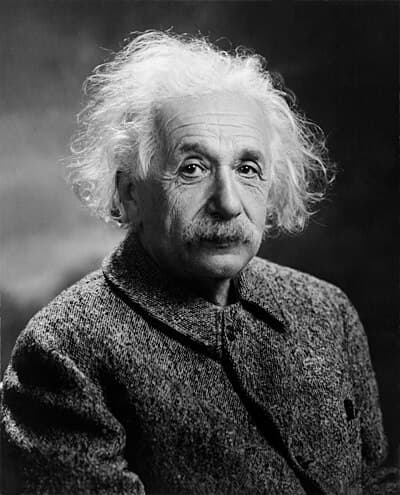
Albert Einstein
Albert Einstein was a German-born theoretical physicist whose groundbreaking work revolutionized the understanding of space, time, and energy. Best known for developing the theory of relativity, Einstein's mass-energy equivalence formula, E = mc², became one of the most recognized equations in the world. His 1905 papers, often referred to as his 'miracle year' contributions, included pivotal theories on the photoelectric effect, Brownian motion, and special relativity, which collectively laid the groundwork for modern physics. In 1915, he expanded his theories to propose a general theory of relativity, fundamentally altering the perception of gravity and influencing cosmology and astrophysics significantly. Einstein's intellectual journey began in Germany, where he was born, but he later moved to Switzerland, where he became a Swiss citizen and worked at the Patent Office in Bern. His career took him to Berlin, where he became a prominent figure in the scientific community. However, the rise of the Nazi regime prompted him to emigrate to the United States in 1933, where he continued his research and became an American citizen in 1940. His advocacy for peace and humanitarian causes, alongside his scientific achievements, cemented his legacy as not only a brilliant physicist but also a moral leader. Einstein's influence extends beyond physics; he became a symbol of intellectual inquiry and ethical responsibility, inspiring generations of scientists and thinkers worldwide.
Famous Quotes
View all 3 quotes“Two things are infinite: the universe and human stupidity; and I'm not sure about the universe.”
“There are only two ways to live your life. One is as though nothing is a miracle. The other is as though everything is a miracle.”
“I am enough of an artist to draw freely upon my imagination. Imagination is more important than knowledge. Knowledge is limited. Imagination encircles the world.”
Books from the author
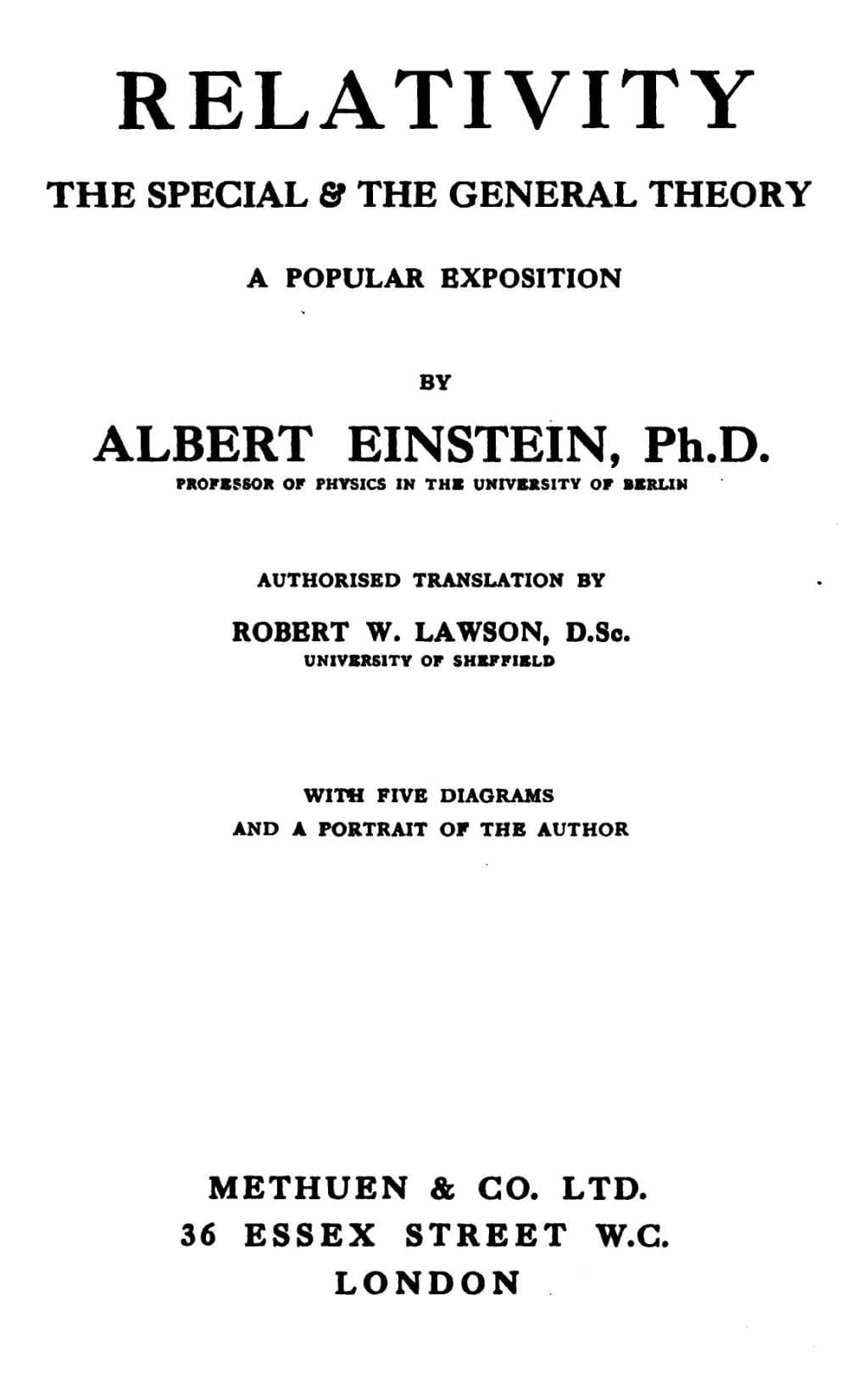
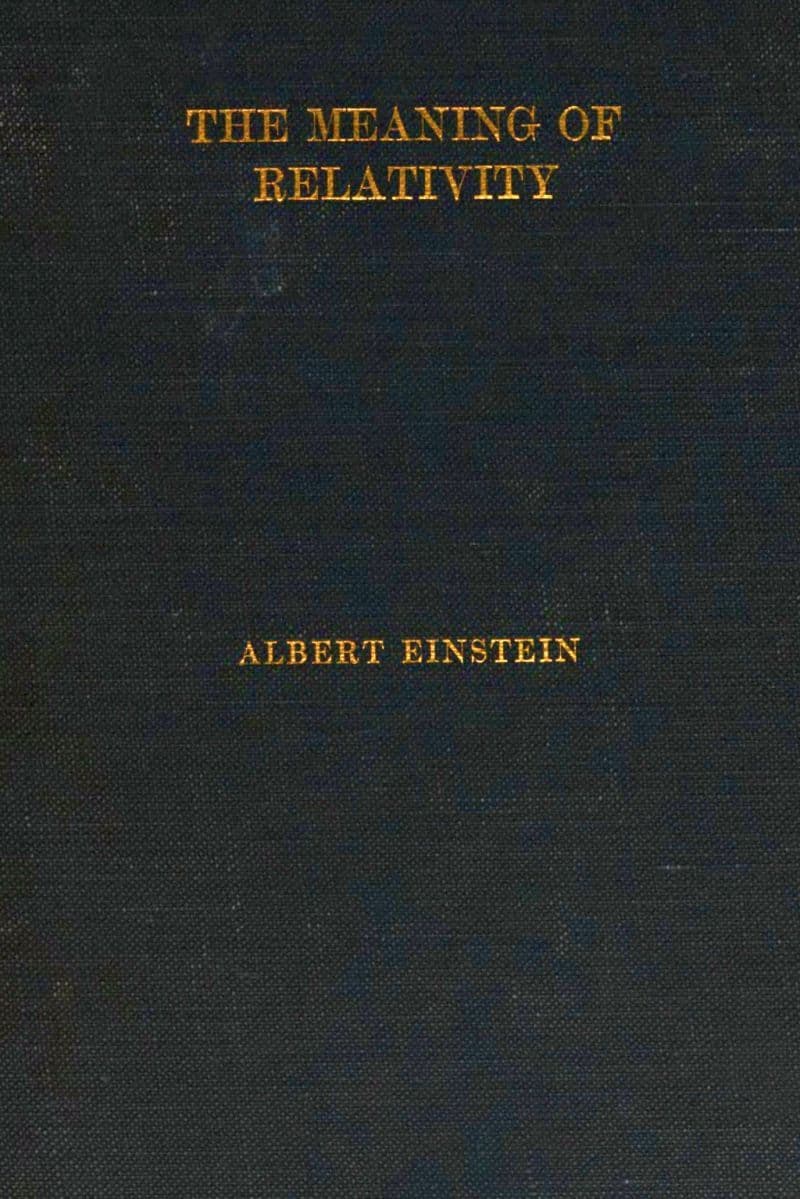



Link to this page
Add a free, dofollow link to Lex on your blog, forum, syllabus, or reading list.

<a href="https://lex-books.com/author/albert-einstein"><img src="https://lex-books.com/badges/read-on-lex.svg" alt="Albert Einstein on Lex" width="160" height="40"></a>[](https://lex-books.com/author/albert-einstein)[url=https://lex-books.com/author/albert-einstein][img]https://lex-books.com/badges/read-on-lex.svg[/img][/url]Albert Einstein on Lex: https://lex-books.com/author/albert-einstein