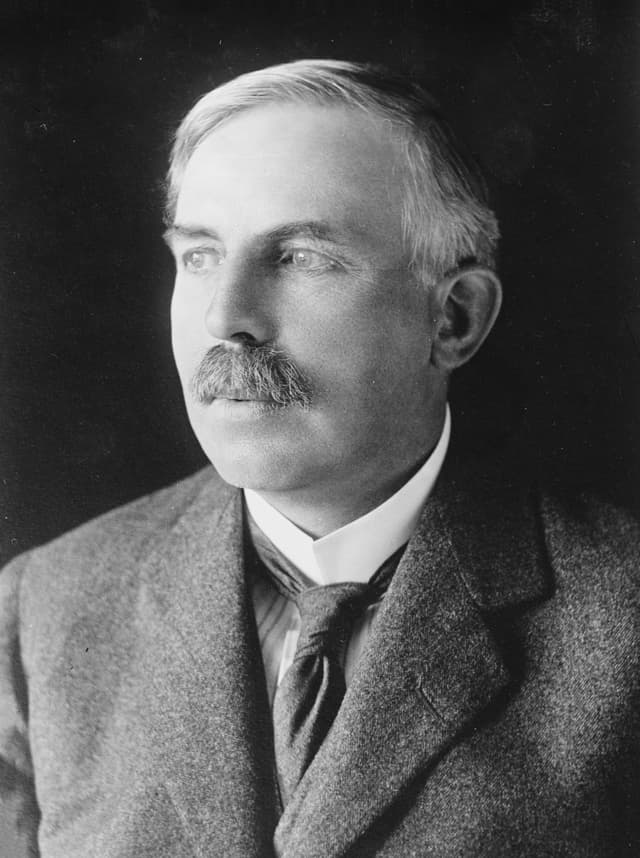
Ernest Rutherford
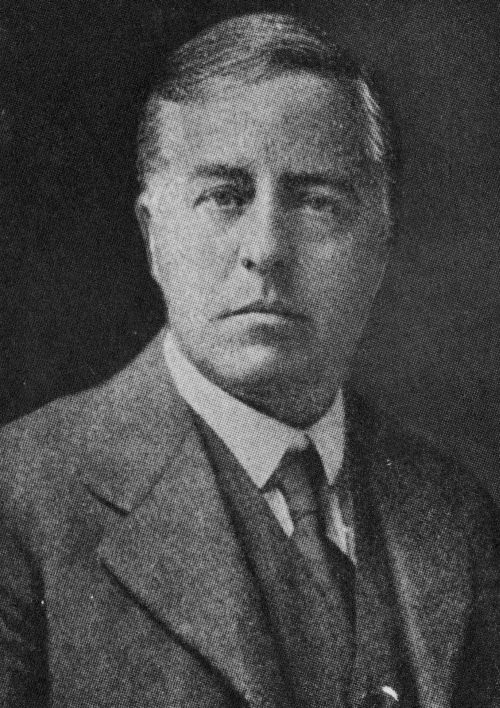
Ernest Rutherford was a New Zealand physicist and chemist renowned for his groundbreaking contributions to atomic and nuclear physics. Often referred to as 'the father of nuclear physics,' Rutherford's work laid the foundation for modern atomic theory. He was awarded the Nobel Prize in Chemistry in 1908 for his investigations into radioactive substances and the disintegration of elements, making him the first Oceanian laureate and the first to receive the prize for work conducted in Canada. His discoveries included the concept of radioactive half-life, the identification of radon, and the differentiation of alpha and beta radiation. Notably, he demonstrated that alpha radiation consists of helium nuclei, a significant advancement in understanding atomic structure. In 1911, Rutherford proposed that atoms have a small, dense nucleus at their center, a theory developed through his famous gold foil experiment. This work led to the formulation of the Rutherford model of the atom, which influenced subsequent theories, including Niels Bohr's atomic model, which he helped establish by inviting Bohr to his laboratory in 1912. Rutherford also conducted the first artificially induced nuclear reaction in 1917, where he discovered the proton, and he played a crucial role in the development of the atomic numbering system with Henry Moseley. As the Director of the Cavendish Laboratory at the University of Cambridge, he oversaw significant advancements in nuclear physics, including the discovery of the neutron by James Chadwick in 1932. Rutherford's legacy endures, with the element rutherfordium named in his honor, and his burial in Westminster Abbey alongside other scientific luminaries underscores his monumental impact on science.
Famous Quotes
View all 14 quotes“All science is either physics or stamp collecting.””
“If your experiment needs a statistician, you need a better experiment.””
“It was quite the most incredible event that has ever happened to me in my life. It was almost as incredible as if you fired a 15-inch shell at a piece of tissue paper and it came back and hit you.[.]””
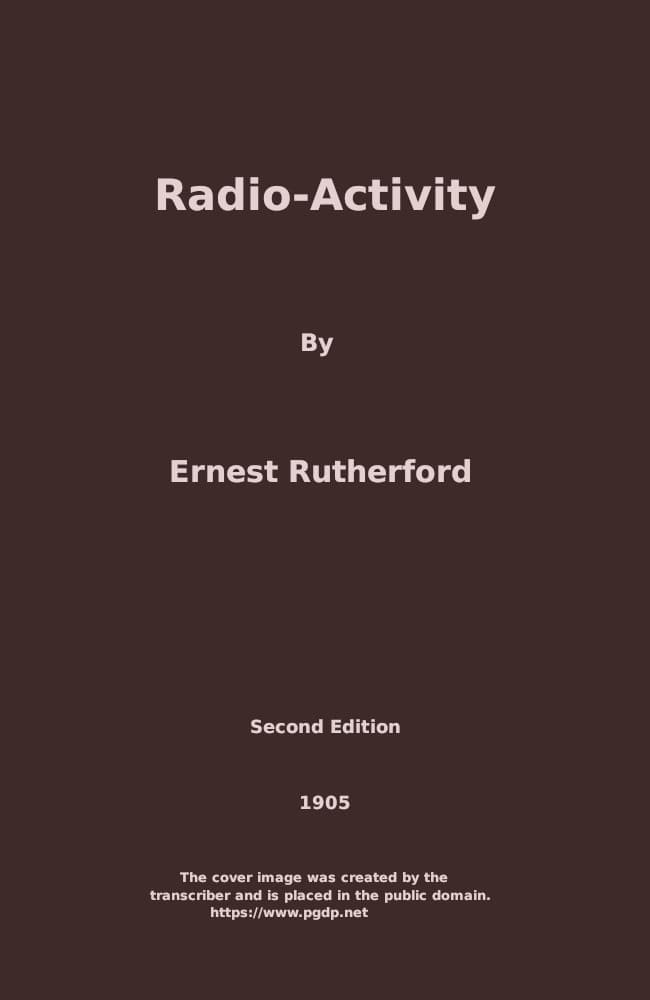
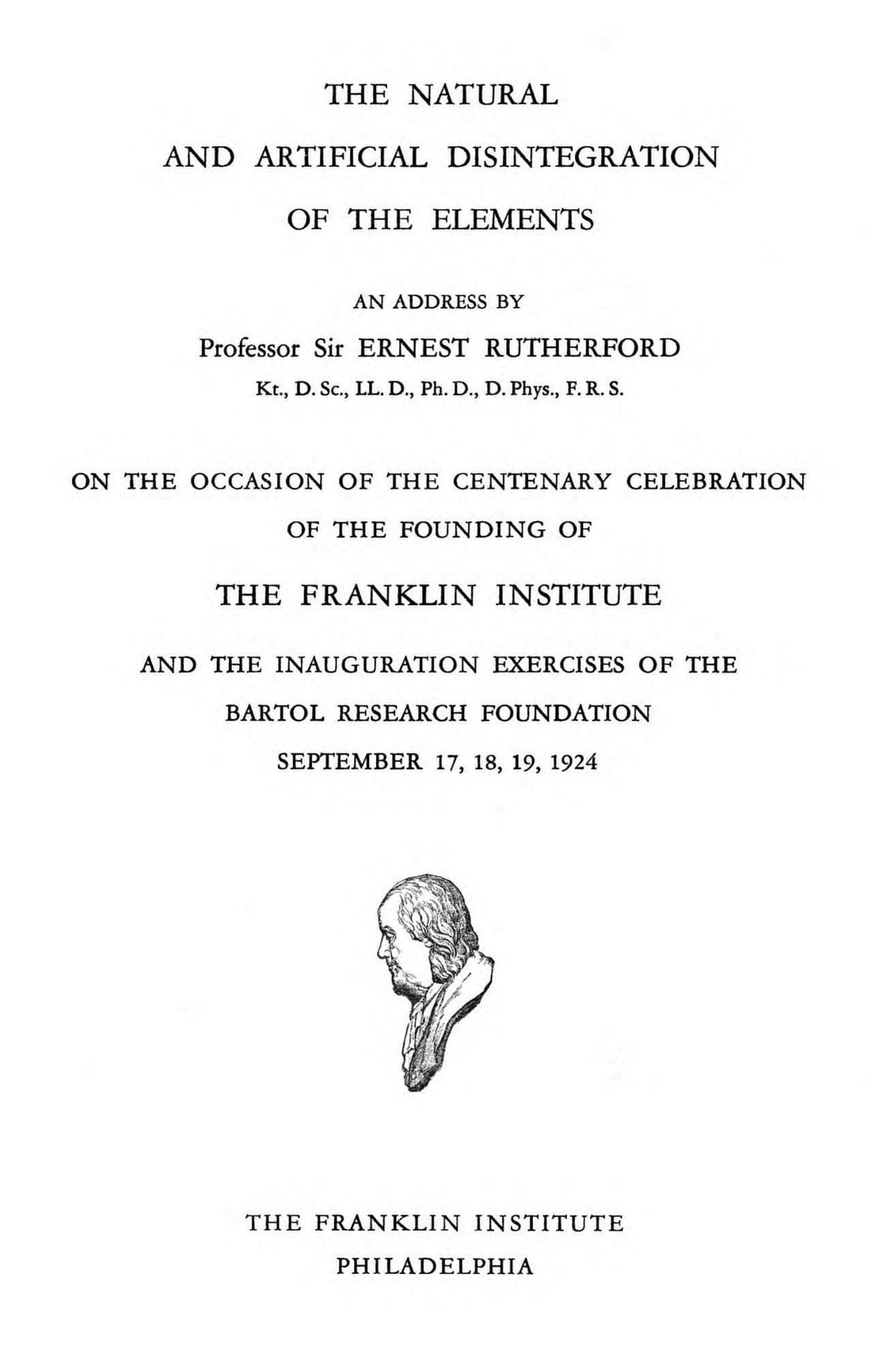
Books from the author



Link to this page
Add a free, dofollow link to Lex on your blog, forum, syllabus, or reading list.

<a href="https://lex-books.com/author/ernest-rutherford"><img src="https://lex-books.com/badges/read-on-lex.svg" alt="Ernest Rutherford on Lex" width="160" height="40"></a>[](https://lex-books.com/author/ernest-rutherford)[url=https://lex-books.com/author/ernest-rutherford][img]https://lex-books.com/badges/read-on-lex.svg[/img][/url]Ernest Rutherford on Lex: https://lex-books.com/author/ernest-rutherford