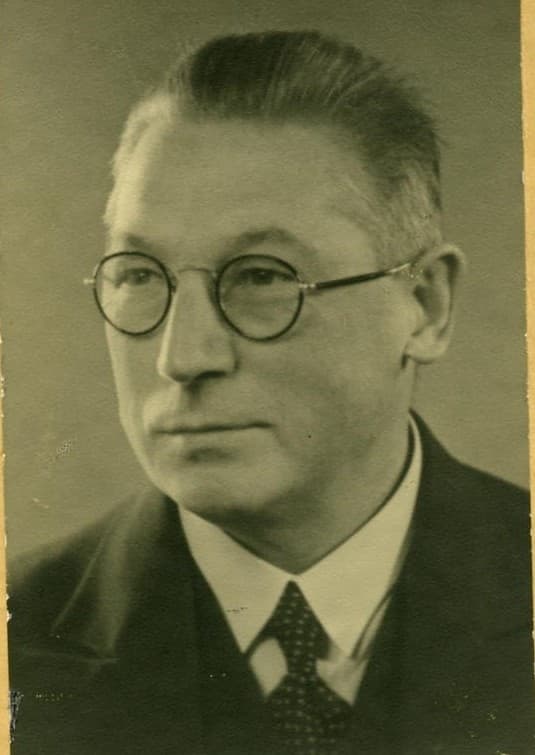
Rudolf Rothe
Rudolf Rothe was a prominent German applied mathematician known for his significant contributions to the field during the early 20th century. Born in Berlin, he dedicated his career to advancing mathematical theories and their practical applications, particularly in the realms of mechanics and engineering. His work laid the groundwork for future developments in applied mathematics, influencing both academic research and industrial practices. Rothe's insights into mathematical modeling and problem-solving techniques were particularly noteworthy, as they bridged the gap between theoretical mathematics and real-world applications. Throughout his career, Rothe published numerous papers that explored various mathematical concepts, including differential equations and their applications in physics. His legacy is marked by his ability to synthesize complex mathematical theories into accessible frameworks that could be utilized by engineers and scientists alike. Despite the challenges he faced during the tumultuous years leading up to World War II, his contributions to mathematics remained influential, and he is remembered as a key figure in the evolution of applied mathematics in Germany and beyond.
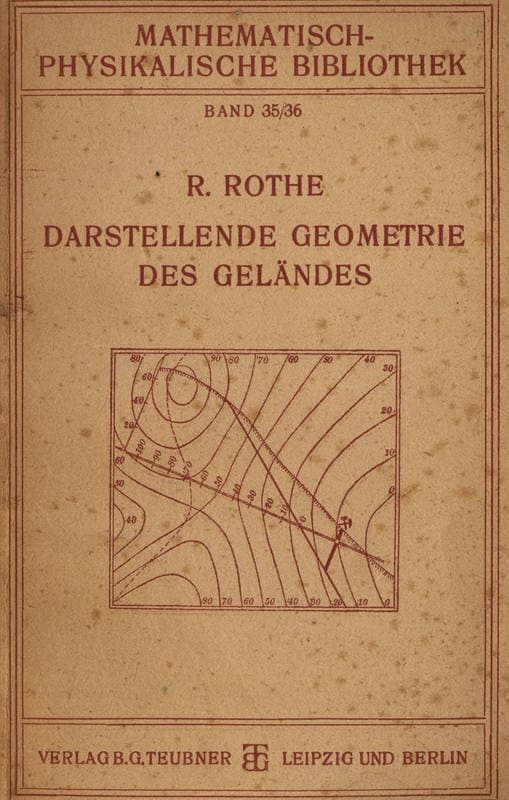
Books from the author



Link to this page
Add a free, dofollow link to Lex on your blog, forum, syllabus, or reading list.

<a href="https://lex-books.com/author/rudolf-rothe"><img src="https://lex-books.com/badges/read-on-lex.svg" alt="Rudolf Rothe on Lex" width="160" height="40"></a>[](https://lex-books.com/author/rudolf-rothe)[url=https://lex-books.com/author/rudolf-rothe][img]https://lex-books.com/badges/read-on-lex.svg[/img][/url]Rudolf Rothe on Lex: https://lex-books.com/author/rudolf-rothe