Waste Land
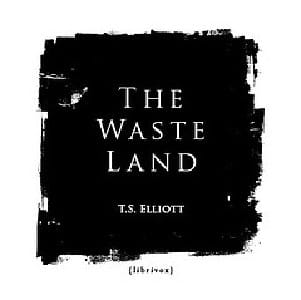
The poem that shattered the rules of poetry and rebuilt them in its own fractured image. Written in the aftermath of World War I, when Europe lay in cultural and spiritual ruins, T.S. Eliot's masterpiece opens with four words that invert everything we expect: "April is the cruelest month." Not spring's renewal but its cruelty. Not hope but the death of hope. Here, memory dissolves into hallucination, ancient myth collides with music-hall comedy, and a dying king waits in a ruined chapel for rain that will never come. Eliot demands we follow him through a landscape where meaning has collapsed, where the past and present bleed together in a single scream of fragmentation. He pulls Sanskrit, German, French, Italian, and English into one voice, and that voice says: this is what remains when everything breaks. The poem endures because its wasteland feels less like allegory than prophecy. Every generation finds its own ruins here, its own dust, its own handful of fear. The final word, "Shantih shantih shantih", the peace that passes understanding, lands like a whisper from the bottom of a well, offering no comfort, only the possibility that meaning might, somehow, someday, return. For readers willing to be undone.
Editions


Link to this book
Add a free, dofollow link to Lex on your blog, forum, syllabus, or reading list.

<a href="https://lex-books.com/book/waste-land-5008a402-0432-4946-b439-16128d646674"><img src="https://lex-books.com/badges/read-on-lex.svg" alt="Read Waste Land by T. S. Eliot free on Lex" width="160" height="40"></a>[](https://lex-books.com/book/waste-land-5008a402-0432-4946-b439-16128d646674)[url=https://lex-books.com/book/waste-land-5008a402-0432-4946-b439-16128d646674][img]https://lex-books.com/badges/read-on-lex.svg[/img][/url]Read Waste Land by T. S. Eliot free on Lex: https://lex-books.com/book/waste-land-5008a402-0432-4946-b439-16128d646674Cite this book
Reading this edition for a paper or guide? Copy a citation.
Eliot, T. S.. Waste Land. Lex, lex-books.com/book/waste-land-5008a402-0432-4946-b439-16128d646674.Eliot, T. S. (n.d.). Waste Land. Lex. https://lex-books.com/book/waste-land-5008a402-0432-4946-b439-16128d646674Eliot, T. S.. Waste Land. Lex. https://lex-books.com/book/waste-land-5008a402-0432-4946-b439-16128d646674.