Views of Nature: Or Contemplations on the Sublime Phenomena of Creation: With Scientific Illustrations
1808

Views of Nature: Or Contemplations on the Sublime Phenomena of Creation: With Scientific Illustrations
1808
Translated by Henry G. (Henry George) Bohn
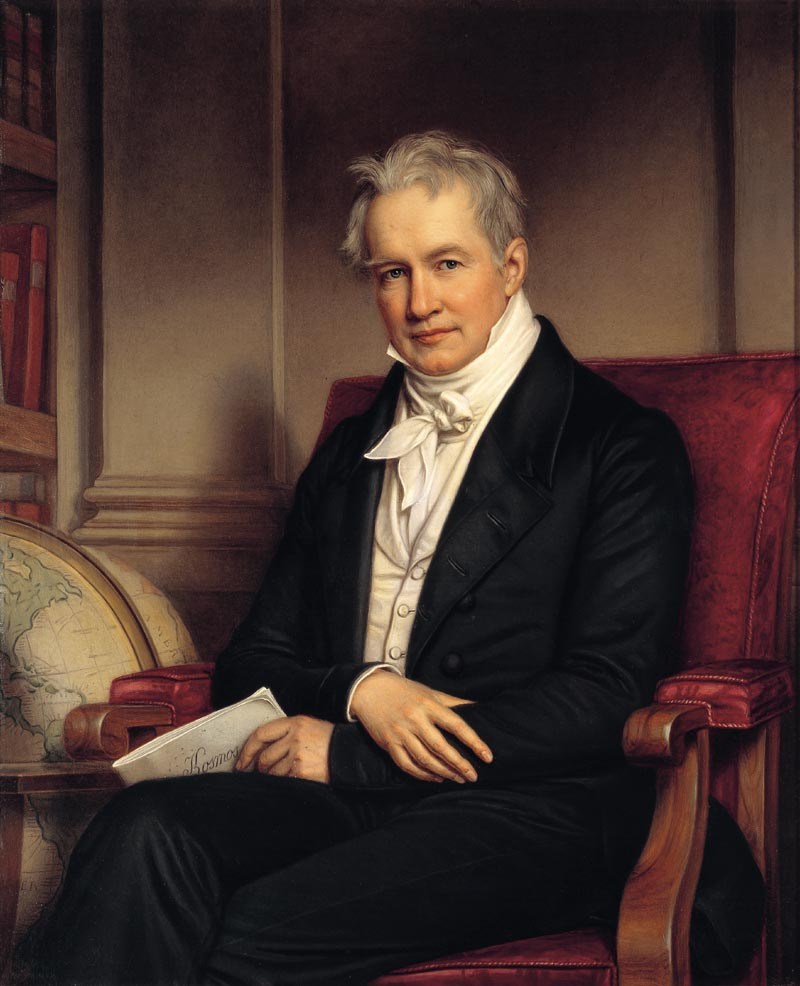
Before conservation became a concept, before nature writing had a name, Alexander von Humboldt wrote this book. Drawing on his legendary 1799-1804 expedition through Central and South America, Humboldt crafted a radical vision: nature not as a catalog of specimens, but as an interconnected web of force and form, beauty and law. Here are the lush rainforests of Venezuela beside the barren Argentine steppes, each rendered with the eye of a scientist and the soul of a poet. Humboldt's prose weaves climate, vegetation, and human experience into something unprecedented: a book that made readers see the natural world differently. It influenced Emerson's philosophy, Thoreau's Walden, Poe's vividest landscapes, and painter Frederic Edwin Church's monumental canvases. Views of Nature was Humboldt's personal favorite, and for good reason. It remains a founding document of environmental consciousness, a book that proves rigorous science and literary beauty were never enemies.
Editions

X-Ray
“It is easier to find courage for the daring act of a moment, and it requires less inner strength, than does the long patience of enduring physical suffering, deeply driven by a spiritual interest to move forward, disregarding the certainty of encountering again, but with weakened faculties, the same deprivations on the return trip.””
— Alexander von Humboldt
Link to this book
Add a free, dofollow link to Lex on your blog, forum, syllabus, or reading list.

<a href="https://lex-books.com/book/views-of-nature-or-contemplations-on-the-sublime-phenomena-of-creation-with-scie-3ca84c32-3da2-4afb-891b-b451e29c3074"><img src="https://lex-books.com/badges/read-on-lex.svg" alt="Read Views of Nature: Or Contemplations on the Sublime Phenomena of Creation: With Scientific Illustrations by Alexander von Humboldt free on Lex" width="160" height="40"></a>[](https://lex-books.com/book/views-of-nature-or-contemplations-on-the-sublime-phenomena-of-creation-with-scie-3ca84c32-3da2-4afb-891b-b451e29c3074)[url=https://lex-books.com/book/views-of-nature-or-contemplations-on-the-sublime-phenomena-of-creation-with-scie-3ca84c32-3da2-4afb-891b-b451e29c3074][img]https://lex-books.com/badges/read-on-lex.svg[/img][/url]Read Views of Nature: Or Contemplations on the Sublime Phenomena of Creation: With Scientific Illustrations by Alexander von Humboldt free on Lex: https://lex-books.com/book/views-of-nature-or-contemplations-on-the-sublime-phenomena-of-creation-with-scie-3ca84c32-3da2-4afb-891b-b451e29c3074Cite this book
Reading this edition for a paper or guide? Copy a citation.
Humboldt, Alexander von. Views of Nature: Or Contemplations on the Sublime Phenomena of Creation: With Scientific Illustrations. Lex, lex-books.com/book/views-of-nature-or-contemplations-on-the-sublime-phenomena-of-creation-with-scie-3ca84c32-3da2-4afb-891b-b451e29c3074.Humboldt, A. V. (1808). Views of Nature: Or Contemplations on the Sublime Phenomena of Creation: With Scientific Illustrations. Lex. https://lex-books.com/book/views-of-nature-or-contemplations-on-the-sublime-phenomena-of-creation-with-scie-3ca84c32-3da2-4afb-891b-b451e29c3074Humboldt, Alexander von. Views of Nature: Or Contemplations on the Sublime Phenomena of Creation: With Scientific Illustrations. Lex. https://lex-books.com/book/views-of-nature-or-contemplations-on-the-sublime-phenomena-of-creation-with-scie-3ca84c32-3da2-4afb-891b-b451e29c3074.