Hygiene: A Manual of Personal and Public Health (new Edition)
1902
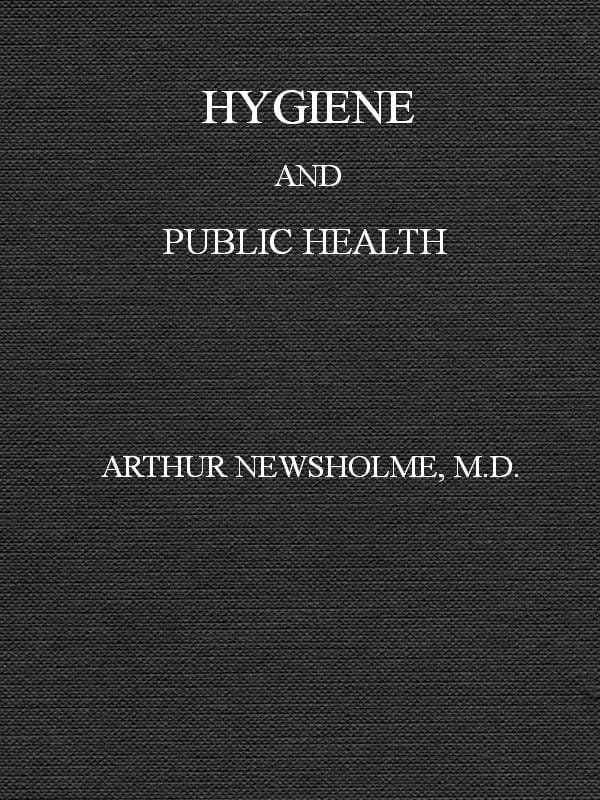
Hygiene: A Manual of Personal and Public Health (new Edition)
1902
At the dawn of the twentieth century, infectious disease was humanity's great leveller. Sir Arthur Newsholme, one of Britain's foremost public health authorities, wrote this manual as a manifesto for a cleaner, healthier world. The book emerges from an era when scientists were finally connecting the dots between sanitation and survival, when cholera and typhoid still stalked cities, and when the radical idea that disease could be prevented rather than merely treated was gaining ground. Newsholme traces hygiene from its ancient roots in religious law and classical mythology through to the scientific breakthroughs of his own time. He examines the trinity of healthy living: food, water, and air, explaining how contaminated supplies and poor ventilation seeded illness. The text is grounded in data and public health records, demonstrating that strategic interventions in sanitation and nutrition could transform entire populations. For modern readers, the book offers a fascinating window into the origins of epidemiology. This is the science of prevention before antibiotics, before vaccines for many diseases, when the best minds believed cleanliness itself was the frontier between civilization and death.
Editions
Link to this book
Add a free, dofollow link to Lex on your blog, forum, syllabus, or reading list.

<a href="https://lex-books.com/book/hygiene-a-manual-of-personal-and-public-health-new-edition-05de2756-84d0-45f4-b6ef-f88fb3208bc4"><img src="https://lex-books.com/badges/read-on-lex.svg" alt="Read Hygiene: A Manual of Personal and Public Health (new Edition) by Arthur, Sir Newsholme free on Lex" width="160" height="40"></a>[](https://lex-books.com/book/hygiene-a-manual-of-personal-and-public-health-new-edition-05de2756-84d0-45f4-b6ef-f88fb3208bc4)[url=https://lex-books.com/book/hygiene-a-manual-of-personal-and-public-health-new-edition-05de2756-84d0-45f4-b6ef-f88fb3208bc4][img]https://lex-books.com/badges/read-on-lex.svg[/img][/url]Read Hygiene: A Manual of Personal and Public Health (new Edition) by Arthur, Sir Newsholme free on Lex: https://lex-books.com/book/hygiene-a-manual-of-personal-and-public-health-new-edition-05de2756-84d0-45f4-b6ef-f88fb3208bc4Cite this book
Reading this edition for a paper or guide? Copy a citation.
Arthur, Sir Newsholme. Hygiene: A Manual of Personal and Public Health (new Edition). Lex, lex-books.com/book/hygiene-a-manual-of-personal-and-public-health-new-edition-05de2756-84d0-45f4-b6ef-f88fb3208bc4.Arthur, S. N. (1902). Hygiene: A Manual of Personal and Public Health (new Edition). Lex. https://lex-books.com/book/hygiene-a-manual-of-personal-and-public-health-new-edition-05de2756-84d0-45f4-b6ef-f88fb3208bc4Arthur, Sir Newsholme. Hygiene: A Manual of Personal and Public Health (new Edition). Lex. https://lex-books.com/book/hygiene-a-manual-of-personal-and-public-health-new-edition-05de2756-84d0-45f4-b6ef-f88fb3208bc4.