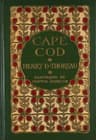
Cape Cod
1865
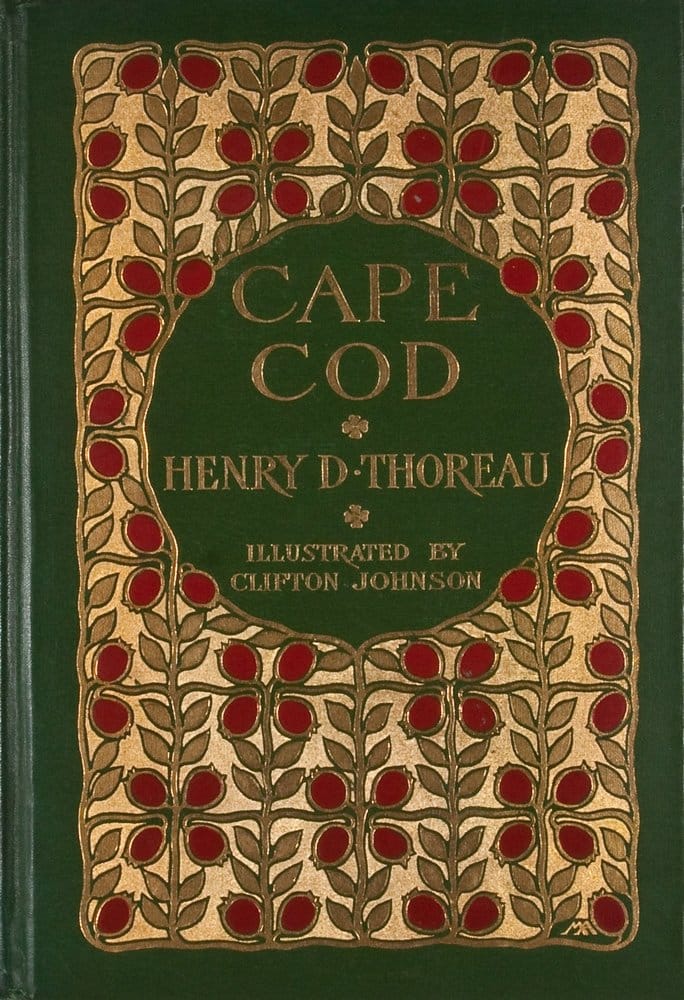
Cape Cod
1865
Thoreau's Cape Cod opens with a shipwreck. The brig St. John has broken apart on the rocky Massachusetts coast, and Thoreau walks among the bodies, the scattered cargo, the silence that follows catastrophe. This is not the optimistic nature writing of Walden. This is something older and harder: a man confronting the ocean's indifference and finding, in that indifference, a strange freedom. Over several visits across seasons, Thoreau roams the peninsula's windswept dunes, marshlands, and isolated villages. He catalogs the terns and the fishermen, the shipwreck survivors and the hermits who have made their peace with the edge of the world. The prose moves between exact naturalist observation and philosophical meditation, between the comic particulars of Cape life (the locals, the weather, the bad roads) and the vast, impersonal rhythms of tide and time. Cape Cod is Thoreau at his most austere, his most unflinching. He does not comfort. He describes. What remains is a book about thresholds: where land ends and sea begins, where life stops and death starts, where solitude becomes something like truth. For readers who want their nature writing to ache.
Editions
X-Ray
“The sea-shore is a sort of neutral ground, a most advantageous point from which to contemplate this world.””
— Henry David Thoreau
“The time must come when this coast (Cape Cod) will be a place of resort for those New-Englanders who really wish to visit the sea-side. At present it is wholly unknown to the fashionable world, and probably it will never be agreeable to them. If it is merely a ten-pin alley, or a circular railway, or an ocean of mint-julep, that the visitor is in search of,”
— Henry David Thoreau
“It is hard to forget that which it is worse than useless to remember.””
— Henry David Thoreau
“Consider what stuff history is made of,”
— Henry David Thoreau
“Thus the great civilizer sends out its emissaries, sooner or later, to every sandy cape and light-house of the New World which the census-taker visits, and summons the savage there to surrender.””
— Henry David Thoreau
“Perhaps this was the first instance of that quiet way of "speaking for" a place not yet occupied, or at least not improved as much as it may be, which their descendants have practised, and are still practising so extensively. Not Any seems to have been the sole proprietor of all America before the Yankees [...] At any rate, I know that if you hold a thing unjustly, there will surely be the devil to pay at last.””
— Henry David Thoreau
“THE SHIPWRECK””
— Henry David Thoreau
Link to this book
Add a free, dofollow link to Lex on your blog, forum, syllabus, or reading list.

<a href="https://lex-books.com/book/cape-cod-37a0c5f6-83f4-4557-bf8f-f4b479b74bd9"><img src="https://lex-books.com/badges/read-on-lex.svg" alt="Read Cape Cod by Henry David Thoreau free on Lex" width="160" height="40"></a>[](https://lex-books.com/book/cape-cod-37a0c5f6-83f4-4557-bf8f-f4b479b74bd9)[url=https://lex-books.com/book/cape-cod-37a0c5f6-83f4-4557-bf8f-f4b479b74bd9][img]https://lex-books.com/badges/read-on-lex.svg[/img][/url]Read Cape Cod by Henry David Thoreau free on Lex: https://lex-books.com/book/cape-cod-37a0c5f6-83f4-4557-bf8f-f4b479b74bd9Cite this book
Reading this edition for a paper or guide? Copy a citation.
Thoreau, Henry David. Cape Cod. Lex, lex-books.com/book/cape-cod-37a0c5f6-83f4-4557-bf8f-f4b479b74bd9.Thoreau, H. D. (1865). Cape Cod. Lex. https://lex-books.com/book/cape-cod-37a0c5f6-83f4-4557-bf8f-f4b479b74bd9Thoreau, Henry David. Cape Cod. Lex. https://lex-books.com/book/cape-cod-37a0c5f6-83f4-4557-bf8f-f4b479b74bd9.