Through the Looking-Glass (version 4)
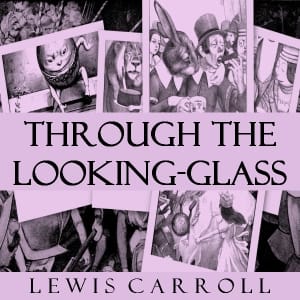
What happens when you step through the looking glass? You enter a world where things run backwards, where you can be afraid of something that hasn't happened yet, where memory works in reverse. Lewis Carroll's sequel to Alice's Adventures in Wonderland is stranger and more structurally rigorous than its predecessor, a kind of fever-dream chess game where Alice herself is a pawn, moving square by square toward the eighth square to become a queen. In this inverted world, nursery rhyme characters have grown corporeal and caustic: Tweedledee and Tweedledum argue about the reality of monsters; Humpty Dumpty dismisses words as whatever he decides they mean; the White Queen lives in last Thursday, perpetually terrified of what hasn't occurred. Carroll populates this world with the Lion and the Unicorn, a fawn who trusts Alice because neither of them is a hunter, and the White Knight whose inventions always fail and always make him weep. The famous "Jabberwocky" appears here, that poem in impossible language that somehow makes perfect sense. The book endures because it captures the strange logic of childhood: rules that make no sense but must be followed, words that can mean whatever you need them to, a world that insists it is perfectly normal while doing the impossible. It is for readers who love language at play, who puzzle over impossible things, and who remember that there was once a world behind the mirror that made perfect sense while making no sense at all.
Editions


Link to this book
Add a free, dofollow link to Lex on your blog, forum, syllabus, or reading list.

<a href="https://lex-books.com/book/through-the-looking-glass-version-4-6863a32a-f753-42e5-abc9-1167446bce67"><img src="https://lex-books.com/badges/read-on-lex.svg" alt="Read Through the Looking-Glass (version 4) by Lewis Carroll free on Lex" width="160" height="40"></a>[](https://lex-books.com/book/through-the-looking-glass-version-4-6863a32a-f753-42e5-abc9-1167446bce67)[url=https://lex-books.com/book/through-the-looking-glass-version-4-6863a32a-f753-42e5-abc9-1167446bce67][img]https://lex-books.com/badges/read-on-lex.svg[/img][/url]Read Through the Looking-Glass (version 4) by Lewis Carroll free on Lex: https://lex-books.com/book/through-the-looking-glass-version-4-6863a32a-f753-42e5-abc9-1167446bce67Cite this book
Reading this edition for a paper or guide? Copy a citation.
Carroll, Lewis. Through the Looking-Glass (version 4). Lex, lex-books.com/book/through-the-looking-glass-version-4-6863a32a-f753-42e5-abc9-1167446bce67.Carroll, L. (n.d.). Through the Looking-Glass (version 4). Lex. https://lex-books.com/book/through-the-looking-glass-version-4-6863a32a-f753-42e5-abc9-1167446bce67Carroll, Lewis. Through the Looking-Glass (version 4). Lex. https://lex-books.com/book/through-the-looking-glass-version-4-6863a32a-f753-42e5-abc9-1167446bce67.