The Water-Babies
1863
The Water-Babies
1863
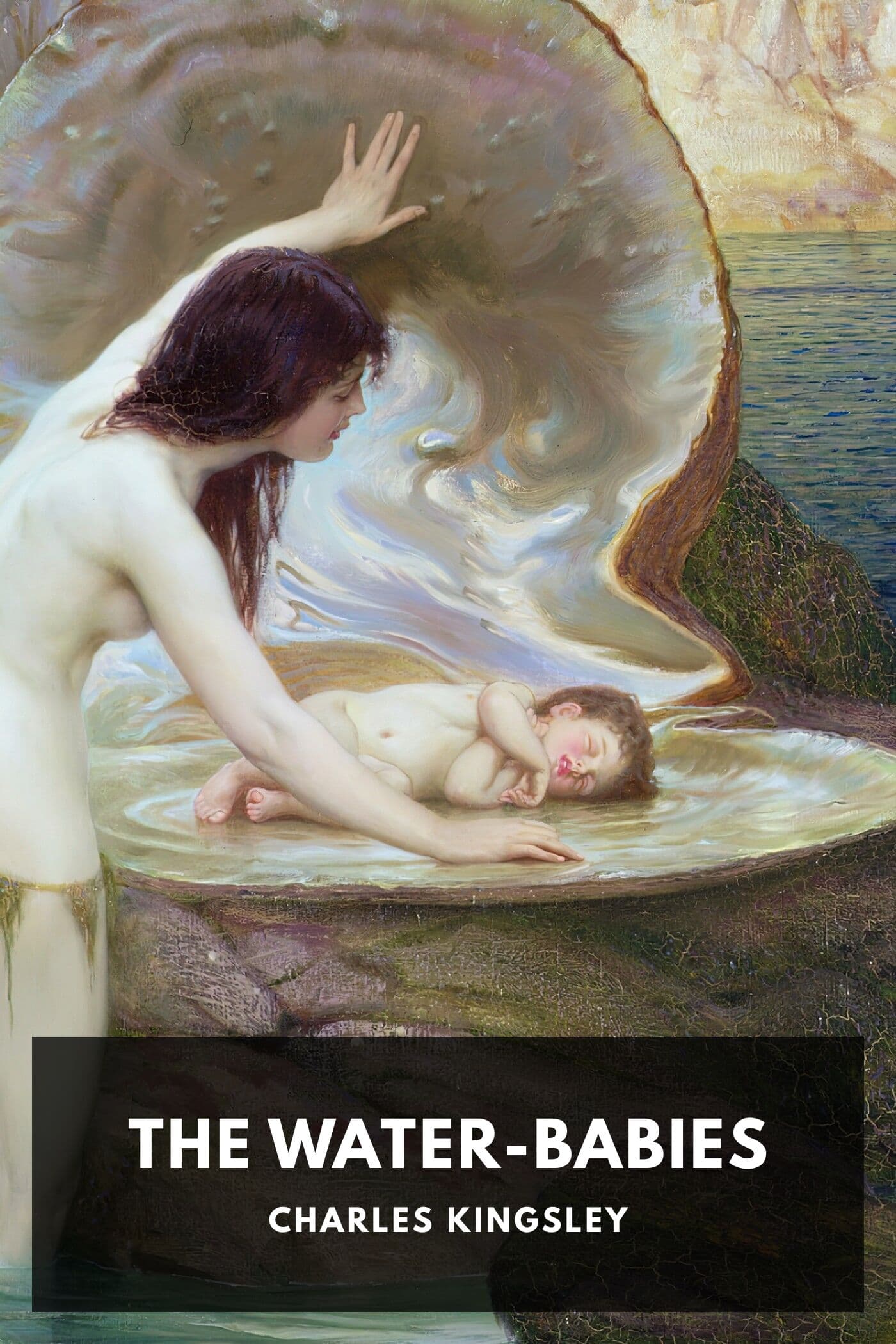
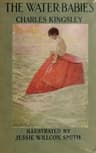
When Tom, a chimney-sweep boy, stumbles into the bedroom of a wealthy household and flees into a cold stream, he undergoes a strange metamorphosis: he becomes a water-baby, a tiny aquatic creature in an underwater world of caves, currents, and curious denizens. What begins as a Victorian fairy tale about adirty, neglected child longing for cleanliness transforms into something far stranger: a satirical adventure that weaves Darwinian natural history, sharp social commentary about child labor, and genuine fantasy into one improbable narrative. Tom swims through encounters with lobsters, dragons, and other water-babies, seeking redemption and purity in a world where he must learn that being good and being clean are not quite the same thing. The book zigs between earnest moral instruction and genuine adventure, between mocking Victorian hypocrisy and celebrating the wonder of the natural world. It is a product of its time, certainly, with its heavy-handed virtues and didactic tangents, but it also pulses with genuine affection for itshero and a reckless ambition to teach children about evolution, ethics, and empathy all at once. The water-babies swim on as a curious relic: a book that believed children could handle ideas as big as the origin of species, dressed up in flippers and fins.
Editions
X-Ray
“The most wonderful and the strongest things in the world, you know, are just the things which no one can see.””
— Charles Kingsley
“Did not learned men, too, hold, till within the last twenty-five years, that a flying dragon was an impossible monster? And do we not now know that there are hundreds of them found fossil up and down the world? People call them Pterodactyles: but that is only because they are ashamed to call them flying dragons, after denying so long that flying dragons could exist.””
— Charles Kingsley
“Do as you would be done by.””
— Charles Kingsley
“In fact, the fairies had turned him into a water-baby.A water-baby? You never heard of a water-baby. Perhaps not. That is the very reason why this story was written. (...)"But there are no such things as water-babies."How do you know that? Have you been there to see? And if you had been there to see, and had seen none, that would not prove that there were none. If Mr. Garth does not find a fox in Eversley Wood”
— Charles Kingsley
“Stop!" said the Irishwoman. "I have one more word for you both; for you will both see me again before all is over. Those that wish to be clean, clean they will be; and those that wish to be foul, foul they will be. Remember.””
— Charles Kingsley
“And what was the song which she sang? Ah, my little man, I am too old to sing that song, and you too young to understand it.””
— Charles Kingsley
“[...] his little whirl-about of a head was so full of the notion of going out to see the world, that it forgot her in five minutes: however, though his head forgot her, I am glad to say his heart did not.””
— Charles Kingsley
“Some people think that there are no fairies. But it is a wide world, and plenty of room in it for fairies, without people seeing them; unless, of course, they look in the right place.””
— Charles Kingsley
“...children always wake after they have slept exactly as long as is good for them..””
— Charles Kingsley
Link to this book
Add a free, dofollow link to Lex on your blog, forum, syllabus, or reading list.

<a href="https://lex-books.com/book/the-water-babies-2aed22f4-b431-44b6-a5b8-e495ebbc0d63"><img src="https://lex-books.com/badges/read-on-lex.svg" alt="Read The Water-Babies by Charles Kingsley free on Lex" width="160" height="40"></a>[](https://lex-books.com/book/the-water-babies-2aed22f4-b431-44b6-a5b8-e495ebbc0d63)[url=https://lex-books.com/book/the-water-babies-2aed22f4-b431-44b6-a5b8-e495ebbc0d63][img]https://lex-books.com/badges/read-on-lex.svg[/img][/url]Read The Water-Babies by Charles Kingsley free on Lex: https://lex-books.com/book/the-water-babies-2aed22f4-b431-44b6-a5b8-e495ebbc0d63Cite this book
Reading this edition for a paper or guide? Copy a citation.
Kingsley, Charles. The Water-Babies. Lex, lex-books.com/book/the-water-babies-2aed22f4-b431-44b6-a5b8-e495ebbc0d63.Kingsley, C. (1863). The Water-Babies. Lex. https://lex-books.com/book/the-water-babies-2aed22f4-b431-44b6-a5b8-e495ebbc0d63Kingsley, Charles. The Water-Babies. Lex. https://lex-books.com/book/the-water-babies-2aed22f4-b431-44b6-a5b8-e495ebbc0d63.