The Three Cities Trilogy: Paris, Complete
1894
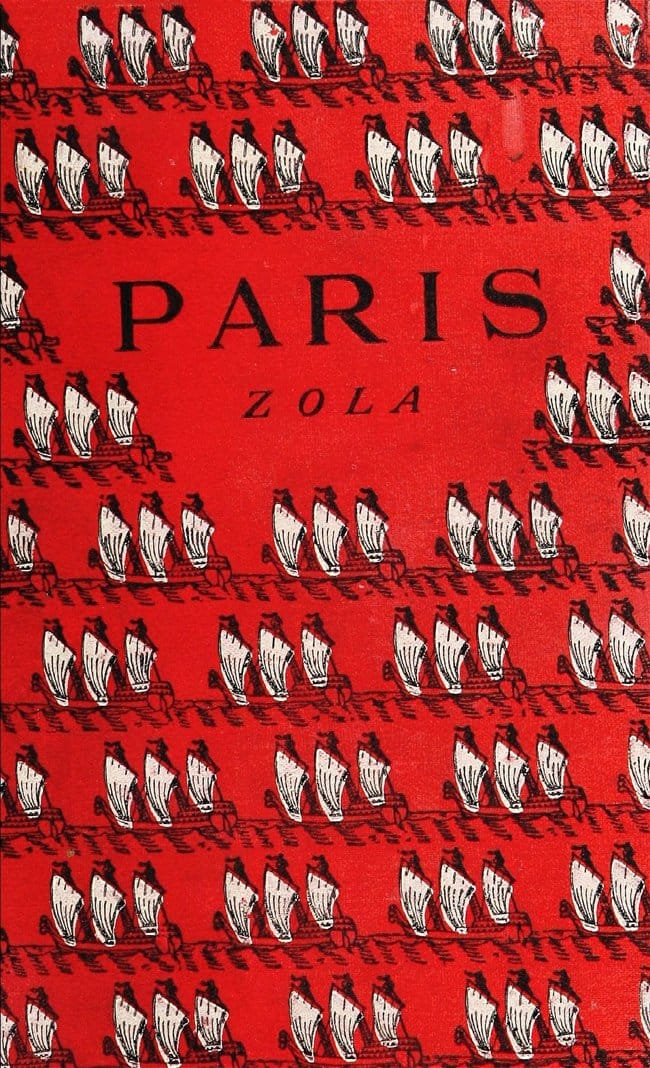
The Three Cities Trilogy: Paris, Complete
1894
Translated by Ernest Alfred Vizetelly
In the final volume of Zola's masterly trilogy, Abbe Pierre Froment walks the streets of late 19th-century Paris, a priest who has lost his faith yet cannot abandon the poor. Dispatched by his superiors to deliver money to a dying old man named Laveuve, Pierre confronts a city of staggering contrast: opulence beside squalor, spiritual emptiness amid material excess. As he moves through the city's labyrinthine poverty, Zola strips away the romantic veneer of Paris to reveal a metropolis teeming with human suffering, moral decay, and the quiet heroism of those whom society has forgotten. Pierre's journey becomes an odyssey through his own soul. The Church that sent him has calcified into bureaucracy; the charity it offers feels like breadcrumbs flung at an ocean of need. Surrounded by characters who embody both the degradation and dignity of the human condition, he must reckon with a terrible question: can faith survive when its institutional vessel has rotted? Zola's naturalist gaze spares nothing in this portrait of a city hurtling toward the threshold of the twentieth century, where the old certainties of religion and class are crumbling alongside the ancient streets themselves. For readers who crave fiction that refuses to look away, that insists on the political act of depicting poverty with unflinching precision, Paris remains essential. It is a novel for anyone who has wondered whether justice is possible in a world built on inequality.
Editions

X-Ray
“In the midst of all his sadness, Pierre felt deep compassion penetrate his heart. He was upset by the thought that mankind should be so wretched, reduced to such a state of woe, so bare, so weak, so utterly forsaken, that it renounced its own reason to place the one sole possibility of happiness in the hallucinatory intoxication of dreams. Tears once more filled his eyes; he wept for himself and for others, for all the poor tortured beings who feel a need of stupefying and numbing their pains in order to escape from the realities of the world.””
— Emile Zola
“How evil life must be if it were indeed necessary that such imploring cries, such cries of physical and moral wretchedness, should ever and ever ascend to heaven!””
— Emile Zola
“Ever since the morning, Pierre had beheld many frightful sufferings in that woeful white train. But none had so distressed his soul as did that wretched female skeleton, liquefying in the midst of its lace and its millions.””
— Emile Zola
“He beheld Lourdes, contaminated by Mammon, turned into a spot of abomination and perdition, transformed into a huge bazaar, where everything was sold, masses and souls alike!””
— Emile Zola
“...the water was scarcely inviting; for, through fear lest the output of the source should not suffice, the Fathers of the Grotto only allowed the water of the baths to be changed twice a day. And nearly a hundred patients being dipped in the same water, it can be imagined what a terrible soup the latter at last became. All manner of things were found in it, so that it was like a frightful of all ailments, a field of cultivation for every kind of poisonous germ, a quintessence of the most dreaded contagious diseases; the miraculous feature of it all being that men should emerge alive from their immersion in such filth.””
— Emile Zola
“Miserable humanity was clamouring from the depths of its abyss of suffering, and the clamour swept along, sending a shudder down every spine, for one and all were plunged in agony, refusing to die, longing to compel God to grant them eternal life. Ah ! life, life! That was what all those unfortunates, who had come from so far, amid so many obstacles, wanted - that was the one boon they asked for, in their wild desire to live it over again, to live it always! O Lord, whatever our misery, whatever the torment of our life may be, cure us, grant that we may begin to live again and suffer once more what we have suffered already. However unhappy we may be, to be is what we wish. It is not heaven that we ask Thee for, it is earth; and grant that we may leave it at the latest possible moment , never leave it indeed, if such be Thy good pleasure. And even when we no longer implore a physical cure, but a moral favour, it is still happiness that we ask for; happiness , the thirst for which alone consumes us. Oh Lord, grant that we may be happy and healthy; let us live, ay, let us live forever!””
— Emile Zola
“But his doubts were again coming back to him; when you needed a miracle to gain belief, it means that you are incapable of believing. There is no need for the Almighty to prove His existence.””
— Emile Zola
“There is no arguing with people who say that, since there is nothing but Nature, no process can be other than natural. There is no sign, even from heaven, that could break down the intellectual prejudice of such people. If they saw Jesus Christ Himself in glory, they could always say that "at present science cannot account for the phenomenon of a luminous body apparently seated upon a throne, but no doubt it will do so in the course of time." If they saw a dead and corrupting man rise from the grave, they could always argue that he could not have been dead and corrupting, or he could not have risen from the grave. Nothing but the Last Judgment could convince such persons. Even when the trumpet sounds, I believe that some of them, when they have recovered from their first astonishment, will make remarks about aural phenomena.””
— Emile Zola
Link to this book
Add a free, dofollow link to Lex on your blog, forum, syllabus, or reading list.

<a href="https://lex-books.com/book/the-three-cities-trilogy-paris-complete-46fb75ae-63ef-40d3-bb53-24340d661668"><img src="https://lex-books.com/badges/read-on-lex.svg" alt="Read The Three Cities Trilogy: Paris, Complete by Emile Zola free on Lex" width="160" height="40"></a>[](https://lex-books.com/book/the-three-cities-trilogy-paris-complete-46fb75ae-63ef-40d3-bb53-24340d661668)[url=https://lex-books.com/book/the-three-cities-trilogy-paris-complete-46fb75ae-63ef-40d3-bb53-24340d661668][img]https://lex-books.com/badges/read-on-lex.svg[/img][/url]Read The Three Cities Trilogy: Paris, Complete by Emile Zola free on Lex: https://lex-books.com/book/the-three-cities-trilogy-paris-complete-46fb75ae-63ef-40d3-bb53-24340d661668Cite this book
Reading this edition for a paper or guide? Copy a citation.
Zola, Emile. The Three Cities Trilogy: Paris, Complete. Lex, lex-books.com/book/the-three-cities-trilogy-paris-complete-46fb75ae-63ef-40d3-bb53-24340d661668.Zola, E. (1894). The Three Cities Trilogy: Paris, Complete. Lex. https://lex-books.com/book/the-three-cities-trilogy-paris-complete-46fb75ae-63ef-40d3-bb53-24340d661668Zola, Emile. The Three Cities Trilogy: Paris, Complete. Lex. https://lex-books.com/book/the-three-cities-trilogy-paris-complete-46fb75ae-63ef-40d3-bb53-24340d661668.