The Playboy of the Western World: A Comedy in Three Acts
1911
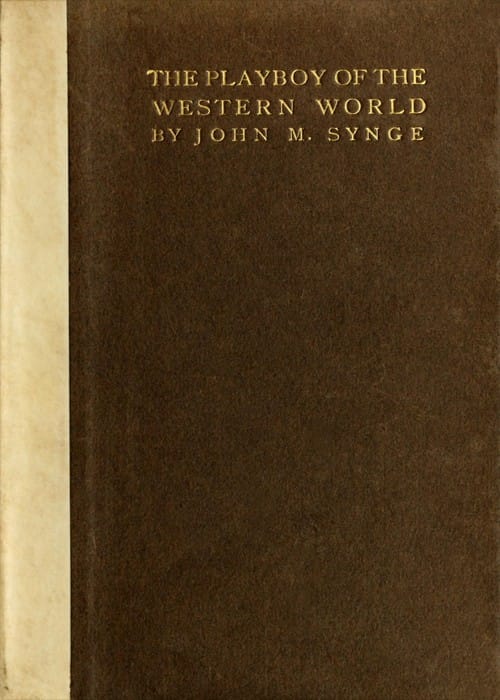
The Playboy of the Western World: A Comedy in Three Acts
1911
When a bedraggled young man stumbles into a County Mayo public house claiming to have killed his father, the villagers don't recoil in horror. They lean in. Christy Mahon expects rejection, but finds something far stranger: adulation. Pegeen Mike, the sharp-tongued publican's daughter, is smitten. The local men treat him like a folk hero. His violent story becomes the most exciting thing to happen in this quiet village in years. Synge's masterpiece asks a simple, devastating question: what makes a man a hero? The answer is hilariously, tragically absurd. When Christy's father shows up very much alive, the same people who celebrated him ready the rope. The play caused riots at its 1907 premiere, shocking Dublin audiences who couldn't stomach Synge's unflattering portrait of rural Irish life. But beneath the controversy lies a brilliant comedy about reputation, storytelling, and the stories we tell ourselves to escape the mundanity of small-town life. The language is wild, lyrical, often bawdy. The ending stings. It remains one of the most radical comedies in the English language, a play that refuses to let anyone off the hook, including you.
Editions

X-Ray
“If the mitred bishops seen you that time, they'd be the like of the holy prophets, I'm thinking, do be straining the bars of Paradise to lay eyes on the Lady Helen of Troy, and she abroad, pacing back and forward, with a nosegay in her golden shawl.””
— J. M. Synge
“I'll say, a strange man is a marvel, with his mighty talk; but what's a squabble in your back yard, and the blow of a loy, have taught me that there's a great gap between a gallous story and a dirty deed.””
— J. M. Synge
“Go on now and I’ll see you from this day stewing my oatmeal and washing my spuds, for I’m master of all fights from now.””
— J. M. Synge
“Isn't there the light of seven heavens in your heart alone, the way you'll be an angel's lamp to me from this out, and I abroad in the darkness, spearing salmons in the Owen, or the Carrowmore?””
— J. M. Synge
“May I meet him with one tooth and it aching, and one eye to be seeing seven and seventy devils in the twists of the road, and one old timber leg on him to limp into the scalding grave.””
— J. M. Synge
Link to this book
Add a free, dofollow link to Lex on your blog, forum, syllabus, or reading list.

<a href="https://lex-books.com/book/the-playboy-of-the-western-world-a-comedy-in-three-acts-4ace7dbf-c038-4799-9277-e6f1b874602e"><img src="https://lex-books.com/badges/read-on-lex.svg" alt="Read The Playboy of the Western World: A Comedy in Three Acts by J. M. Synge free on Lex" width="160" height="40"></a>[](https://lex-books.com/book/the-playboy-of-the-western-world-a-comedy-in-three-acts-4ace7dbf-c038-4799-9277-e6f1b874602e)[url=https://lex-books.com/book/the-playboy-of-the-western-world-a-comedy-in-three-acts-4ace7dbf-c038-4799-9277-e6f1b874602e][img]https://lex-books.com/badges/read-on-lex.svg[/img][/url]Read The Playboy of the Western World: A Comedy in Three Acts by J. M. Synge free on Lex: https://lex-books.com/book/the-playboy-of-the-western-world-a-comedy-in-three-acts-4ace7dbf-c038-4799-9277-e6f1b874602eCite this book
Reading this edition for a paper or guide? Copy a citation.
Synge, J. M.. The Playboy of the Western World: A Comedy in Three Acts. Lex, lex-books.com/book/the-playboy-of-the-western-world-a-comedy-in-three-acts-4ace7dbf-c038-4799-9277-e6f1b874602e.Synge, J. M. (1911). The Playboy of the Western World: A Comedy in Three Acts. Lex. https://lex-books.com/book/the-playboy-of-the-western-world-a-comedy-in-three-acts-4ace7dbf-c038-4799-9277-e6f1b874602eSynge, J. M.. The Playboy of the Western World: A Comedy in Three Acts. Lex. https://lex-books.com/book/the-playboy-of-the-western-world-a-comedy-in-three-acts-4ace7dbf-c038-4799-9277-e6f1b874602e.