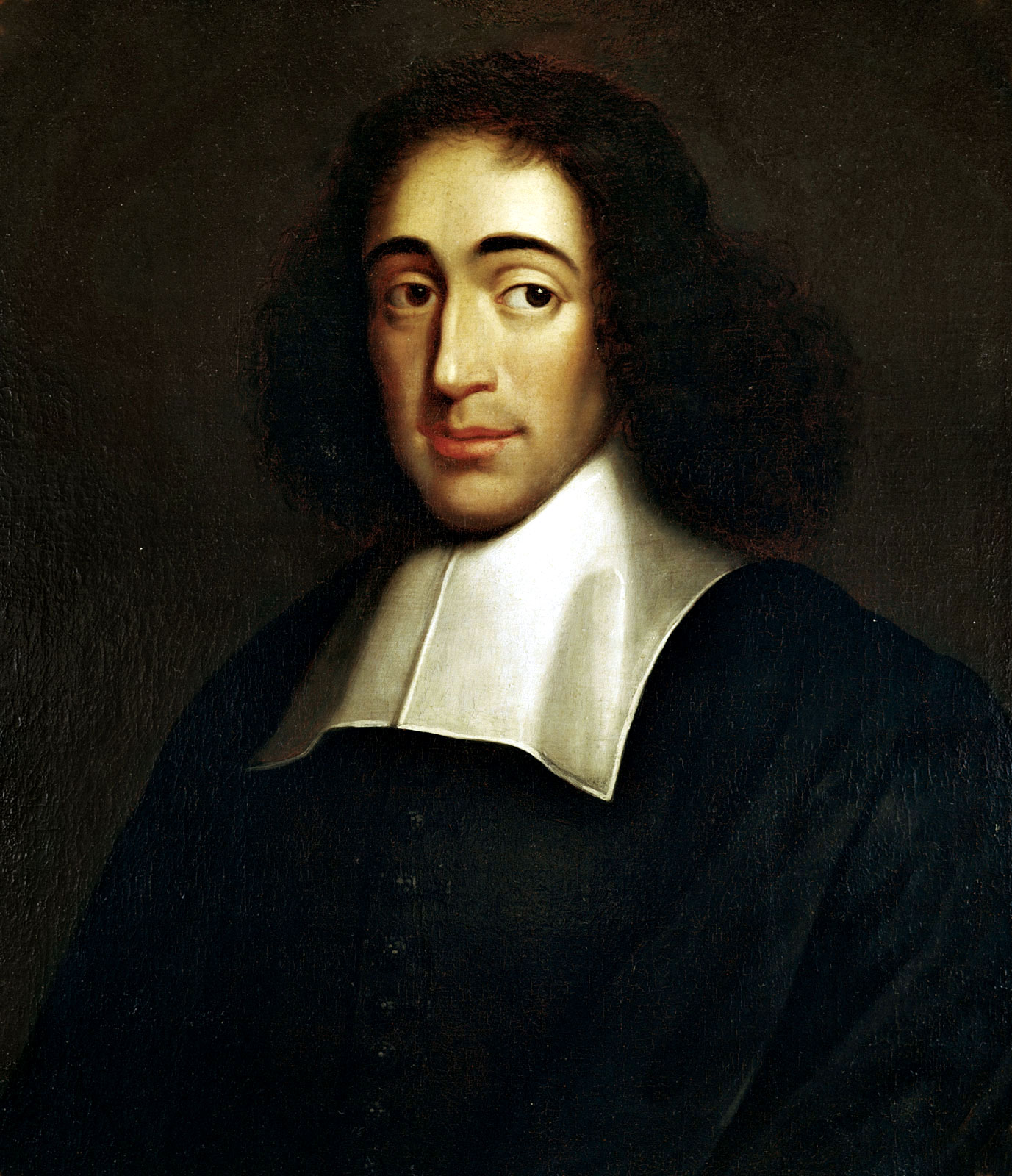
The Philosophy of Spinoza
Baruch Spinoza was excommunicated from Amsterdam's Jewish community in 1656 for his heretical views. Four centuries later, his radical vision remains one of the most daring in Western philosophy: God is not a separate being who created the universe, but the universe itself, every particle of matter, every thought in your mind, every star in the sky. This accessible edition gathers his essential writings, stripping away the geometrical formalism of the original Ethics to reveal the burning intelligence beneath. Spinoza argues that we live in a world of strict necessity, where everything follows inevitably from the nature of Nature itself, yet he insists this knowledge brings not despair but liberation. By understanding that our actions flow from our natures, we gain the clarity needed to live wisely. The philosopher who was condemned as an atheist by both synagogue and church offered something more radical than blasphemy: a vision of reality where the sacred and the mechanical are one, where determinism and freedom are not opposites, and where the path to virtue lies not in obedience to external law but in the clear perception of what we truly are.
Editions
X-Ray
“The less the mind understands and the more things it perceives, the greater its power of feigning is; and the more things it understands, the more that power is diminished.””
— Benedictus de Spinoza
“each will form universal images according to the conditioning of his body.””
— Benedictus de Spinoza
“In so far as we understand, we can desire nothing but that which must be, nor, in an absolute sense, can we find contentment in anything but truth.””
— Benedictus de Spinoza
“I realised that all the things which were the source and object of my anxiety held nothing of good or evil in themselves save in so far as the mind was influenced by them,””
— Benedictus de Spinoza
“In a state of nature nothing can be said to be just or unjust; this is so only in a civil state, where it is decided by common agreement what belongs to this or that man.””
— Benedictus de Spinoza
“He who exults in popular esteem has the daily burden of anxiously striving, acting and contriving to preserve his reputation. For the populace is fickle and inconstant, and unless a reputation is preserved it soon withers away.””
— Benedictus de Spinoza
“in the case of the given numbers 1, 2, 3, everybody can see that the fourth proportional is 6, and all the more clearly because we infer in one single intuition the fourth number from the ratio we see the first number bears to the second.””
— Benedictus de Spinoza
“those who have more often regarded with admiration the stature of men will understand by the word ‘man’ an animal of upright stature, while those who are wont to regard a different aspect will form a different common image of man, such as that man is a laughing animal, a feather-less biped, or a rational animal.””
— Benedictus de Spinoza
Link to this book
Add a free, dofollow link to Lex on your blog, forum, syllabus, or reading list.

<a href="https://lex-books.com/book/the-philosophy-of-spinoza-4cda1bd7-c7c6-4673-a560-392ac9709104"><img src="https://lex-books.com/badges/read-on-lex.svg" alt="Read The Philosophy of Spinoza by Benedictus de Spinoza free on Lex" width="160" height="40"></a>[](https://lex-books.com/book/the-philosophy-of-spinoza-4cda1bd7-c7c6-4673-a560-392ac9709104)[url=https://lex-books.com/book/the-philosophy-of-spinoza-4cda1bd7-c7c6-4673-a560-392ac9709104][img]https://lex-books.com/badges/read-on-lex.svg[/img][/url]Read The Philosophy of Spinoza by Benedictus de Spinoza free on Lex: https://lex-books.com/book/the-philosophy-of-spinoza-4cda1bd7-c7c6-4673-a560-392ac9709104Cite this book
Reading this edition for a paper or guide? Copy a citation.
Spinoza, Benedictus de. The Philosophy of Spinoza. Lex, lex-books.com/book/the-philosophy-of-spinoza-4cda1bd7-c7c6-4673-a560-392ac9709104.Spinoza, B. D. (n.d.). The Philosophy of Spinoza. Lex. https://lex-books.com/book/the-philosophy-of-spinoza-4cda1bd7-c7c6-4673-a560-392ac9709104Spinoza, Benedictus de. The Philosophy of Spinoza. Lex. https://lex-books.com/book/the-philosophy-of-spinoza-4cda1bd7-c7c6-4673-a560-392ac9709104.