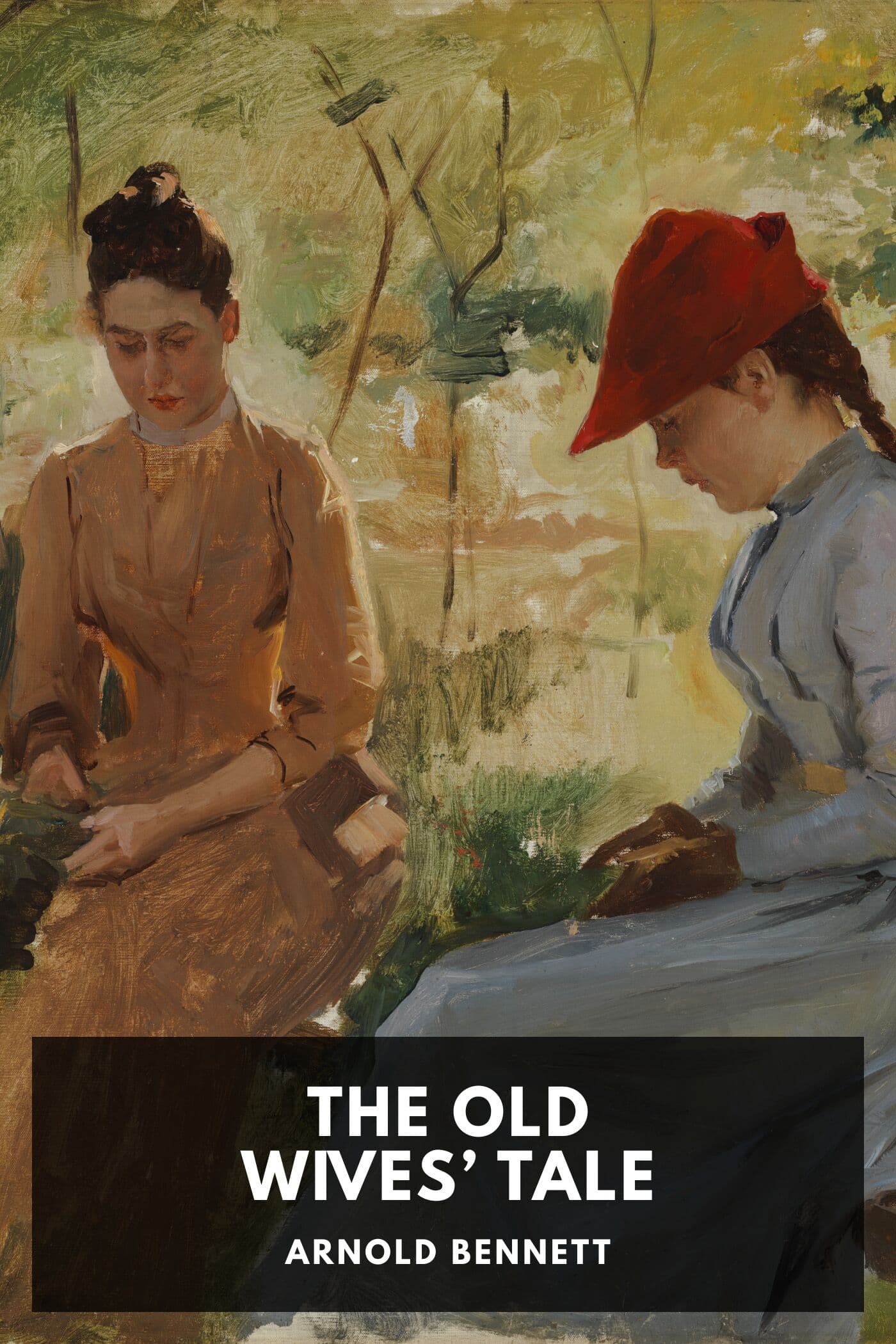
The Old Wives' Tale
1908
Two sisters. Sixty-five years. One stays in the dusty drapery shop of provincial Bursley; the other runs away to Paris and disappears into glamorous squalor. Arnold Bennett spent a decade writing this novel, and every page bears the weight of his obsession with what time does to ordinary lives. Constance and Sophia Baines begin as giggling girls in their father's shop in the Five Towns of Staffordshire, squabbling over servants and dreaming of futures they can't quite imagine. Then the decades collapse. Bennett captures the invisible tragedy of change itself, not dramatic disasters, but the slow accumulation of small choices and non-choices that reshape a life. The sisters reunite as old women, their youth vanished so gradually they never noticed it leaving. Bennett wrote the book after seeing an ancient woman in a Parisian restaurant and thinking: she was once young. That moment of recognition, that every stout old woman was once a girl with the whole world in her face, is the ache that powers this novel. It's a book that rewards patience. The prose moves at the pace of actual life, with all its tedium and sudden illuminations. If you've ever wondered how you became who you are, or looked at an old photograph of yourself and felt the strange grief of recognition, this novel will break you open.
Editions
X-Ray
“. . . humanity walks ever on a thin crust over terrific abysses.””
— Arnold Bennett
“The manner of his life was of no importance. What affected her was that he had once been young. That he had grown old, and was now dead. That was all. Youth and vigour had come to that. Youth and vigour always came to that. Everything came to that.””
— Arnold Bennett
“Good clothes, when put to the test, survive a change in fortune, as a Roman arch survives the luxury of departed empire.””
— Arnold Bennett
“Happily the inhabitants of the Five Towns in that era were passably pleased with themselves; and they never even suspected that they were not quite modern and not quite awake. They thought that the intellectual, the industrial, and the social movements had gone about as far as these movements could go, and they were amazed at their own progress.””
— Arnold Bennett
“God is not mocked!””
— Arnold Bennett
“Yet a little while," she thought, "and I shall be lying on a bed like that! And what shall I have lived for? What is the meaning of it?" The riddle of life itself was killing her, and she seemed to drown in a sea of inexpressible sorrow.””
— Arnold Bennett
Link to this book
Add a free, dofollow link to Lex on your blog, forum, syllabus, or reading list.

<a href="https://lex-books.com/book/the-old-wives-tale-93b960de-9fcd-4c5a-9fa1-9251b3468e03"><img src="https://lex-books.com/badges/read-on-lex.svg" alt="Read The Old Wives' Tale by Arnold Bennett free on Lex" width="160" height="40"></a>[](https://lex-books.com/book/the-old-wives-tale-93b960de-9fcd-4c5a-9fa1-9251b3468e03)[url=https://lex-books.com/book/the-old-wives-tale-93b960de-9fcd-4c5a-9fa1-9251b3468e03][img]https://lex-books.com/badges/read-on-lex.svg[/img][/url]Read The Old Wives' Tale by Arnold Bennett free on Lex: https://lex-books.com/book/the-old-wives-tale-93b960de-9fcd-4c5a-9fa1-9251b3468e03Cite this book
Reading this edition for a paper or guide? Copy a citation.
Bennett, Arnold. The Old Wives' Tale. Lex, lex-books.com/book/the-old-wives-tale-93b960de-9fcd-4c5a-9fa1-9251b3468e03.Bennett, A. (1908). The Old Wives' Tale. Lex. https://lex-books.com/book/the-old-wives-tale-93b960de-9fcd-4c5a-9fa1-9251b3468e03Bennett, Arnold. The Old Wives' Tale. Lex. https://lex-books.com/book/the-old-wives-tale-93b960de-9fcd-4c5a-9fa1-9251b3468e03.