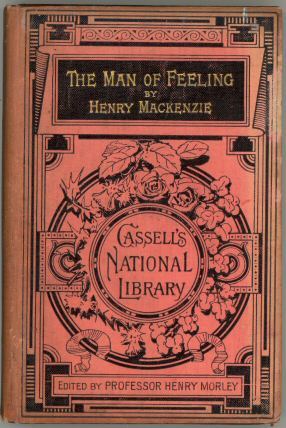
The Man of Feeling
1771
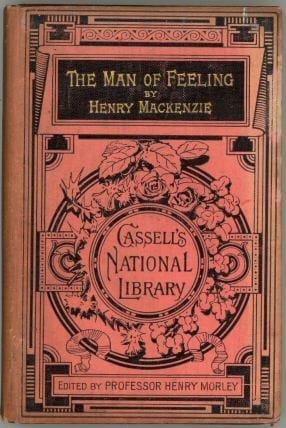
The novel that defined an era of feeling. When Henry Mackenzie published The Man of Feeling in 1771, it sparked something close to mania, readers wept openly, argued in coffee houses about whether it would elevate or destroy English literature. The book follows Harley, a man so tenderhearted he cannot witness suffering without intervention, so principled he will sacrifice his own happiness rather than compromise his virtue. Through a series of vignettes, we watch him move through a commercial world that has no patience for his compassion. He helps the unfortunate, loses his love, and fails spectacularly at worldly success. The novel asks what Mackenzie saw as the vital question of his age: in a cold, calculating society, is maintaining one's humanity wisdom or folly? The book captures a historical moment when sentiment became philosophy and sensitivity was hailed as the highest virtue. It laid groundwork for the Romantic movement that would follow. Modern readers may find its earnestness challenging, but the novel remains essential for understanding where modern emotional literature began.
Editions
X-Ray
“Indeed, I have observed one ingredient, somewhat necessary in a man’s composition towards happiness, which people of feeling would do well to acquire; a certain respect for the follies of mankind: for there are so many fools whom the opinion of the world entitles to regard, whom accident has placed in heights of which they are unworthy, that he who cannot restrain his contempt or indignation at the sight will be too often quarrelling with the disposal of things to relish that share which is allotted to himself. ””
— Henry Mackenzie
“but the world is apt to make an erroneous estimate: ignorant of the dispositions which constitute our happiness or misery, they bring to an undistinguished scale the means of the one, as connected with power, wealth, or grandeur, and of the other with their contraries. Philosophers and poets have often protested against this decision; but their arguments have been despised as declamatory, or ridiculed as romantic.””
— Henry Mackenzie
“As for faces - you may look into them to know, whether a man's nose be a long or a short one.””
— Henry Mackenzie
“In this world of semblance, we are contented with personating happiness; to feel it, is an art beyond us.””
— Henry Mackenzie
Link to this book
Add a free, dofollow link to Lex on your blog, forum, syllabus, or reading list.

<a href="https://lex-books.com/book/the-man-of-feeling-a5618bf2-043f-4e18-8740-9efa80874a49"><img src="https://lex-books.com/badges/read-on-lex.svg" alt="Read The Man of Feeling by Henry Mackenzie free on Lex" width="160" height="40"></a>[](https://lex-books.com/book/the-man-of-feeling-a5618bf2-043f-4e18-8740-9efa80874a49)[url=https://lex-books.com/book/the-man-of-feeling-a5618bf2-043f-4e18-8740-9efa80874a49][img]https://lex-books.com/badges/read-on-lex.svg[/img][/url]Read The Man of Feeling by Henry Mackenzie free on Lex: https://lex-books.com/book/the-man-of-feeling-a5618bf2-043f-4e18-8740-9efa80874a49Cite this book
Reading this edition for a paper or guide? Copy a citation.
Mackenzie, Henry. The Man of Feeling. Lex, lex-books.com/book/the-man-of-feeling-a5618bf2-043f-4e18-8740-9efa80874a49.Mackenzie, H. (1771). The Man of Feeling. Lex. https://lex-books.com/book/the-man-of-feeling-a5618bf2-043f-4e18-8740-9efa80874a49Mackenzie, Henry. The Man of Feeling. Lex. https://lex-books.com/book/the-man-of-feeling-a5618bf2-043f-4e18-8740-9efa80874a49.