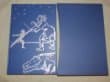
The Little Minister
1891
The Little Minister, published in 1891 by J. M. Barrie, is a novel set in the fictional Scottish village of Thrums. It follows Gavin Dishart, a young minister who grapples with love, duty, and social tensions as he begins his new role. The narrative, rich in local color, explores Gavin's earnest character and his interactions with the townsfolk, including an enigmatic Egyptian woman, hinting at the romantic and societal conflicts he will face. The book is notable for its exploration of the complexities of rural life and the clergy's role within it.
Editions

X-Ray
“Let no one who loves be called altogether unhappy. Even love unreturned has its rainbow.””
— J. M. Barrie
“Life is a long lesson in humility.””
— J. M. Barrie
“The life of every man is a diary in which he means to write one story, and writes another; and his humblest hour is when he compares the volume as it is with what he vowed to make it.””
— J. M. Barrie
“There are, I dare say, many lovers who would never have been drawn to each other had they met for the first time, as, say, they met the second time.””
— J. M. Barrie
“Love, it is said, is blind, but love is not blind. It is an extra eye, which shows us what is most worthy of regard. To see the best is to see most clearly, and it is the lover's privilege.””
— J. M. Barrie
“Nadie que ama puede ser considerado totalmente infeliz. Incluso el amor no correspondido tiene su arcoiris.Let no one who loves be considered altogether unhappy. Even love unrequited has its rainbow.””
— J. M. Barrie
Link to this book
Add a free, dofollow link to Lex on your blog, forum, syllabus, or reading list.

<a href="https://lex-books.com/book/the-little-minister-c00f8e47-7751-41d5-9897-818769643a07"><img src="https://lex-books.com/badges/read-on-lex.svg" alt="Read The Little Minister by J. M. Barrie free on Lex" width="160" height="40"></a>[](https://lex-books.com/book/the-little-minister-c00f8e47-7751-41d5-9897-818769643a07)[url=https://lex-books.com/book/the-little-minister-c00f8e47-7751-41d5-9897-818769643a07][img]https://lex-books.com/badges/read-on-lex.svg[/img][/url]Read The Little Minister by J. M. Barrie free on Lex: https://lex-books.com/book/the-little-minister-c00f8e47-7751-41d5-9897-818769643a07Cite this book
Reading this edition for a paper or guide? Copy a citation.
Barrie, J. M.. The Little Minister. Lex, lex-books.com/book/the-little-minister-c00f8e47-7751-41d5-9897-818769643a07.Barrie, J. M. (1891). The Little Minister. Lex. https://lex-books.com/book/the-little-minister-c00f8e47-7751-41d5-9897-818769643a07Barrie, J. M.. The Little Minister. Lex. https://lex-books.com/book/the-little-minister-c00f8e47-7751-41d5-9897-818769643a07.