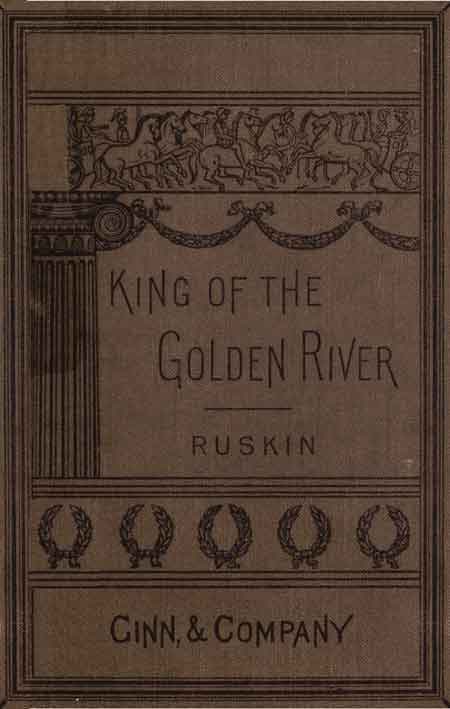
The King of the Golden River
1851
John Ruskin wrote this tale in 1841 for a twelve-year-old girl named Effie Gray, whom he would later marry. That's the extraordinary origin of this Victorian fairy tale: one of the 19th century's most formidable art critics, crafting a story of magic and morality for a child. The result is neither sentimental nor preachy, but a beautifully strange fable about what happens when three brothers inherit a valley blessed by a Golden River. Schwartz and Hans are brutal, selfish men who care only for wealth. Their younger brother Gluck is gentle and small, derided as useless until he alone proves capable of the compassion the river's king demands. When the Southwest Wind comes seeking vengeance for the brothers' cruelty, the valley's prosperity shatters. Only Gluck's journey to the King of the Golden River, undertaken not for gain but for love of his brothers, can restore what was lost. The prose has a Victorian richness that rewards reading aloud, with descriptions of mountain weather and flowing water that show Ruskin's masterly eye for nature. It endures because it never hammers its lesson: the moral emerges naturally from the magic, and Gluck's reward feels earned rather than given.
Editions
X-Ray
“There is no wealth but life.””
— John Ruskin
“And thus the... valley became a garden again, and the inheritance, which had been lost by cruelty, was regained by love.””
— John Ruskin
“...the water which has been refused to the cry of the weary and dying, is unholy, though it had been blessed by every saint in heaven; and the water which is found in the vessel of mercy is holy...””
— John Ruskin
Link to this book
Add a free, dofollow link to Lex on your blog, forum, syllabus, or reading list.

<a href="https://lex-books.com/book/the-king-of-the-golden-river-6b298642-fd3c-4594-a3a6-1c7ba116f41e"><img src="https://lex-books.com/badges/read-on-lex.svg" alt="Read The King of the Golden River by John Ruskin free on Lex" width="160" height="40"></a>[](https://lex-books.com/book/the-king-of-the-golden-river-6b298642-fd3c-4594-a3a6-1c7ba116f41e)[url=https://lex-books.com/book/the-king-of-the-golden-river-6b298642-fd3c-4594-a3a6-1c7ba116f41e][img]https://lex-books.com/badges/read-on-lex.svg[/img][/url]Read The King of the Golden River by John Ruskin free on Lex: https://lex-books.com/book/the-king-of-the-golden-river-6b298642-fd3c-4594-a3a6-1c7ba116f41eCite this book
Reading this edition for a paper or guide? Copy a citation.
Ruskin, John. The King of the Golden River. Lex, lex-books.com/book/the-king-of-the-golden-river-6b298642-fd3c-4594-a3a6-1c7ba116f41e.Ruskin, J. (1851). The King of the Golden River. Lex. https://lex-books.com/book/the-king-of-the-golden-river-6b298642-fd3c-4594-a3a6-1c7ba116f41eRuskin, John. The King of the Golden River. Lex. https://lex-books.com/book/the-king-of-the-golden-river-6b298642-fd3c-4594-a3a6-1c7ba116f41e.