The King James Version of the Bible
1611
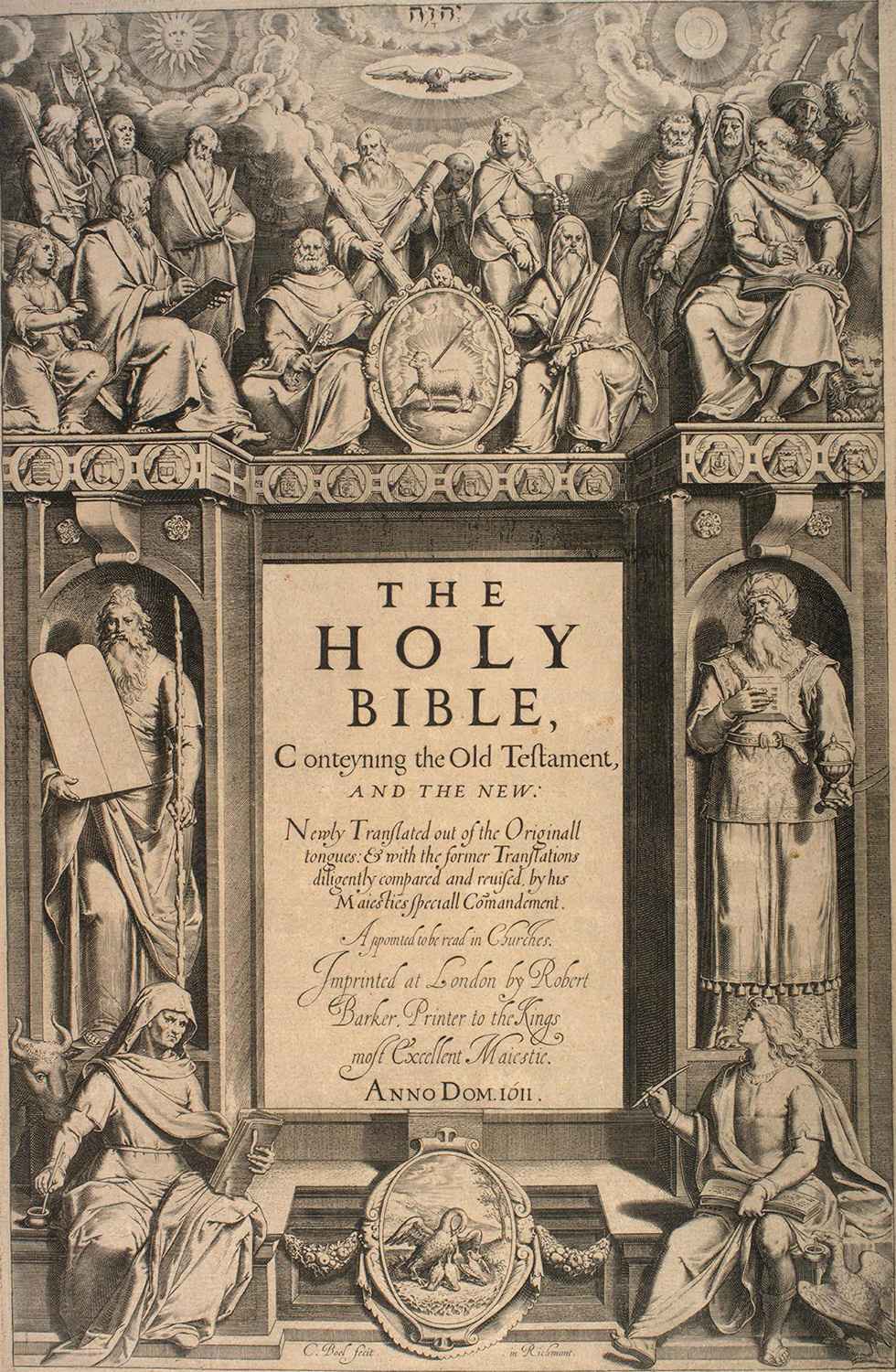
It is the book that invented English. Before the King James Version (published 1611), there was no dominant literary language in England; after it, English became a vehicle for some of the most beautiful prose ever written. The translators, drawing on earlier work from Tyndale and others, created a version that shaped not only religious thought but the entire trajectory of Western literature, from Milton's Paradise Lost to Morrison's Beloved. Its phrases have become so embedded in our speech that we no longer recognize them as quotations: "the powers that be," "a broken heart," "the salt of the earth," "the valley of the shadow of death." The text moves from the creation of all things in Genesis through the exile and return, the coming of Christ, and the Revelation of things to come. It is both narrative and prayer, genealogy and prophecy, law and poetry. Whether you come to it for spiritual nourishment or literary study, the King James remains the version that generations of English-speaking people have turned to in their darkest hours and greatest joys.
Editions
X-Ray
“And now these three remain: faith, hope and love. But the greatest of these is love.””
— Unknown
“Therefore do not worry about tomorrow, for tomorrow will worry about its own things. Sufficient for the day is its own trouble. Matthew 6:34””
— Unknown
“Where your treasure is, there will your heart be also.””
— Unknown
“Do not judge, or you too will be judged. For in the same way you judge others, you will be judged, and with the measure you use, it will be measured to you[Matthew 7:1-2]””
— Unknown
“Do not be deceived: bad company corrupts good morals.””
— Unknown
“Trust in the LORD with all thine heart; and lean not unto thine own understanding. In all thy ways acknowledge him, and he shall direct thy paths.””
— Unknown
“Do not worry about your life, what you will eat or drink; or about your body, what you will wear. Is not life more important than food, and the body more important than clothes?Look at the birds of the air; they do not sow or reap or store away in barns, and yet your heavenly Father feeds them. Are you not much more valuable than they?Who of you by worrying can add a single hour to his life?And why do you worry about clothes? See how the lilies of the field grow. They do not labour or spin. Yet I tell you that not even Solomon in all his splendor was dressed like one of these. If that is how God clothes the grass of the field, which is here today and tomorrow is thrown into the fire, will he not much more clothe you, O you of little faith?So do not worry, saying, ``What shall we eat?'' or ``What shall we drink?'' or ``What shall we wear?'' For the pagans run after all these things, and your heavenly Father knows that you need them. But seek first his kingdom and his righteousness, and all these things will be given to you as well.Therefore do not worry about tomorrow, for tomorrow will worry about itself. Each day has enough trouble of its own.- Matthew 6:25-34””
— Unknown
“Whatsoever a man soweth, that shall he also reap.””
— Unknown
“Faith is the substance of things hoped for, the evidence of things not seen. (Hebrew 11:1 KJV)””
— Unknown
Link to this book
Add a free, dofollow link to Lex on your blog, forum, syllabus, or reading list.

<a href="https://lex-books.com/book/the-king-james-version-of-the-bible-e62e9a22-c7f7-4537-849e-cfa97c6bda16"><img src="https://lex-books.com/badges/read-on-lex.svg" alt="Read The King James Version of the Bible by Unknown free on Lex" width="160" height="40"></a>[](https://lex-books.com/book/the-king-james-version-of-the-bible-e62e9a22-c7f7-4537-849e-cfa97c6bda16)[url=https://lex-books.com/book/the-king-james-version-of-the-bible-e62e9a22-c7f7-4537-849e-cfa97c6bda16][img]https://lex-books.com/badges/read-on-lex.svg[/img][/url]Read The King James Version of the Bible by Unknown free on Lex: https://lex-books.com/book/the-king-james-version-of-the-bible-e62e9a22-c7f7-4537-849e-cfa97c6bda16Cite this book
Reading this edition for a paper or guide? Copy a citation.
Unknown. The King James Version of the Bible. Lex, lex-books.com/book/the-king-james-version-of-the-bible-e62e9a22-c7f7-4537-849e-cfa97c6bda16.Unknown (1611). The King James Version of the Bible. Lex. https://lex-books.com/book/the-king-james-version-of-the-bible-e62e9a22-c7f7-4537-849e-cfa97c6bda16Unknown. The King James Version of the Bible. Lex. https://lex-books.com/book/the-king-james-version-of-the-bible-e62e9a22-c7f7-4537-849e-cfa97c6bda16.