The Kasîdah of Hâjî Abdû El-Yezdî
1931
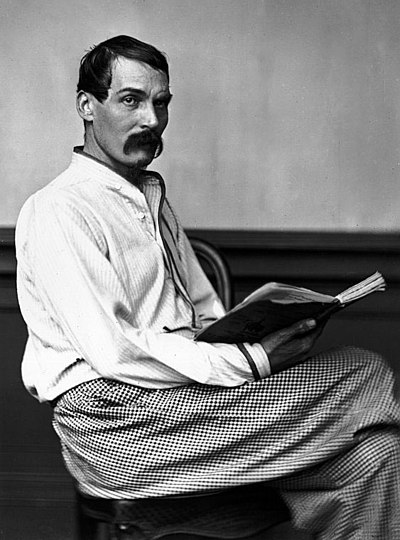
Sir Richard Francis Burton, the Victorian explorer who walked barefoot through Mecca and spoke more languages than any man of his era, here adopts the voice of a Persian sage on the road to Arabia. The result is a strange, beautiful, and unsettling poem: a Kasidah, or Arabic ode, that unfolds as a meditation on life's fundamental paradoxes. The journey begins at dawn, with camels and horses assembled, a caravan setting off toward the holy city. But this is no mere travelogue. Through the wise wanderer Hâjî Abdû El-Yezdî, Burton poses questions that have haunted philosophy for centuries: What is the relationship between happiness and misery? Can self-cultivation ever be sufficient in a world of suffering? What remains when we strip away the illusions we live by? The poem moves through love, death, truth, and the nature of existence itself, offering no easy answers but much hard-won wisdom. Written in 1870 but appearing here in this 1931 edition, it endures because it speaks across cultures and centuries to anyone who has ever stood at the edge of the unknown and wondered what it all means. For readers who loved The Prophet by Kahlil Gibran or the philosophical depth of Eastern poetry.
Editions
X-Ray
“All faith is False, all Faith is true:Truth is the shattered mirror strownIn myriad bits; while each believeshis little bit the whole to own.””
— Sir Richard Francis Burton
“And still the Weaver plies his loom, whose warp and woof is wretched ManWeaving th' unpattern'd dark design, so dark we doubt it owns a plan””
— Sir Richard Francis Burton
“Do what thy manhood bids thee do, from none but self expect applause;He noblest lives and noblest dies who makes and keeps his self-made laws.All other Life is living Death, a world where none but Phantoms dwell,A breath, a wind, a sound, a voice, a tinkling of the camel-bell.Richard Burton, The Kasidah, 1880””
— Sir Richard Francis Burton
Link to this book
Add a free, dofollow link to Lex on your blog, forum, syllabus, or reading list.

<a href="https://lex-books.com/book/the-kas-dah-of-h-j-abd-el-yezd-b0c6b5aa-fbb4-437f-9209-dec84086021d"><img src="https://lex-books.com/badges/read-on-lex.svg" alt="Read The Kasîdah of Hâjî Abdû El-Yezdî by Sir Richard Francis Burton free on Lex" width="160" height="40"></a>[](https://lex-books.com/book/the-kas-dah-of-h-j-abd-el-yezd-b0c6b5aa-fbb4-437f-9209-dec84086021d)[url=https://lex-books.com/book/the-kas-dah-of-h-j-abd-el-yezd-b0c6b5aa-fbb4-437f-9209-dec84086021d][img]https://lex-books.com/badges/read-on-lex.svg[/img][/url]Read The Kasîdah of Hâjî Abdû El-Yezdî by Sir Richard Francis Burton free on Lex: https://lex-books.com/book/the-kas-dah-of-h-j-abd-el-yezd-b0c6b5aa-fbb4-437f-9209-dec84086021dCite this book
Reading this edition for a paper or guide? Copy a citation.
Burton, Sir Richard Francis. The Kasîdah of Hâjî Abdû El-Yezdî. Lex, lex-books.com/book/the-kas-dah-of-h-j-abd-el-yezd-b0c6b5aa-fbb4-437f-9209-dec84086021d.Burton, S. R. F. (1931). The Kasîdah of Hâjî Abdû El-Yezdî. Lex. https://lex-books.com/book/the-kas-dah-of-h-j-abd-el-yezd-b0c6b5aa-fbb4-437f-9209-dec84086021dBurton, Sir Richard Francis. The Kasîdah of Hâjî Abdû El-Yezdî. Lex. https://lex-books.com/book/the-kas-dah-of-h-j-abd-el-yezd-b0c6b5aa-fbb4-437f-9209-dec84086021d.